





 Portuguese
  English
  Spanish
  4 min of reading
  0 comments


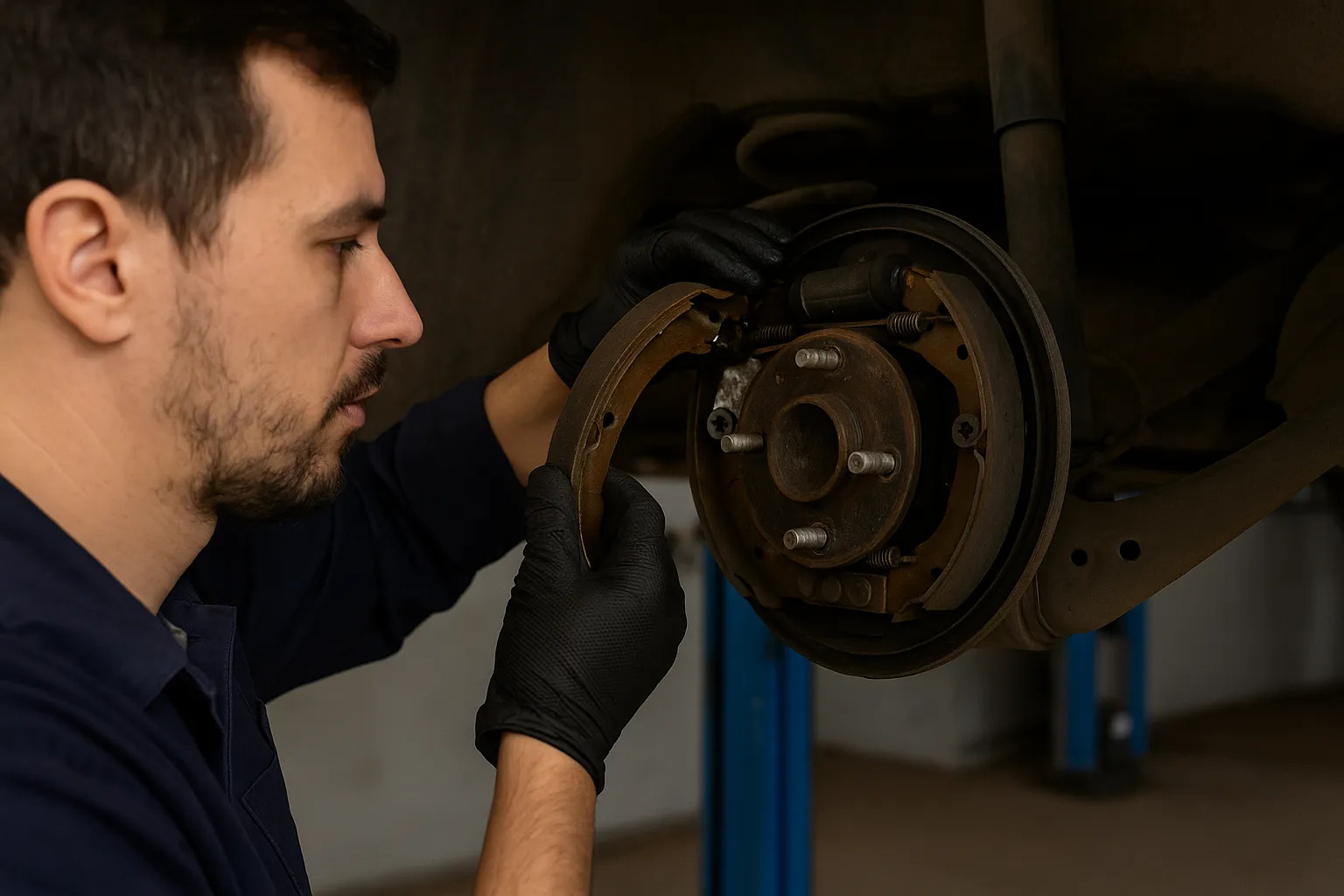
Few people remember the rear brake linings until the car starts showing signs that something is wrong. But ignoring these signs can be a costly and risky mistake. After all, the linings play an essential role in safety, as they are part of the drum braking system, widely used on the rear wheels of popular cars and utilities. Knowing how to recognize the symptoms of wear or malfunction is crucial to avoid accidents and higher expenses.
Brake Linings: The Foundation of Rear Braking
The brake linings are located inside the drums and work in direct contact with them. When the driver presses the pedal, hydraulic pressure pushes the wheel cylinders, which press the linings against the drum, generating friction and slowing down the car. This system is simple, robust, and inexpensive to maintain, which is why it is still common in current models.
Wear on the linings is inevitable. Over time, the friction material wears down, and braking efficiency decreases. Unlike the front pads, which generally wear out faster, the rear linings have a longer lifespan but need periodic inspection.
-
The 2026 electric Vitara arrives in Brazil and proves that Suzuki is not leaving: 4×4 traction, 184 hp, 61 kWh LFP battery, 293 km range, R$ 259,000, and a trunk capacity of 224 L.
-
Hyundai has unveiled the Boulder, a square SUV with a body-on-frame design, 37-inch mud tires, and carriage-style doors that seems to be made to take on the Ford Bronco and the Scout Traveller in the United States.

-
The Toyota Hilux is R$ 75.5 thousand cheaper and bets on the 2.8 turbodiesel engine with up to 204 hp and 50.9 kgfm to catch up with the VW Saveiro, which leads with 4,472 sales.
-
The new Renault Koleos has a screen exclusively for the passenger that is invisible to the driver, heated rear seats, and 29 assistance systems, but its Chinese competitors cost R$ 40,000 less and deliver more power.

Signs of Wear on Brake Linings
One of the first indications that there is a problem with the brake linings is the increased pedal travel. If you feel the need to push the pedal down further for the car to respond, it may be a sign of excessive wear.
Another symptom is a metallic noise when braking, especially coming from the rear. This noise indicates that the friction material has worn out and the metal of the lining is now in direct contact with the drum. In addition to being dangerous, this can damage the part, increasing maintenance costs.
It is also common to notice loss of braking efficiency. The car seems to take longer to stop, or it becomes unstable when you brake suddenly. Often, the driver only notices this in risky situations, making preventive inspection even more important.
Vibrations and Tremors in the Pedal
Another symptom that indicates worn or poorly adjusted brake linings is vibration in the pedal. When the linings are uneven, the friction with the drum is not uniform. This causes tremors that are felt in the driver’s foot. In some cases, the sensation is also perceived in the steering wheel.
Vibrations can be the result of not only wear but also contamination with oil or grease from leaks in the wheel cylinder. If the hydraulic system has failures, the linings become soaked and completely lose their friction capacity.
The Importance of the Parking Brake
One often-neglected detail is the role of the handbrake. As it acts directly on the rear linings, it can also indicate wear. If the parking brake no longer “holds” the car on inclines, or requires pulling the lever very high, it may be a sign that the linings are worn or out of adjustment.
Ignoring this symptom is dangerous. Besides compromising safety, you might strain the handbrake cable and require another repair.
When to Replace the Brake Linings
There is no exact mileage for replacement because this depends on driving style and vehicle use. In cars that frequently drive in urban traffic, the linings might last between 30,000 and 50,000 km. In highway vehicles, this lifespan may be longer.
The recommendation is to inspect the system at every service, especially when the car has more than 20,000 km since the last replacement. Many workshops take the opportunity during alignment and balancing to check the condition of the linings.
The Risk of Delaying Maintenance
Driving with worn brake linings is risking your life. Besides the danger of not being able to stop the car in time, there are other collateral damages: scratched drums, compromised wheel cylinders, and even failures in the handbrake. All of this increases maintenance costs, which could have been simple and inexpensive.
It is important to remember that the rear brake system complements the front. If the linings do not function properly, the front pads become overloaded, accelerating their wear as well.
What to Observe During Inspection
In the workshop, the mechanic will measure the thickness of the friction material of the linings. If it is below the limit specified by the manufacturer, it is time to replace them. Cracks, glazing (when the lining becomes “glassy” due to excessive heat), and signs of contamination are also checked.
Another point is to check the condition of the drums. If they are scratched, oval, or out of specification, it may be necessary to machine or replace them. And do not forget to check the wheel cylinder, a fundamental part for hydraulic pressure.
Care That Prolongs Lifespan
Some habits help increase the durability of brake linings. Avoid resting your foot on the pedal for long periods, especially on downhill slopes. Use lower gears to help hold the car. Another tip is not to overuse the handbrake while in motion, as this improperly stresses the linings.
Keeping the brake system clean also makes a difference. Dust, mud, and accumulated dirt accelerate lining wear and compromise friction with the drum.
Safety First
The brake linings may not always be in plain sight, but their function is vital. Paying attention to wear signs and adopting regular inspections is the safest path. After all, few systems in a car are as crucial as the braking system.
Driving safely does not only depend on the driver’s skill, but also on trust in the vehicle. Investing in the maintenance of the brake linings is, above all, investing in your life and in the lives of those who ride with you.










-

Uma pessoa reagiu a isso.