





 Portuguese
  English
  Spanish
  4 min of reading
  0 comments


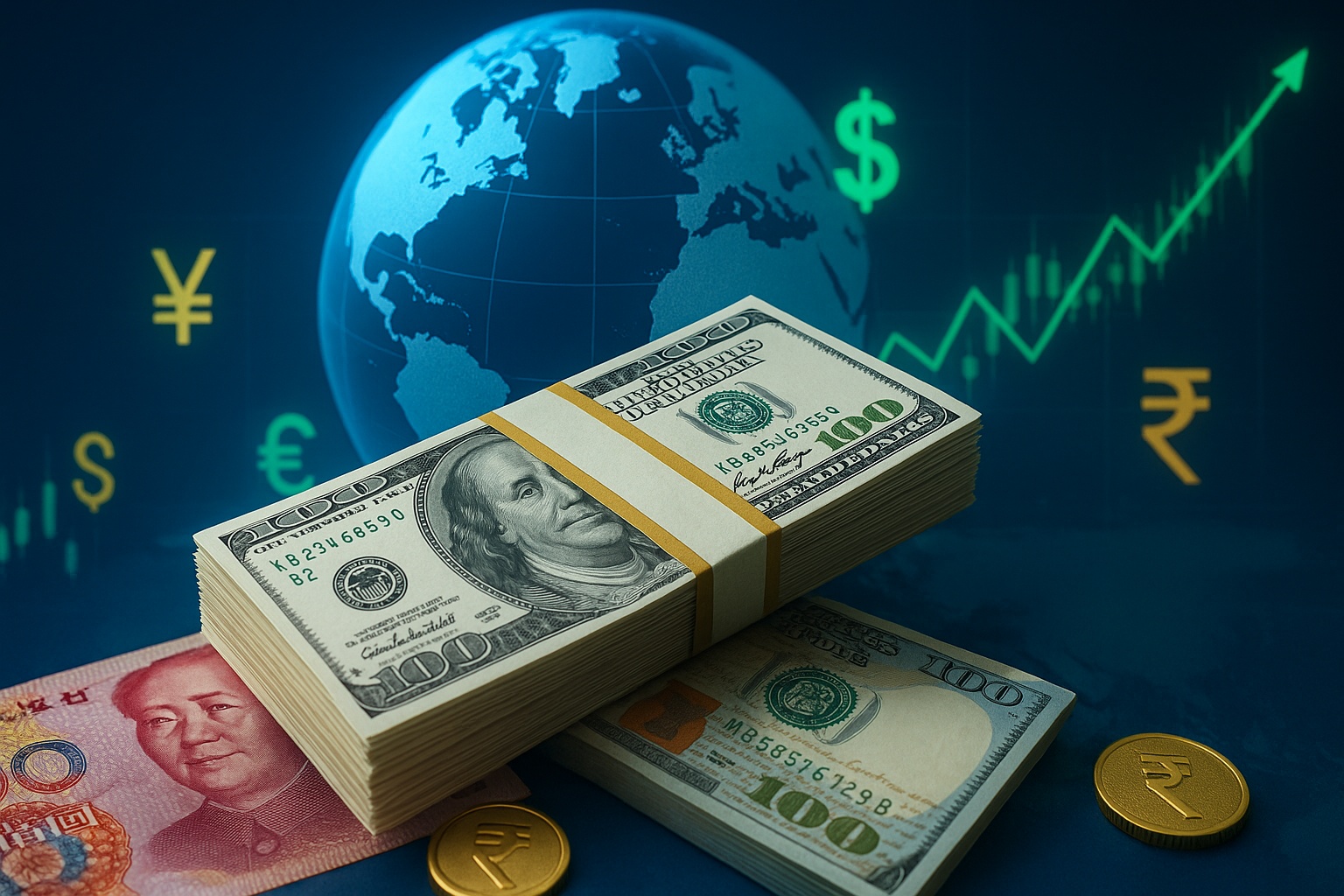
Dollar Dominates The World For 80 Years. Global Reserves Exceed US$ 7 Trillion And, Even With The Advance Of The Yuan And The Rupee, Its Replacement Will Be Difficult.
The prominence of the dollar did not emerge immediately. Its rise began in 1944, at the Bretton Woods Conference, when more than 40 countries decided to create a new international financial system in the post-war period. At that moment, the dollar was chosen as the basis of the global exchange system, backed by gold and supported by the economic and military power of the United States. In addition to being the central currency of the agreement, the dollar gained institutional support with the establishment of the International Monetary Fund (IMF) and the International Bank for Reconstruction and Development (IBRD), which began operating under strong American influence. This architecture gave the dollar a robustness that no other currency has been able to replicate.
The End Of The Gold Standard And The Consolidation Of Dollar Hegemony
In 1971, President Richard Nixon ended the dollar’s convertibility into gold, breaking with the Bretton Woods agreement.
Many analysts believed this would be the end of the system, but the effect was the opposite: the American currency had already established itself as a global benchmark of trust and began to be massively used as a means of payment, store of value, and protective asset in times of instability.
-
A 68-year-old pizza delivery driver went off route to buy a soda that was missing from a visually impaired customer’s order, refused an extra tip, and now Dan Simpson has over R$ 546,000 in donations from people around the world who want to ensure he can retire peacefully on April 30.

-
Amateur archaeologists were searching a forest in Poland with metal detectors when they found a ceramic pot buried for over 1,500 years. Inside was a pure gold necklace weighing 222 grams, folded to fit in the vessel, and when experts examined the piece, they discovered it was the first Gothic torque ever found in Polish territory.

-
Millions of people have been eating pomegranates for centuries without knowing that this ancient fruit contains punicalagins, which scientists are studying for their possible effects on memory and vascular health.

-
Argentina patrols the South Atlantic with ships built in France and monitors over 1.1 million km² with 87 m OPVs, a range of 7,500 miles, 360° radar, and a 30 mm cannon against illegal fishing in the 200-mile zone.

From the 1970s onwards, the dollar ceased to be merely the official currency of the United States to become the world’s primary currency, supporting most international trade, including oil — consolidating the concept of “petrodollar”.
The Dollar As The Primary Currency Of The Planet

Currently, more than 60% of global currency reserves are denominated in dollars, which corresponds to more than US$ 7 trillion held in central banks around the world. In addition, about 80% of international trade transactions still use the American currency as a reference, either directly or through indexed contracts.
Even in times of crisis, when other currencies depreciate, the dollar tends to strengthen. This phenomenon, known as “flight to quality,” reinforces the perception that the American currency continues to be a safe haven for investors and governments.
Advancement Of The Yuan And The Rupee, But Barriers Persist
In recent years, China has been trying to increase the use of the yuan in international transactions, just as India seeks to strengthen the rupee in Asian trade. In addition, groups like the BRICS advocate for a reduction in dependence on the dollar, creating alternatives for multilateral payments.
However, there are structural barriers:
- The dollar has the most liquid financial market in the world.
- It has a consolidated global payment infrastructure, such as the SWIFT system.
- It ensures political and institutional trust, even amidst internal disputes.
- It maintains an international acceptance network that no other currency has achieved.
This means that, although new currencies are advancing regionally, their ability to replace the dollar in the short term remains limited.
The Hegemony Of The Dollar And The Next Challenges
The hegemony of the dollar is the result of eight decades of institutional building, strategic alliances, and accumulated trust. Today, it is not only the currency of the United States but the central engine of the global financial system.
Overcoming it would require not only a country with a strong economy but also a global network of trust, liquidity, and comparable financial infrastructure — something that neither China nor India have been able to build so far.
Why It Will Be Difficult To Overcome The Dollar?
The dollar has become the world’s primary currency because it has been able to combine economic strength, political influence, and institutional stability during a period of global transformations.
Even with the strengthening of currencies like the yuan and the rupee, the replacement of the American currency will be a long, gradual process filled with structural barriers.
What started at Bretton Woods 80 years ago remains firm in 2025: the dollar continues to be the most powerful currency on the planet — and is unlikely to lose this position in the near future.









Seja o primeiro a reagir!