





 Portuguese
  English
  Spanish
  5 min of reading
  0 comments


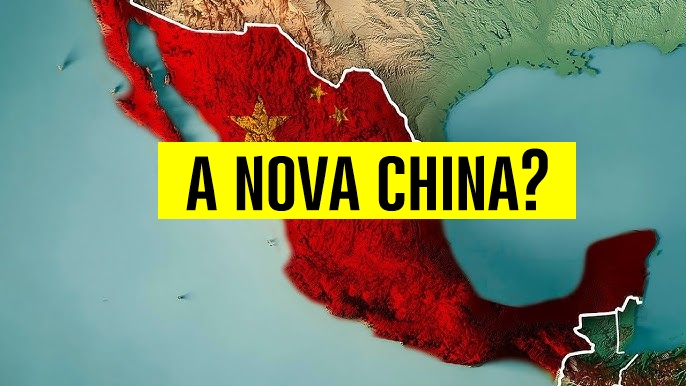
With a Growing Economy, Strategic Geopolitical Position, and Investments in Key Sectors, Mexico Is Emerging as a Global Force, Surprising Economists and Analysts.
Mexico is leveraging the trade tensions between the United States and China to establish itself as one of the major global manufacturing hubs. With a strategic location, competitive labor force, and robust trade agreements, the country has attracted large multinationals and strengthened its relationships with its main trading partner, the United States.
The strategy of “nearshoring“, which involves relocating production to regions close to consumer markets, is gaining traction as Washington and Beijing become commercially distanced.
Companies like Tesla, Walmart, Amazon, Samsung, Nissan, and Home Depot have been shifting some of their operations from Asia to Mexico, driven by factors such as lower operational costs and proximity to the North American market.
-
Spain challenges the USA and closes its airspace for operations against Iran, raising global tension and provoking the threat of a trade rupture.

-
While no other country manufactures tanks in Latin America, Argentina activates the TAM 2C-A2 and raises a curiosity about the technological lag in the region.

-
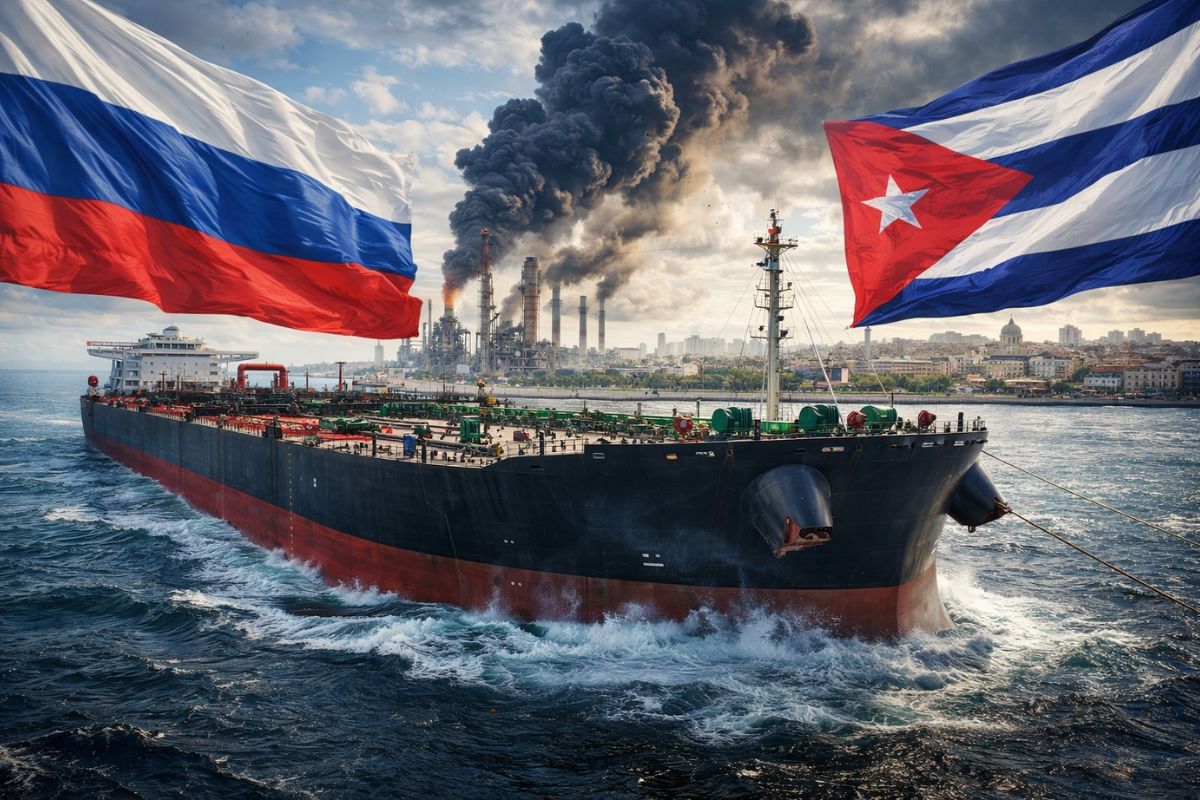
A Russian ship with 730,000 barrels of oil has just arrived in Cuba while Mexico negotiates fuel sales through private companies: the communist island is desperately seeking alternatives after losing its supply from Venezuela due to American military action.
-
Iranian drones and missiles destroyed a 270 million dollar American spy plane in Saudi Arabia, splitting the E-3 Sentry aircraft in half and injuring 12 military personnel in an attack that exposes the vulnerability of U.S. bases in the Persian Gulf.


This movement has yielded historic results in 2023. For the first time in two decades, Mexico surpassed China as the main trading partner of the United States.
In the first four months of the year, bilateral trade between the two countries reached US$ 263 billion, accounting for 15.4% of the total goods imported and exported by the U.S. during that period.
Experts point out that this shift reflects not only the frictions between the two largest economies in the world but also the U.S. strategy of seeking greater economic integration with North American countries.
Mexico, it seems, is reaping the rewards of this geopolitical transformation, consolidating itself as a preferred destination for global investments in manufacturing.


Investment Attraction: An Economic Boom
The flow of foreign investments in Mexico is also on the rise. Tesla, for instance, announced an investment of US$ 15 billion in a new factory in the northern part of the country.
Moreover, companies from various sectors are redirecting their resources to take advantage of the benefits offered by Mexico, such as tax incentives and privileged access to global markets.
Mexico’s infrastructure also plays a crucial role. With a robust transportation network, including modern ports, efficient highways, and rail connections directly linked to the U.S., the country is becoming the ideal location for establishing logistics and industrial operations.
Mexico offers a unique combination of factors, such as political stability, broad trade agreements, and a young and expanding workforce, making it a preferred choice for global investors.
The Strength of Trade Agreements
The Treaty between Mexico, the United States, and Canada (T-MEC), which replaced NAFTA, is one of the main reasons for the growth of Mexican exports.
This agreement guarantees preferential access to the North American market, eliminating tariffs in various sectors and creating conditions for the economic integration of the region.
The T-MEC also protects Mexico from potential dependence on China. A specific clause in the treaty prevents members from signing trade agreements with “non-market economies“, a clear reference to China.
This clause reinforces Mexico’s trade alliance with the U.S. and Canada while limiting Beijing’s economic influence in the region.
Challenges and International Relations
Despite recent economic success, Mexico faces significant challenges. Internally, issues such as violence and social inequality continue to be obstacles to sustainable development. Externally, the country must balance its relationship with the U.S., its main trading partner, and China, a global economic power.
Recently, President Claudia Sheinbaum responded to criticisms from the U.S. government regarding Mexico’s role in the entry of Chinese products into the North American market.
Sheinbaum emphasized that Mexico is committed to strengthening its own industries and reducing dependence on Asian imports.
According to Reuters, the Mexican president highlighted that the country will continue to protect its national interests while maintaining a collaborative stance with the U.S.
Sheinbaum’s assertive posture reflects a strategic shift in Mexico. Instead of simply following Washington’s directives, the country is seeking greater autonomy in its trade policies while benefiting from the increasing flow of foreign investments.
Unique Competitive Advantages of Mexico
Mexico has several competitive advantages that highlight it as one of the top destinations for industrial investments:
- Geographic Proximity: Mexico’s location allows companies to reduce transportation costs and improve delivery times to the U.S.
- Skilled Workforce: The country has a young and expanding population, with training in areas such as engineering and information technology.
- Sustainable Growth: The Mexican government is investing in renewable energy and sustainable industrial practices, attracting companies concerned with ESG (Environmental, Social, and Governance).
Additionally, Mexico is expanding its presence in high-tech sectors such as semiconductors and electric vehicles. In 2024, the country signed a cooperation agreement with the U.S. to increase semiconductor chip production, a significant step toward consolidating its position as a regional leader in advanced technology.
A Promising Future for Mexico?
The trade relationship between Mexico and the United States remains a crucial axis for the Mexican economy, but it is also a terrain filled with challenges. The history of negotiations with Donald Trump during his first term demonstrates Mexico’s ability to navigate tariff threats and maintain economic stability.
However, Trump’s return to power promises a potentially more volatile scenario, with new promises of tariffs of 25% on Mexican exports, this time motivated by issues such as combating drug trafficking and illegal migration.
While the financial market has shown remarkable resilience to bad news, as highlighted by Ernesto Revilla, chief economist at Citi, Trump’s more radical stance this time may test the limits of that confidence.
The new president of Mexico, Claudia Sheinbaum, faces a complex scenario. Unlike her predecessor, Andrés Manuel López Obrador, Sheinbaum adopts a more direct approach, but her initial response to Trump’s threats raised doubts about the effectiveness of her strategy.
The challenges are clear: Mexico must balance its need to maintain economic integration with the United States while protecting its sovereignty and addressing critical internal issues such as combating violence and strengthening its industries.
Despite the tensions, Mexico continues to be an essential player in the global supply chain, and its geopolitical importance ensures that threats are often followed by agreements that allow business continuity.










-

Uma pessoa reagiu a isso.