





 Portuguese
  English
  Spanish
  5 min of reading
  30 comments




Poorly Planned Drillings Can Result in Loss and Frustration. Therefore, Before Digging an Artesian Well, It Is Essential to Discover if There Is a Water Vein in the Area
Digging an artesian well is not just digging a hole. The decision requires care, planning, and information. Not every land has water, and a mistake can be costly. Therefore, before starting drilling, it is essential to check if there is any “water vein” or accessible aquifer.
The good news is that there are ways to do this. Some are based on science, others on practical observation. There are also traditional methods still used in various regions of Brazil. Combining all of this can greatly increase the chances of success.
Companies that Analyze Soil
There are specialized companies that offer soil analysis services for those who intend to drill an artesian well.
-
Something is happening around the Earth: Inside the huge explosion of fireballs in 2026

-
A hot air bubble coming from Argentina expands over Brazil, causing thermometers to exceed 38 degrees with a thermal sensation of 40 degrees in late March, affecting 6 states at once.

-
The radish leaf that almost everyone throws away has more polyphenols, flavonoids, and fiber than the consumed root, and a 2025 study showed that the leaf contains compounds that protect the intestine, combat inflammation, and may inhibit the growth of cancer cells.

-
A planet that seemed to defy the laws of physics has intrigued scientists for decades, until the James Webb revealed what is really affecting Saturn’s rotation.


These professionals use equipment such as geophysical probes, which allow them to identify water veins and estimate the depth of groundwater.
The analysis also considers other factors, such as soil permeability and the geological characteristics of the area. All of this helps assess the water potential of the region.
The cost of these services varies significantly. It depends on the technology used, the area evaluated, and the complexity of the terrain.
Therefore, it is advisable to request personalized quotes and, above all, verify if the company is registered with the responsible bodies.
Signs of Nature — What the Terrain Can Show
Observing the surrounding landscape can reveal a lot. In many cases, nature itself gives clues about the presence of groundwater.
Areas with greener vegetation, places where grass grows faster, or lands that take longer to dry after the rain may indicate the presence of moisture underground. These are simple but valuable signs.
Other important signs include the existence of natural springs, old abandoned wells, or even depressions where small temporary ponds form.
In agriculture, for example, it can be noted that certain crops, such as corn and wheat, grow better in areas with more access to water. These locations are usually closer to underground veins.
Modern Equipment — Detectors and Measurements
Current technology also offers interesting resources for those who want to increase their chances of finding water. One of the most common methods is the use of electromagnetic detectors.
These devices measure the electrical conductivity of the soil. Since water conducts electricity better than dry soil, the equipment can identify regions with higher moisture.
Although it does not indicate the exact depth of the water, it helps direct drilling to the most promising points.
Another simpler resource is the trench test. It involves digging a shallow hole and observing whether the soil is moist.
It is a cost-effective technique that is easy to execute, but it requires attention. Before digging, it is necessary to consult the local government.
This prevents accidents with pipelines, underground wirings, or other buried infrastructures. Municipal bodies often provide maps of the city’s subterranean network.
Radiesthesia — Popular Practice but Lacking Scientific Proof


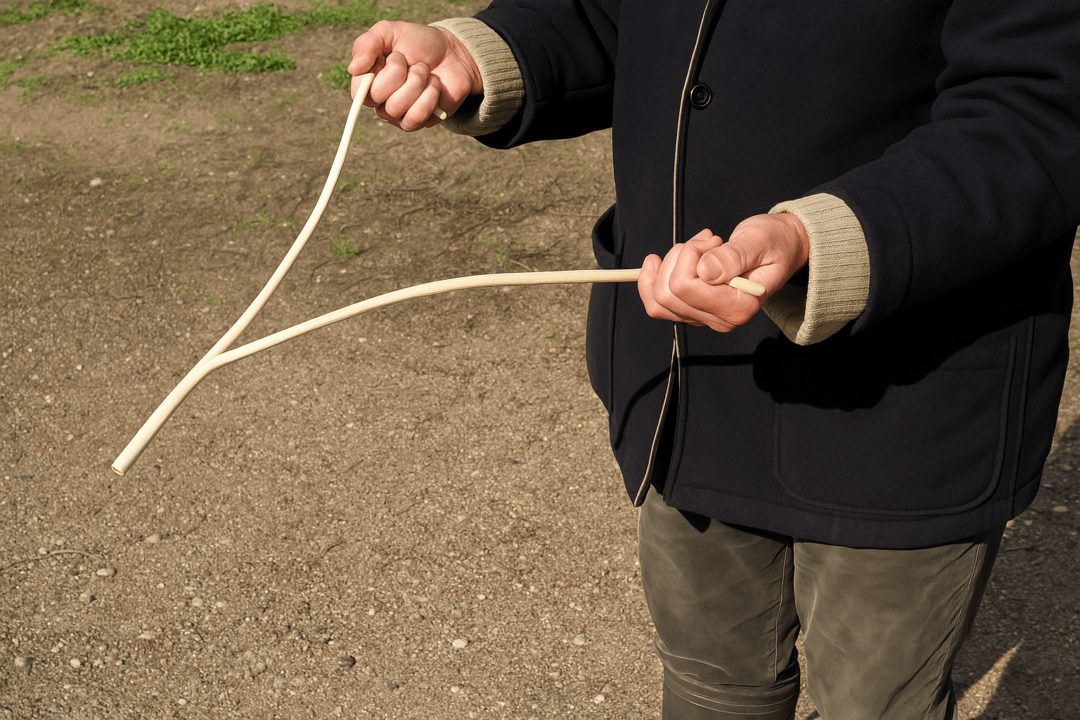
Radiesthesia is an ancient practice that still generates debate, especially among scientists. It involves the use of rods in Y shape or pendulums, used by people who claim to have the ability to find underground water.
These “sensitives” are still contracted in various interior regions, even by municipalities. In rural communities in states like Pernambuco, Ceará, and Bahia, it is common for families to seek out these practitioners before digging wells.
Many say that the results are positive. Some even charge for the service. Even without scientific basis, many residents believe in radiesthesia.
They say it works through “sensitivity” or “gift.” Others claim that, even without proof, the technique helps to choose points with a higher chance of finding water — especially in places where soil knowledge is passed down through generations.
Despite the lack of scientific proof, radiesthesia continues to be used by those who trust traditional methods or have had good experiences with the practice. However, for those seeking more safety and precision, it is still advisable to rely on science.
Hydrologists — The Specialists on the Subject
Anyone truly looking for precision can hire a hydrologist. This professional specializes in the study of groundwater and can conduct a detailed technical analysis of the site.
The hydrologist considers factors such as topography, rock type, vegetation, and can use imaging techniques to detect aquifers.
This significantly reduces the risk of investing in a drilling that will yield no results.
Conversations with Residents — Wisdom from Those Who Know
Often, a conversation with someone who has lived in the area for a long time can be more helpful than it seems. Longtime residents, experienced farmers, and public servants usually know the geography of the region well.
They know where artesian wells once existed, where water used to be, or where the soil is drier. This type of information, when combined with technical data and visual observation, helps to create a more complete picture of the area.
In other words: before investing in drilling, it is worth spending some time listening to stories and accounts from those who have lived there.
Planning Is the Best Way
Finding water underground is possible, but it requires patience, attention, and preparation. There is no single foolproof method.
The ideal is to cross information: use scientific data, observe nature, talk to neighbors, and if desired, even resort to traditional methods.
Each terrain is unique. Therefore, the secret lies in the combination of techniques. With good planning, the chances of finding water increase — and the risks decrease.
Digging an artesian well can bring many benefits, such as more autonomy in water supply, cost reduction, and water security.
But this only makes sense if the water is actually there. And, to be sure, it is worth following the right steps.







Oii tudo bem?? ok
Oii tudo bem???
Oii tudo bem?