





 Portuguese
  English
  Spanish
 5 min of reading
  0 comments


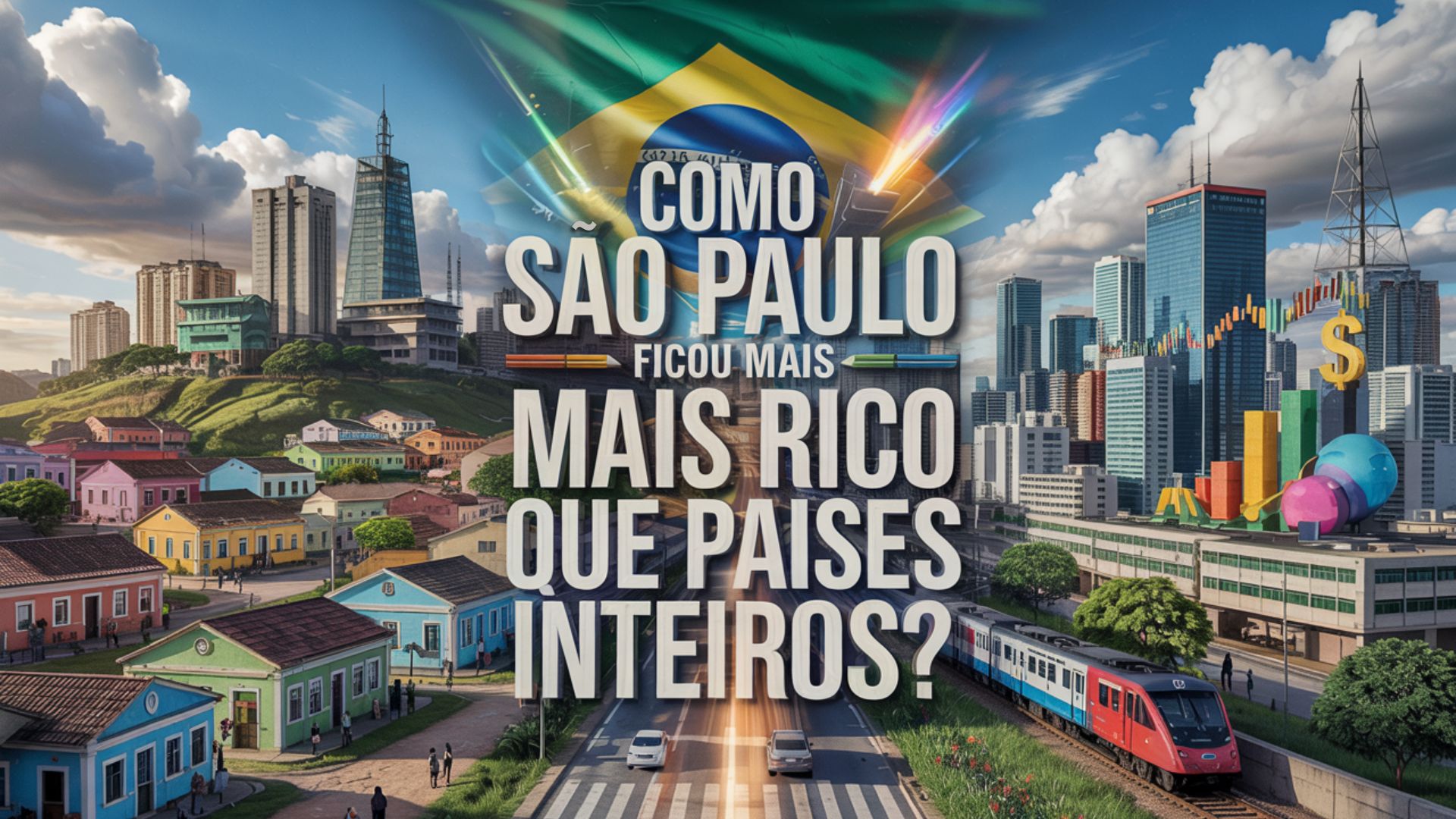
From Forgotten Province to Economic Powerhouse: Understand How São Paulo Became the Richest State in Brazil Thanks to Coffee, Mass Immigration, and the Power of Railways.
Today, São Paulo is synonymous with wealth, modernity, and economic power. But it wasn’t always this way. Just over 200 years ago, the state barely ranked among the most important regions of Brazil. In 1872, the capital had only 30,000 inhabitants and was the ninth largest city in the country — smaller than Belém and almost ten times smaller than Rio de Janeiro. So how did this former peripheral province transform into the richest state in Brazil?
When São Paulo Was Just a Supporting Actor
For much of the colonial era and the early Empire, São Paulo had little economic or political significance. In the 19th century, it was a modest province, while Bahia, Pernambuco, and Maranhão led the national economy with sugar and cotton exports. São Paulo even produced sugar, but on a smaller scale and with severe logistical difficulties.

The Obstacle of the Serra do Mar
The topography was one of the first major barriers. The mountain range between the interior of São Paulo and the coast was a true wall. The transportation of goods was done through narrow Indigenous trails, and even with the construction of roads in the 18th century, the path remained winding — with 133 dangerous curves between the plateau and the port of Santos.
-
Petrobras sends a message to Brazilian truck drivers after fuel collapse and reveals plan to have 100% domestic diesel.

-
Mothers and daughters come together, create an ‘express’ beauty salon and turn the idea into a network with 21 units, revenue of R$ 16.7 million and 12,000 subscribers.

-
End of the 6×1 schedule: how the reduction of hours can affect service companies, industry, and agribusiness.

-
Brazil Ignores Trump’s threats to BRICS, Buys 42 tons of gold and reduces the Dollar’s share by 6.45% in international reserves.


This logistical difficulty limited São Paulo’s ability to integrate into external trade. But it was precisely by resolving this obstacle that the state began its ascent.
Coffee, Pack Mules, and Toll Roads: The First Steps Toward Growth
In the first half of the 19th century, coffee began to become the engine of the Brazilian economy. In São Paulo, cultivation was only viable in the regions closest to the coast due to the high cost of mule transport. The “fuel” for the troops was corn, which was expensive and limited the economically viable distances.
In 1831, after the abdication of Dom Pedro I, the provinces gained more autonomy. One of the first measures of the São Paulo Provincial Assembly was to institute tolls on mules. The money collected financed improvements in the roads, allowing coffee to be planted further away from the coast. This movement would pave the way for agro-export expansion.
The Railway Revolution
The second great leap came with the arrival of railways, primarily financed by the coffee producers themselves. Railway transport shortened distances, reduced costs, and allowed coffee from the more distant regions of the São Paulo interior to quickly reach the port of Santos — and from there, to the world.
At the same time, the United States and European countries were increasing their demand for coffee, which further boosted cultivation. The railway stations gave rise to new towns, and the economy of the São Paulo interior flourished.
The Labor Force That Changed Everything: From the End of Slavery to Mass Immigration
The growth of coffee required a lot of labor. Initially, there was internal migration of enslaved people from the Northeast to the Southeast. But with the advancement of the abolitionist movement and the prohibition of the transatlantic slave trade, the slave system became unsustainable.
In light of this, the São Paulo elite decided to encourage European immigration. Millions of Italians, Spaniards, Portuguese, Japanese, Syrians, and Lebanese came to work on the farms. More than 3 million people passed through the old immigrants’ lodging in São Paulo in less than a century.
These immigrants formed a new wage-earning working class that, unlike the enslaved, received wages and consumed goods. This created an internal demand that served as a foundation for São Paulo’s future industrialization.
The Birth of the São Paulo Industry
By the end of the 19th century and the beginning of the 20th, São Paulo began to replace previously imported products with locally manufactured items — such as textiles and processed foods. With modern transportation infrastructure, capital from coffee, and available labor, the city became the main industrial hub in the country.
This economic advance soon reflected in politics. Along with Minas Gerais, São Paulo began to dominate national politics in what became known as the “Coffee with Milk Republic.” The state had finally ceased to be a periphery and become the center of decisions.
The Revolution of 1932 and the Creation of USP
The global crisis of 1929 crashed coffee prices, severely affecting São Paulo. When Getúlio Vargas took power in 1930, he reduced the autonomy of the states and appointed federal interventors. The São Paulo elite reacted with the Constitutional Revolution of 1932 — and lost.
But the military defeat led to a symbolic and strategic response: instead of lamenting, São Paulo invested in knowledge. In 1934, the University of São Paulo (USP) was founded, which would consolidate the state as a center of scientific and cultural production.
Protection for Industry and Urban Growth
During Vargas’s government, import substitution policies further strengthened the national industry. São Paulo, which already had a productive structure and specialized labor, benefited greatly from these measures.
Throughout the 20th century, the city of São Paulo attracted millions of migrants — especially from the Northeast — who contributed to the expansion of construction, manufacturing, and rapid urbanization. In 2022, more than 5 million residents of the state were born in the Northeast, representing over 11% of the population.
The Legacy That Shaped the Present
The combination of infrastructure, public policies, immigration, industrialization, and internal market consolidated São Paulo as the locomotive of Brazil. Starting in the 1950s, the capital was already the largest city in the country — economically, demographically, and culturally.
But experts warn of the dangers of interpreting this success as “natural superiority.” According to sociologist Gessé Souza, the São Paulo elite took advantage of the symbolic power of European immigration to try to legitimize a leadership over the rest of the country. “You need symbolic power to convince others that you are superior,” he says.
The Short Answer: Why Did São Paulo Get So Rich?
Because it solved a logistical problem (the mountains), invested in railways, took advantage of high coffee demand, encouraged mass immigration, industrialized rapidly, and later benefited from federal policies to protect the industry. In other words, because it combined geography, economy, politics, and institutions efficiently.
Today, São Paulo accounts for over 30% of Brazil’s GDP, and if it were a country, it would have one of the largest economies in Latin America. An impressive trajectory that began with mules, trails, and a lot of coffee.







Seja o primeiro a reagir!