





 Portuguese
  English
  Spanish
  5 min of reading
  1 comment


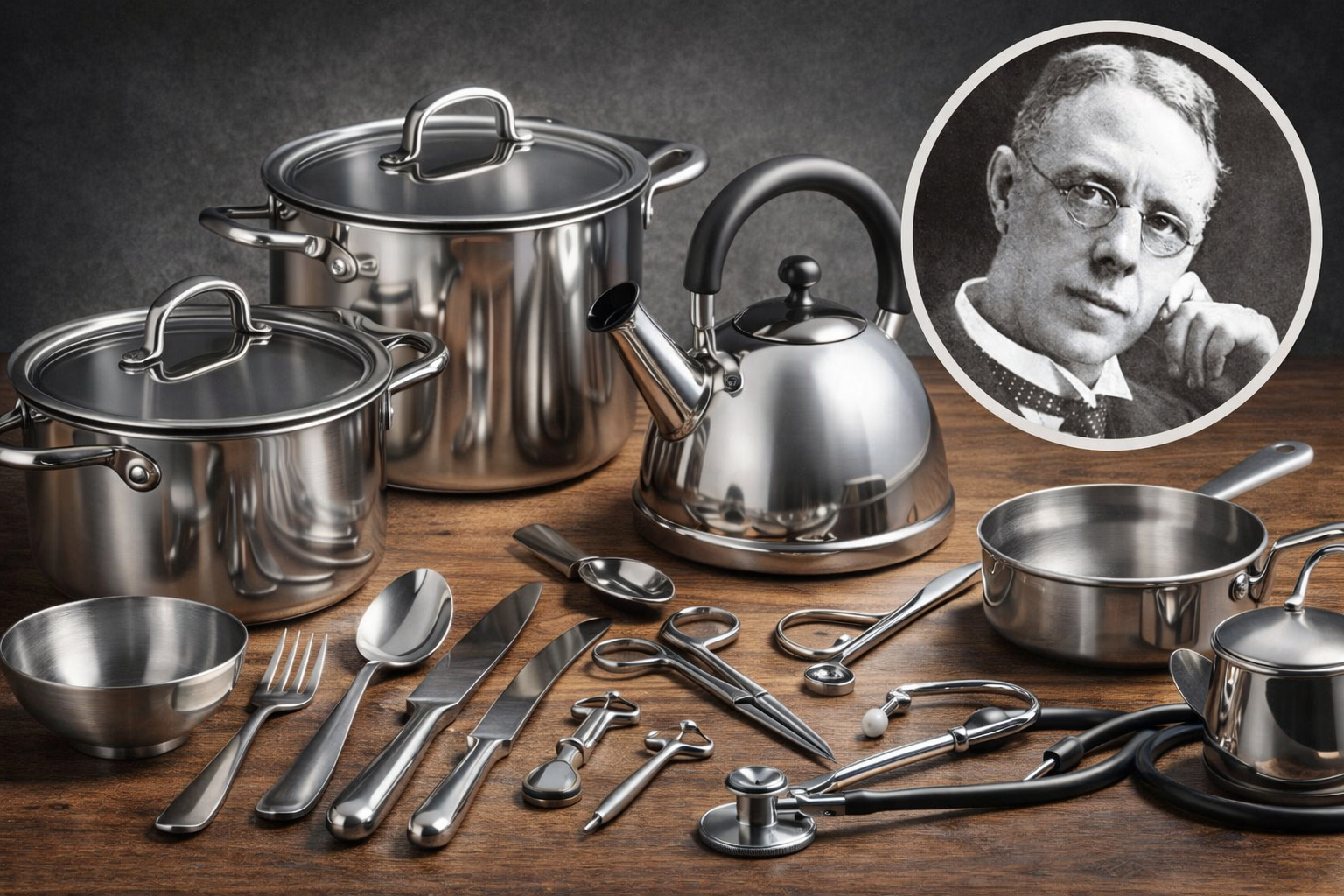


Stainless Steel Emerged in 1913 When Metallurgist Harry Brearley Was Testing Alloys for Gun Barrels and Noticed That a Type of Steel with Chromium Simply Did Not Rust.
Today, stainless steel is present almost everywhere: cutlery, pots, hospital equipment, industrial structures, ships, and even spacecraft. This material has become essential for various areas of industry precisely because of a specific characteristic: its enormous resistance to corrosion.
What few people know is that the origin of this material did not come from an attempt to create household utensils or kitchen equipment. In fact, stainless steel was born from military research in the early 20th century.
The Discovery of Stainless Steel
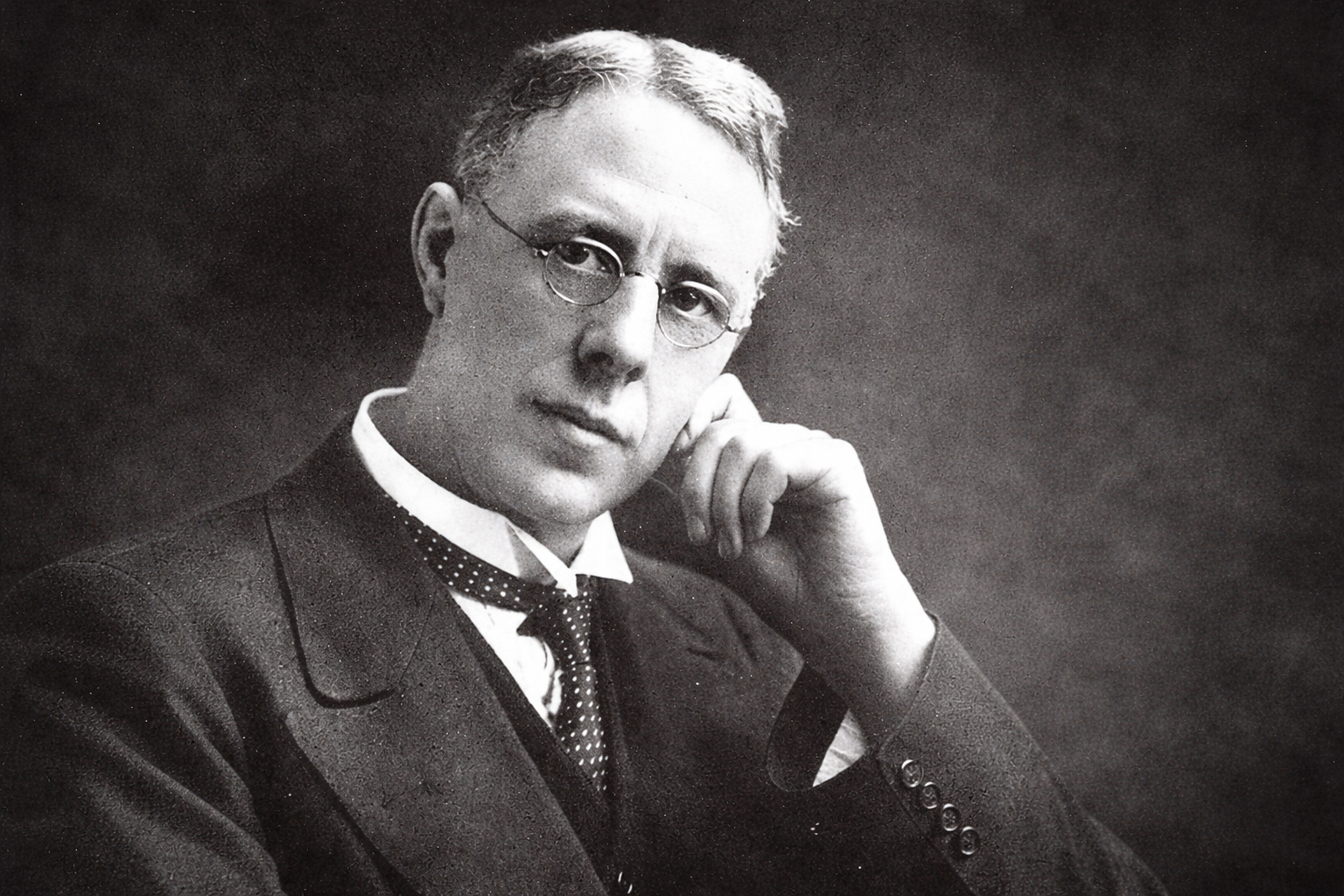
The discovery took place in 1913, in the English city of Sheffield, which was already known as one of the largest metallurgical centers in the world. At the time, British metallurgist Harry Brearley was working in a research laboratory trying to develop more resistant metal alloys for gun barrels.
-
In the middle of the sea, these enormous concrete and steel structures, built by the British Navy to protect strategic maritime routes, look like they came straight out of a Star Wars movie.

-
For years, no one could cross a neighborhood in Tokyo because of the tracks, but an impressive solution changed mobility and completely transformed the local routine.

-
With 15 floors, an unusual building in Curitiba uses concrete, pilasters, and exposed roofs to create the effect of stacked houses.

-
Archaeologists opened a secret chamber that had been sealed by sand for 40,000 years inside a cave in Gibraltar and found what may be the last place where Neanderthals lived before disappearing from Europe forever.
The goal was to create a steel that would better resist wear caused by the high temperatures and friction generated during firing. During the experiments, Brearley began testing different combinations of iron, carbon, and other chemical elements.
Among these experimental alloys, one of them contained about 12% to 13% chromium. It was this mixture that would change the history of metallurgy. The material showed no rust, even after exposure to air and moisture.
The Problem Engineers Were Trying to Solve
In the early 20th century, one of the challenges of the arms industry was the rapid wear of gun barrels. During firing, extremely high temperatures were generated inside the barrel, leading to metal erosion, internal deformations, and accelerated corrosion.
These problems reduced the accuracy of firearms and diminished their lifespan. Therefore, metallurgical laboratories began to investigate new steel alloys that could better withstand these extreme conditions.

It was in this context that Harry Brearley began his experiments. He analyzed different chemical compositions of steel to identify which could offer greater wear resistance. What he did not expect was to discover a metal that practically did not rust.
The Discovery Occurred in an Unexpected Way
During the tests, Brearley produced several samples of steel with different chromium concentrations. Some of these pieces were discarded in the laboratory after the initial tests. Days later, when revisiting the place where the samples were stored, he noticed something curious.
While the other pieces of steel had already shown visible signs of corrosion, one of the alloys remained practically intact. This material appeared to unusually resist rust. Intrigued, Brearley decided to investigate that specific alloy further.
The analysis showed that the presence of chromium was responsible for an important chemical phenomenon. When exposed to oxygen in the air, chromium forms an extremely thin layer of chromium oxide. This layer acts as a protective barrier that prevents the iron in the steel from coming into direct contact with oxygen and moisture. This microscopic film prevents rust formation.
The Birth of Stainless Steel
Upon understanding this mechanism, Brearley realized that he had discovered a material completely different from conventional steels. He had created a metal capable of resisting corrosion under normal usage conditions.
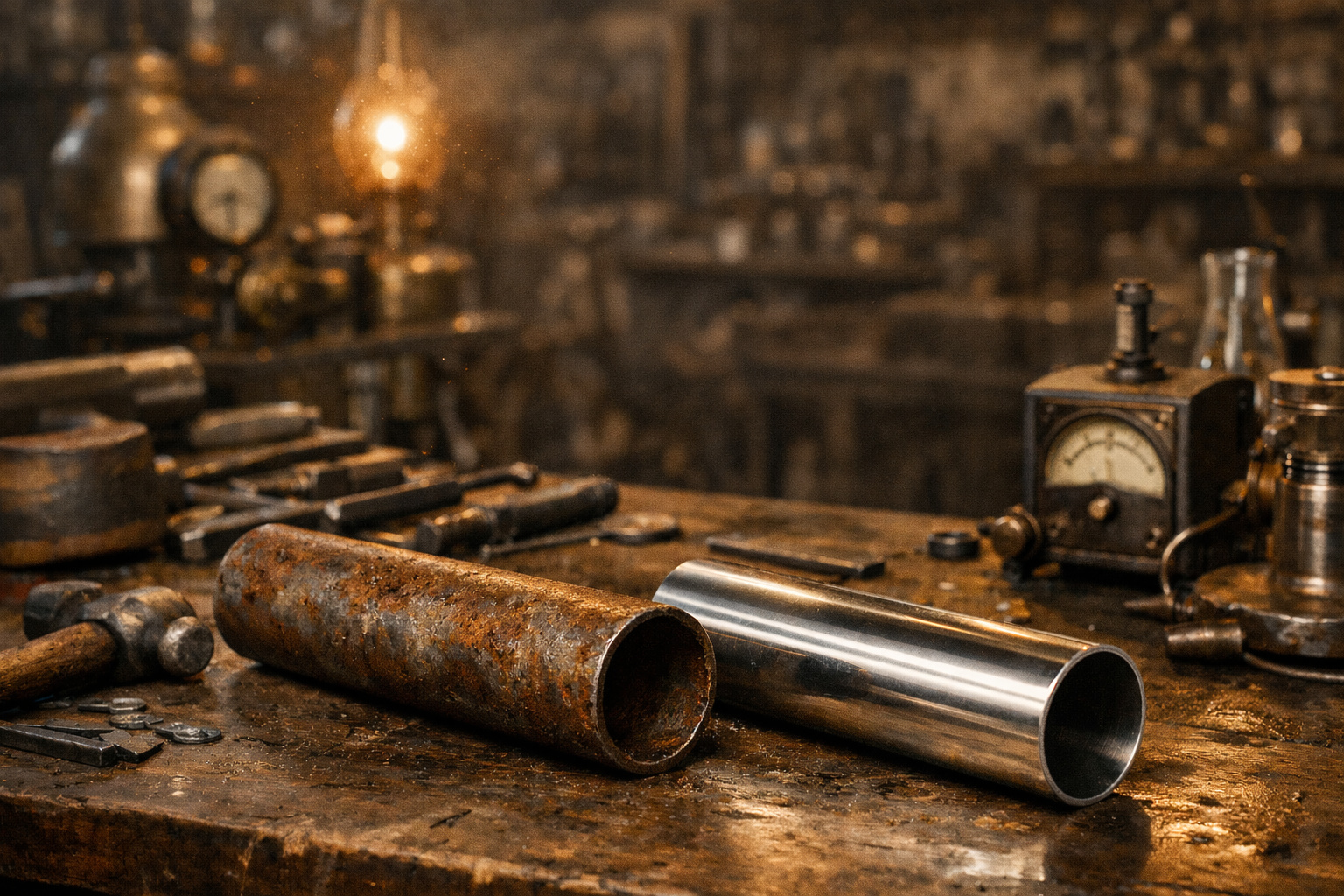
This new alloy came to be called stainless steel. Initially, the material was considered a scientific curiosity. But it soon became clear that it had enormous potential for various industrial applications.
One of the first commercial uses occurred right in Sheffield, where the cutlery industry was already extremely strong. Manufacturers realized that the new material was ideal for producing knives, forks, spoons, and kitchen utensils. These products did not rust and maintained their shine for much longer than those made with regular steel. This quickly transformed stainless steel into a highly valued material.
How Chromium Protects the Metal
The main difference between stainless steel and regular steel lies in the presence of chromium. While conventional steel is basically an alloy of iron and carbon, stainless steel contains significant amounts of chromium, usually over 10.5%. When this metal comes into contact with oxygen, it forms an invisible layer called passive layer. This film has special characteristics:
- It is extremely thin
- It strongly adheres to the surface of the metal
- It automatically regenerates if damaged
Thanks to this protective layer, the metal is shielded against corrosion. This phenomenon is what makes stainless steel so resistant to rust.
The Expansion of Stainless Steel Use in the 20th Century
After its discovery, stainless steel began to gain ground in different sectors of industry. Over the following decades, new alloys were developed for specific applications. Among the sectors that use stainless steel the most today are:
- Food Industry
- Medicine and Hospital Equipment
- Construction
- Chemical Industry
- Naval Engineering
- Aerospace Technology
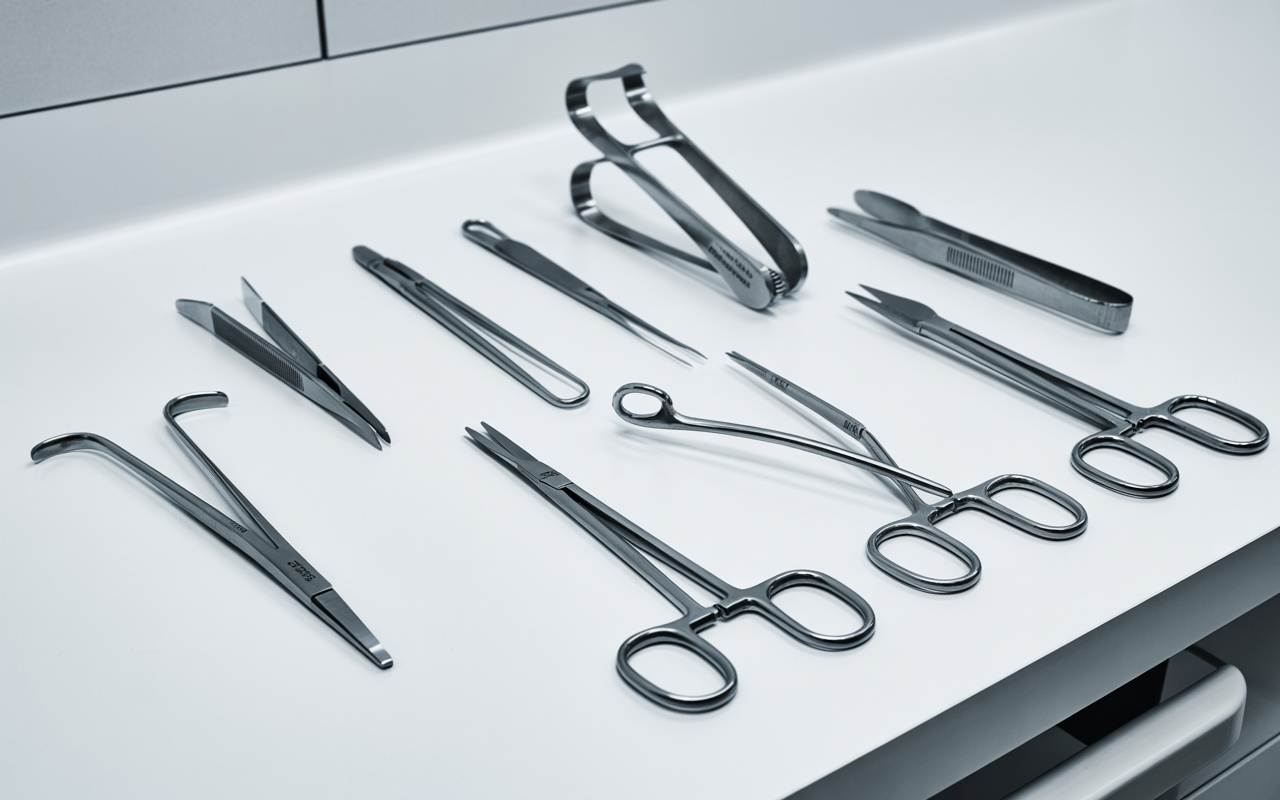
The material also became essential in environments where corrosion resistance is fundamental. Equipment exposed to moisture, chemicals, or saltwater often relies on stainless steel to ensure durability.
Sheffield Became the Cradle of Stainless Steel
The English city of Sheffield was already known in the 19th century as one of the largest metallurgical centers in the world. With the discovery of stainless steel, this reputation was further strengthened.
Local factories quickly began producing utensils made with the new metallic alloy. Within a few years, stainless steel began to be exported to different countries. This expansion solidified Sheffield as one of the world’s major steel industry hubs.
A Discovery That Changed Metallurgy
The creation of stainless steel completely transformed the way metallic materials are used in modern industry. Before this discovery, corrosion was one of the greatest challenges faced by engineers and manufacturers.


Rust would deteriorate equipment, structures, and utensils in relatively little time. With the advent of stainless steel, it became possible to produce materials that were much more durable and resistant.
Today, over a century after the discovery made by Harry Brearley, stainless steel remains one of the most important materials in engineering. A discovery made almost by chance ended up creating a metal that revolutionized the global industry.








Caramba, que redundância, escreve 10 vezes a mesma coisa. Está precisando fazer um curso de redação para aprender a ser mas claro e direto com as informações e não repetir ate a exaustão.