





 Portuguese
  English
  Spanish
  5 min of reading
  13 comments


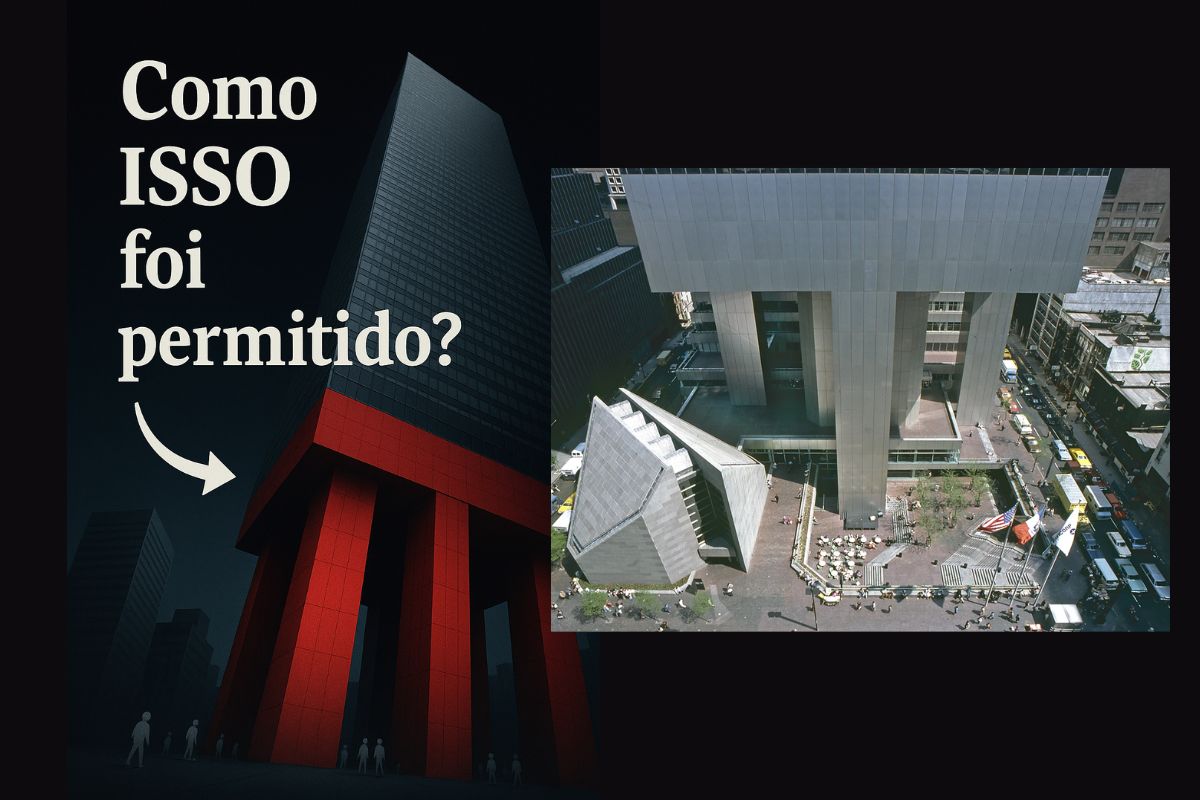


US$ 175 Million Building Was Inaugurated With Critical Structural Flaw That Could Cause Its Collapse During a Hurricane. Engineer Saved Thousands With Silent Nighttime Renovation Without Evacuating Occupants
In the Heart of Manhattan, one of the boldest buildings of modern engineering nearly collapsed silently during the summer of 1978. The Citicorp Center, which had just been inaugurated, exhibited a fatal flaw in its structure — capable of collapsing under winds of just 68 mph. A disaster with the potential to kill thousands was averted thanks to the ethical and technical courage of engineer William LeMessurier.
The story, detailed by the Veritasium channel and confirmed by investigations and official documents, reveals one of the most tense and hidden episodes in modern civil engineering — reported Veritasium on May 25, 2025.
-
Scientists use sawdust mixed with clay to create a lighter brick, promising efficient thermal insulation and impressing by transforming waste into a solution for construction.

-
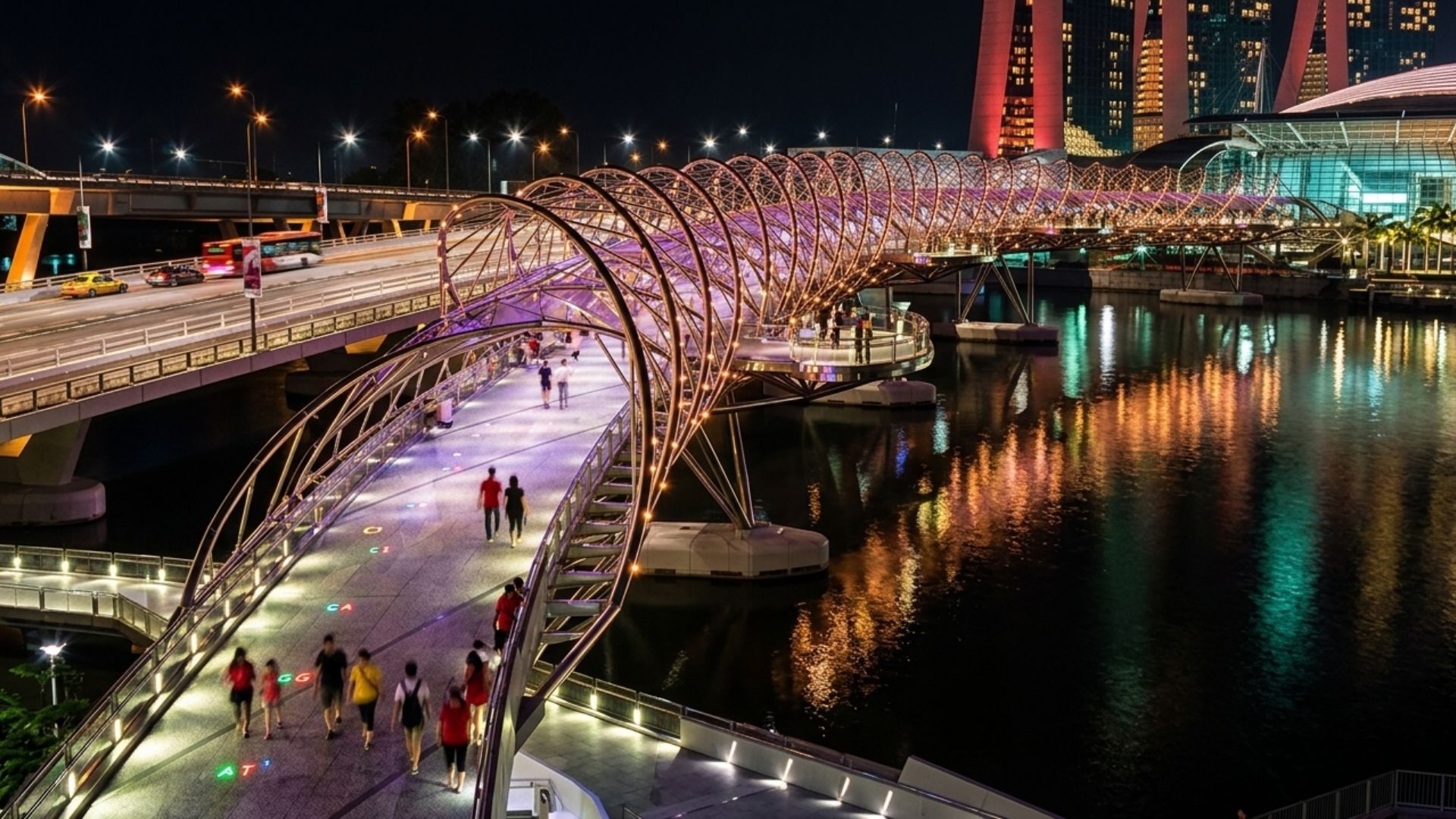
With a DNA shape, this bridge in Singapore draws attention in modern architecture and surprises tourists by transforming a simple crossing into an unforgettable visual experience in the urban heart.
-
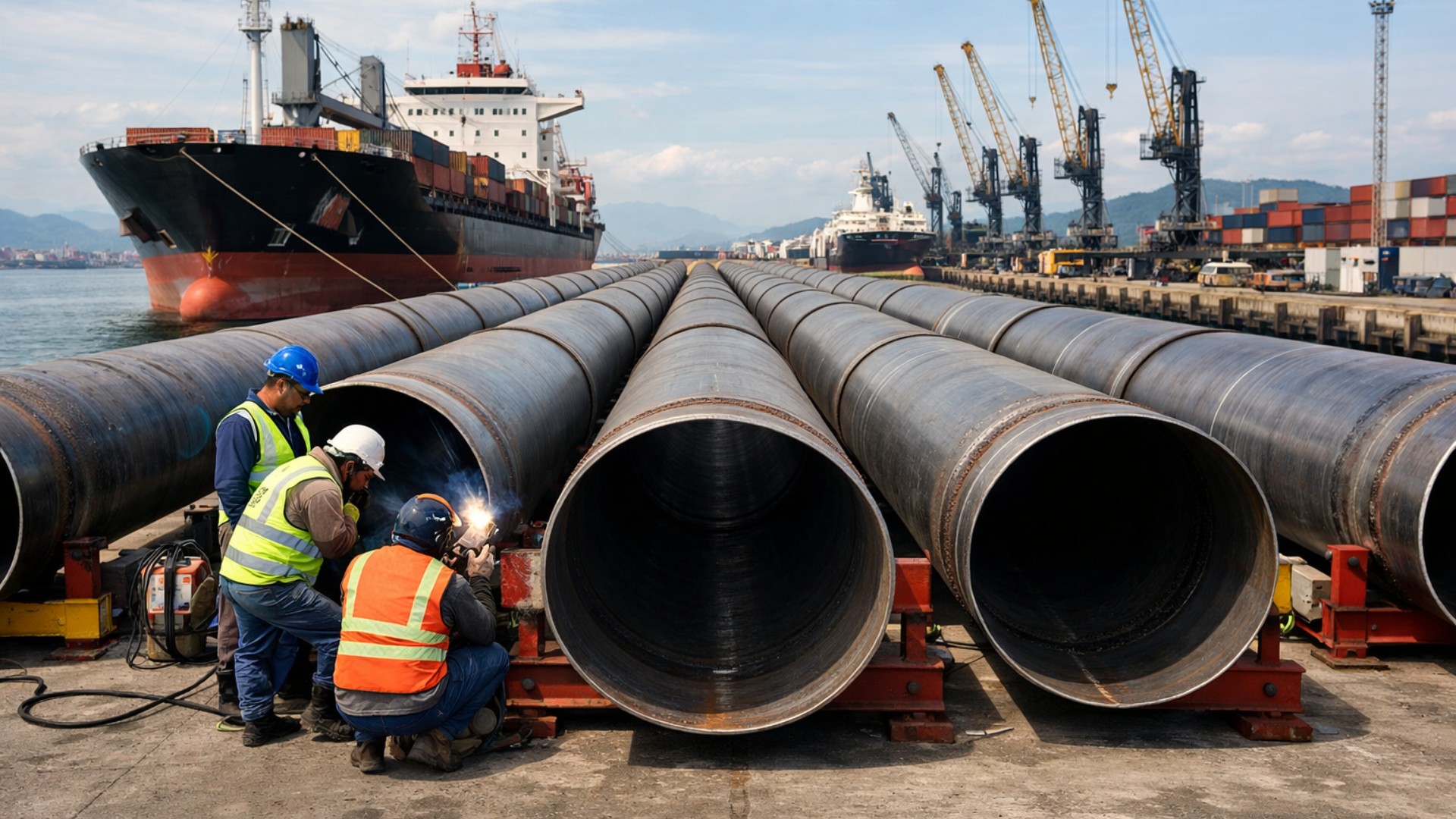
Giant underwater pipeline begins to take shape with a R$ 134.7 million project at the Port of Santos: the 1.7 km structure uses 12-meter and 700 mm pipes to supply water to 450,000 people in Guarujá.
-
A mason reveals a professional plastering technique that uses aligned guides and a 3-meter ruler to plaster an entire wall in up to 3 hours, without visible seams, with uniform thickness, perfect plumb, and a finish ready for painting without rework.

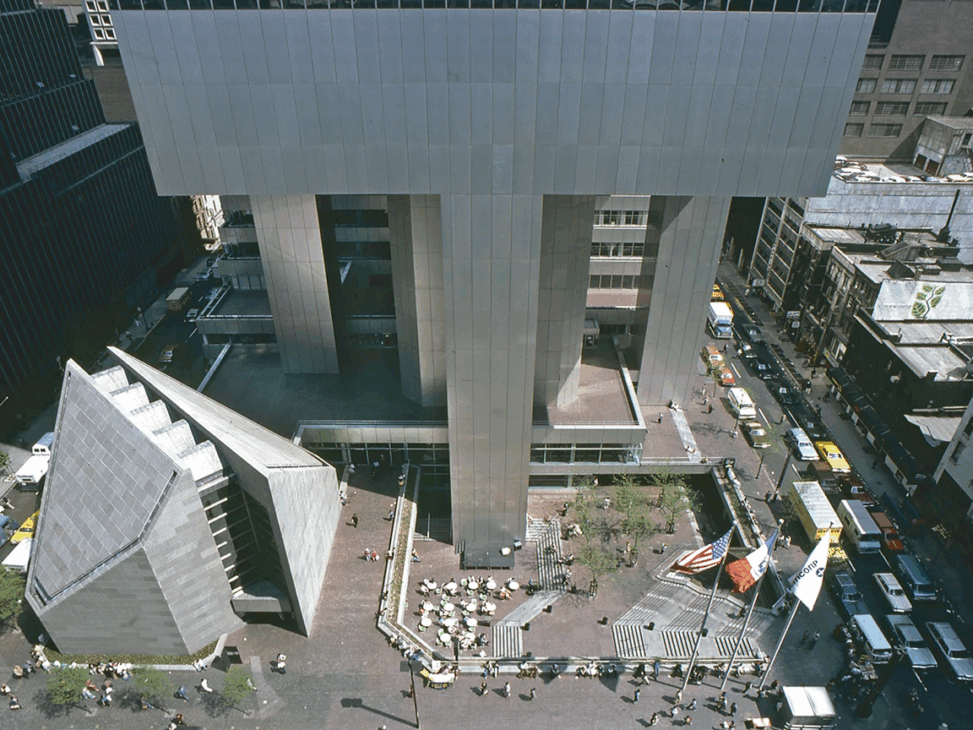
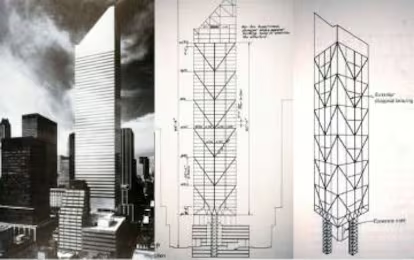
Designed to be an architectural icon, the building was erected on four pillars positioned not at the corners, but in the middle of each face, to respect the space of the historic St. Peter’s Church. This bold design generated unique challenges, solved with chevrons — giant diagonal beams — and an unprecedented 400-ton mass damping system (TMD) on top of the building. But a simple change from welds to bolts compromised everything.

A Bold Engineering Decision: Pillars in the Middle, Diagonal Beams, and Giant Damper on Top
The Citicorp Center was erected based on a radical design. To preserve the historic church at ground level, the four main pillars of the skyscraper were moved to the center of each side, leaving the corners suspended. This required complex engineering, led by William LeMessurier, who designed the building with diagonal structures — called chevrons — capable of distributing wind and gravity forces to the central pillars and a robust central column.

To control the building’s sway, LeMessurier innovated by installing a tuned mass damper (TMD) — a 400-ton concrete block floating on oil at the top of the building. This system, used in bridges and ships, had never been applied to a skyscraper. The TMD reduced the building’s movement by up to 50% on windy days, providing comfort and safety to occupants.
Everything seemed to work perfectly. Citicorp was inaugurated in 1977 with pomp, media praise, and architectural awards. But less than a year later, a simple question from a student would change everything.
The Fatal Mistake: Diagonal Winds, Loose Bolts, and the Real Risk of Collapse
During a technical discussion with an engineering student, LeMessurier realized that the original calculations did not account for diagonal winds — known as “quartering winds.” Upon redoing the simulations, he discovered that these winds generated a load 40% greater than expected and that the bolts replacing the welds were insufficient to withstand the force.
Worse yet: the safety standards applied to the design had been underestimated. In some structural joints, 14 bolts would be necessary to safely support the expected loads — but there were only four. The most fragile point was the 30th floor. If one of these connections failed, the building would collapse like a domino of steel and concrete.
The situation was desperate. Each year, there was a 1 in 16 chance of a storm with winds strong enough to topple the building. A hurricane like Belle, which passed by New York the previous year, would be sufficient. LeMessurier faced the greatest dilemma of his life: stay silent and hope for the best, or confess and try to save lives — risking his career.
Project Serene: Secret Operation Saved Thousands in Manhattan Without Anyone Knowing
LeMessurier chose to take action. Along with Citicorp, he devised an ultra-secret repair plan: “Project Serene.” Every night after working hours, teams of welders would enter the building, remove internal walls, and apply 2-inch thick steel plates to the compromised joints. They would then restore the finish as if nothing had happened.
More than 200 joints were repaired, prioritizing the most critical floors. No employees were informed. Not even the public or the press. Coincidentally (or providentially), all the newspapers in New York were on strike during that period. The entire city escaped panic — and disaster.
But fate would test the plan. In September 1978, Hurricane Ella formed and headed straight for New York. The city was about to begin evacuating 10 blocks. The building could collapse onto other buildings, causing a chain reaction. But, miraculously, the hurricane veered out to sea. The building was saved — along with thousands of lives.
Media Reaction: Absolute Silence During the Crisis
Despite the seriousness of the structural issue and the imminent risk of collapse, the media reaction was virtually nonexistent, and this was not by chance.
Throughout the period of the secret repair of the Citicorp Center, the major newspapers in New York were on strike, preventing immediate disclosure of the case. This information blackout helped ensure that the operation conducted by William LeMessurier and Citicorp proceeded without generating public panic.
The first time the episode came to light in detail was nearly two decades later in a 1995 report published by the magazine The New Yorker, revealing to the world the crisis that almost no one knew existed.
LeMessurier’s Legacy: From Fatal Mistake to Global Ethics Lesson in Engineering
The repairs discreetly finished in October 1978. The building gained new strength and could, according to LeMessurier, withstand a storm that occurs only once every thousand years. But the secret would last nearly two decades. Only in 1995 did a report from The New Yorker bring the story to light. Far from being condemned, LeMessurier was acclaimed for his courage and ethics.
Today, the story of the Citicorp Center is taught in civil engineering courses around the world as an example of professional ethics, responsibility, and technical integrity. The building, now called 601 Lexington, stands tall — with its central pillars, its famous mass damper, and above all, the memory of a difficult choice made by an engineer who chose to save lives, even when faced with his own abyss.
What do you think of this incredible story? Did you know about this case? Comment below and share with your engineer, architect, and structure enthusiast friends! This is one of the most impressive stories in modern engineering.








Soube que a descoberta do erro foi por uma estudante de engenharia, que estranhou o fato de não ver os cálculos contra ventos e indagou à empresa de engenharia. Esta foi rever os cálculos e confirmou o erro. Ética e conhecimentos para corrigir o erro são base na engenharia.
Meu cérebro deve funcionar ao contrário do da maioria que comentou aqui…não consigo encontrar a ética quando o risco foi desafiado.
Exelente profissional espero que sirva de exempto