





 Portuguese
  English
  Spanish
  5 min of reading
  0 comments


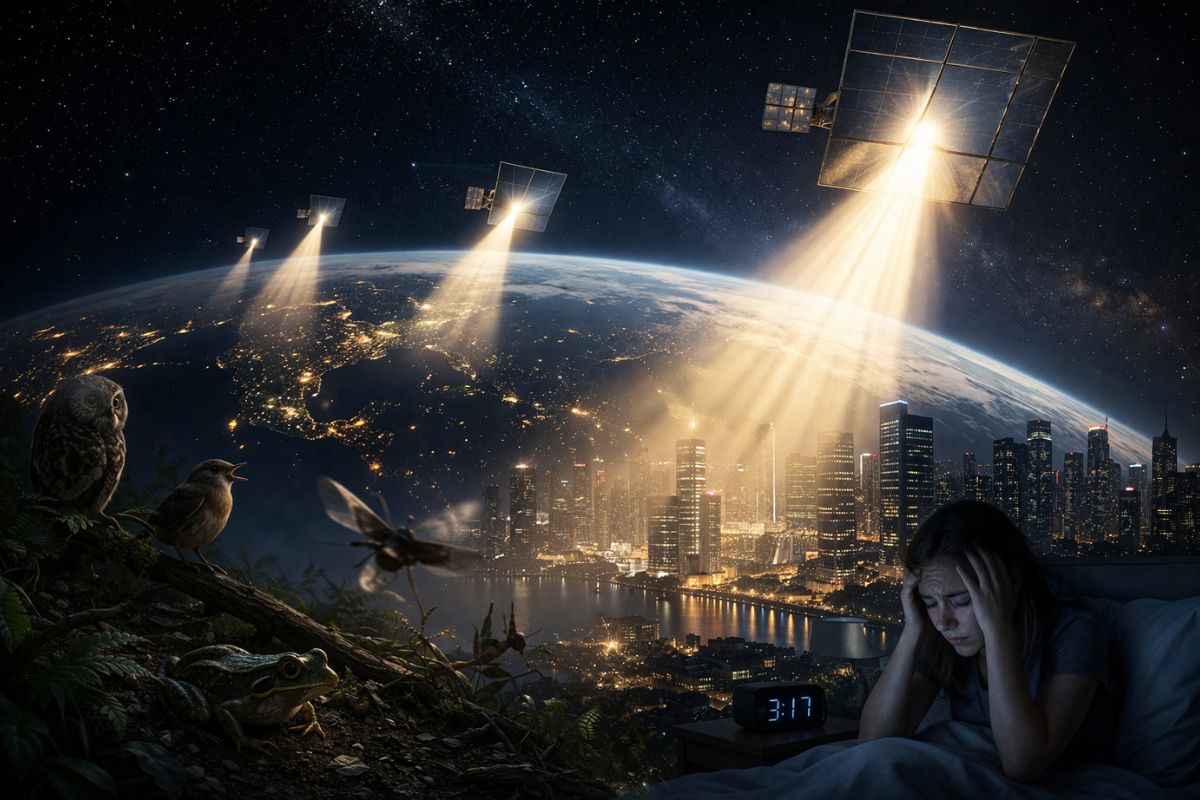
The reflective mirror satellites from the startup Reflect Orbital can create beams of light the size of entire neighborhoods, varying from the brightness of a full moon to almost midday light, while SpaceX wants to launch up to 1 million satellites, and scientists warn that the night sky has already become 10% brighter.
Projects to install satellites with reflective mirrors in Earth’s orbit to illuminate specific areas at night are being analyzed by the Federal Communications Commission of the United States. Presidents of four international scientific societies, representing about 2,500 researchers, sent letters to the agency warning that these satellites would represent “a significant alteration of the natural nighttime light environment on a planetary level.” In parallel, SpaceX proposed to launch up to 1 million satellites to form an orbital network for artificial intelligence processing.
According to information from the portal one planet, the warnings are not theoretical. Studies cited by environmental organizations indicate that the current number of satellites has already increased the diffuse brightness of the night sky by about 10%, with projections of continuous increase until 2035. Scientists state that eliminating the natural darkness can interfere with the biological clock of humans and animals, affect hormonal production, disrupt migratory routes, harm plants, and compromise marine organisms all on a global scale and in ways that science still cannot fully predict.
What the mirror satellites from Reflect Orbital intend to do
The startup Reflect Orbital proposes to use satellites equipped with mirrors capable of redirecting sunlight to specific areas of Earth at night.
-
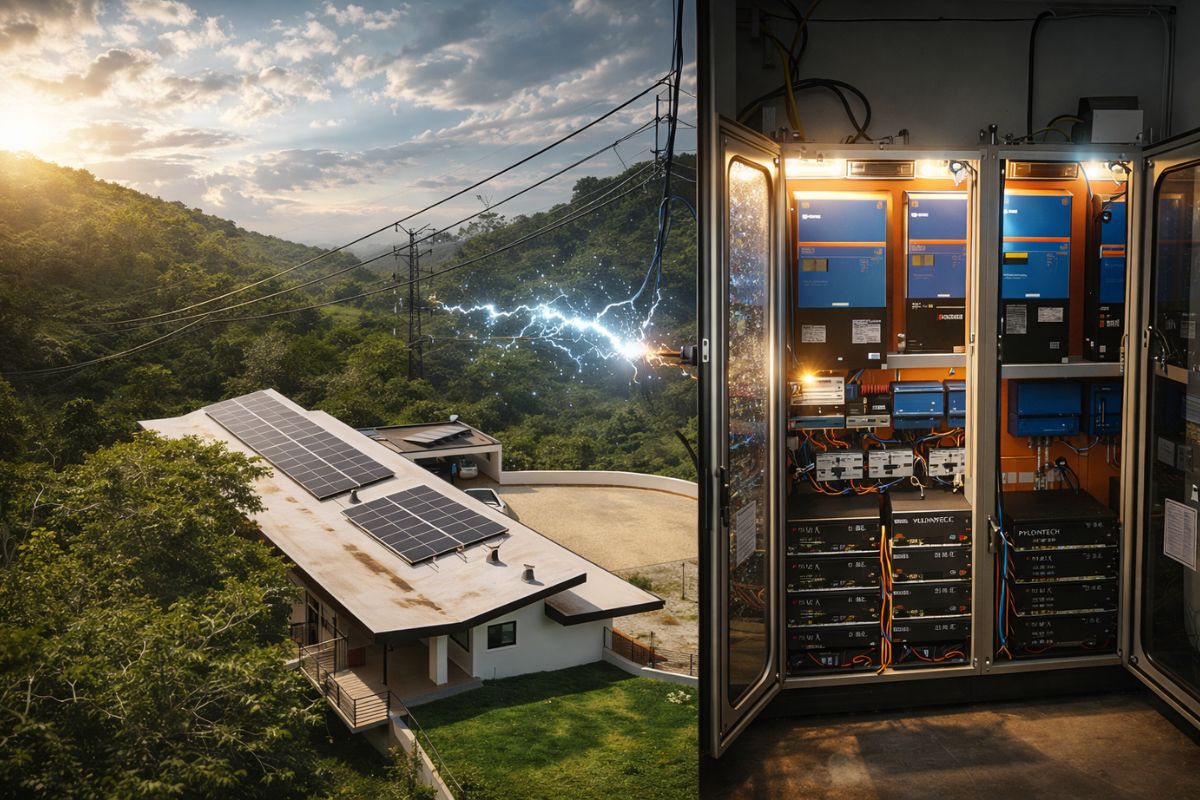
Blackout in the interior of SP? Off-grid hybrid solar system takes over in 16–20 ms without blinking: Victron integrates Fronius on-grid, 30 kWh Pylontech, and 15 kVA three-phase, limits injection, and helps avoid the B wire.
-
Satellite images show heavy clouds and a cold front advancing: a cyclone brings storms from RS to SP, winds of up to 100 km/h, and an alert from Inmet, today with a risk of hail; Recife remains flooded.

-
China has started testing humanoid robots to control its border with Vietnam, and the company behind the project already plans to deliver 10,000 units by 2027 to expand their use across the country.

-
A cave in Morocco reveals jaws, teeth, vertebrae, and a femur dating back 773,000 years that may belong to archaic humans close to the ancestors of Homo sapiens, potentially changing what was known about the origin of our lineage in Africa.

The lighting could cover regions up to 6 kilometers wide and vary in intensity from the brightness equivalent to that of a full moon to something close to midday light. It is a technology that, if implemented, would turn night into day at any point on the planet under the beam of the satellites.
The company argues that the satellites would have practical applications: increasing solar energy generation during nighttime, illuminating infrastructure works, and supporting rescue operations in emergency situations.
These are arguments with economic and humanitarian appeal, but they do not address what happens when darkness is eliminated from an ecosystem that has evolved over billions of years in cycles of light and shadow.
The concept is still under analysis by the FCC, and the decision of the American regulatory body will have consequences that go far beyond the borders of the United States.
SpaceX’s plan to launch 1 million satellites into orbit
In parallel to the Reflect Orbital project, SpaceX proposed something even more ambitious: to launch up to 1 million satellites to create an orbital network focused on artificial intelligence processing.
The idea is to transfer part of the computational work from terrestrial data centers to space, reducing energy consumption on the surface. If approved, the project would multiply the number of artificial objects in low Earth orbit by hundreds.
The problem is that each additional satellite contributes to the diffuse brightness of the night sky. In some locations, artificial objects in orbit may already exceed the number of stars visible to the naked eye, and with 1 million additional satellites, the night as we know it may simply cease to exist in much of the planet.
Scientists who wrote to the FCC are asking the agency to require a complete environmental assessment before any approval and to establish limits on the artificial brightness produced by satellites.
What science says about the risks of eliminating darkness with satellites
Geneticist Charalambos Kyriacou from the University of Leicester summarized the concern directly: “We are saying: think before moving forward with this, because it may have global implications, including for food security. Plants need the night.
You can’t just eliminate it.” The mirror satellites would not only illuminate urban areas but also affect forests, oceans, agricultural fields, and any ecosystem within their reach.
Researcher Tami Martino from the University of Guelph goes further. According to her, the central point is not the intensity of light compared to the moon, but the extreme sensitivity of living organisms.
“Circadian systems respond to light levels far below what humans perceive as bright. If the night sky becomes permanently brighter due to satellites, the effects may spread through ecosystems in ways still unknown.”
Nocturnal animals that rely on darkness to hunt, reproduce, and migrate would be directly affected. Pollinating insects that operate at night could have their cycles disrupted, with cascading consequences for agriculture.
The impact of satellites on human health and the sleep of billions of people
Letters signed by entities related to sleep studies highlight that the deregulation of the circadian rhythm caused by the elimination of darkness is not a minor inconvenience.
Continuous exposure to nighttime light is associated with serious health problems: sleep disorders, hormonal changes, increased risk of obesity, diabetes, depression, and even cancer. Satellites capable of illuminating entire regions at night would amplify these risks for populations currently living in areas with still relatively dark night skies.
The human body needs darkness to produce melatonin, the hormone that regulates the sleep-wake cycle. If satellites make the sky permanently brighter, billions of people may have their sleep chronically disrupted without even knowing the cause.
Scientific organizations are asking the FCC to treat the issue with the same seriousness it treats air or water pollution because light pollution on a planetary scale, caused by satellites, could be the next environmental crisis that no one saw coming.
Do you think illuminating the Earth at night with satellites is progress or a threat? Should there be limits on what companies can do with the night sky? Let us know in the comments.










Seja o primeiro a reagir!