





 Portuguese
  English
  Spanish
  5 min of reading
  13 comments


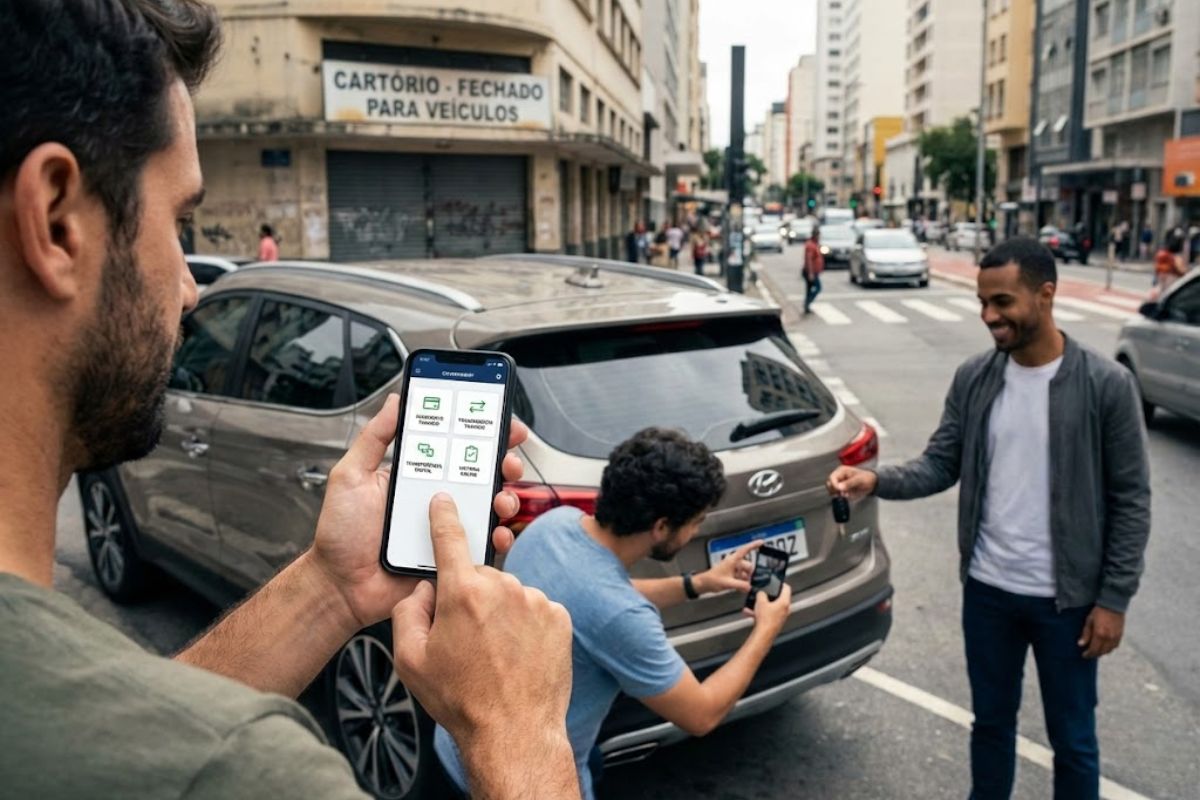


New Car Buying and Selling Rule Promises to Eliminate the Need for Notary and Move the Entire Process to the Digital Transit Wallet App, with Payment Blocked Until the Document Transfer, Self-Inspection by the Owner, and a Unified System Across All State Departments in the Country.
The rules for buying and selling cars in Brazil are set to undergo a digital shift starting in 2026, when the Ministry of Transport plans to launch a national transaction model for private individuals to complete directly via mobile, without the need for a notary and with enhanced security for buyers and sellers.
The forecast was detailed by Executive Secretary George Santoro in an interview with EXAME Infra, explaining that the new system is expected to launch between January and February 2026, with payment blocked until the transfer of the document of the vehicle and the possibility of self-inspection by the owner, using technology to reduce bureaucracy.
How Car Buying and Selling Works Today
Currently, buying and selling cars between private individuals still requires a lengthy and insecure process, according to market participants.
-
The Senate approves a bill that criminalizes misogyny, hatred, or aversion towards women, and includes the crime in the Racism Law with a penalty of up to 5 years.

-
Chamber Approves Bill That Allows Pepper Spray for Women Over 16 and Imposes Strict Rules for Purchase, Possession, and Use as Self-Defense

-
Chamber Approves Law to Combat Leucaena, Fast-Growing Plant That Dominates Land and Threatens Native Species in Various Regions of the Country

-
Asset Division: Know What Cannot Be Divided in Case of Divorce


In practice, buyers and sellers usually meet, fill out the transfer document, and then go to a notary to have their signatures notarized and formalize the sale.
In this traditional model, payment is often made via check, transfer, or instant payment before all documentation is in order.
Buyers and sellers find themselves in a sort of “gray area,” where the money may have been transferred, but the vehicle transfer has not yet been completed at the State Department, opening the door for conflicts and distrust.
According to Secretary George Santoro, this reality is viewed as “unbelievably bureaucratic”, in addition to being inefficient in terms of safety and cost for citizens.
What Changes with the National Digital Model
The proposal from the Ministry of Transport is that buying and selling cars will almost entirely take place within the Digital Transit Wallet app, integrated with Senatran and state Departments of Transport.
The idea is that citizens can, via mobile, initiate negotiations, confirm vehicle details, register the intention to sell, and complete the transfer in a standardized way in any state.
Instead of stamps on paper and notarized signatures, the process will rely on digital verifications, with user authentication and automatic information checks.
Currently, some Departments of Transport already allow digital steps in vehicle buying and selling, but in a fragmented manner.
The federal government’s goal is to standardize the procedure for the entire country, preventing each state from maintaining its own rules and platforms that confuse drivers.
Payment Blocked Until Document Transfer
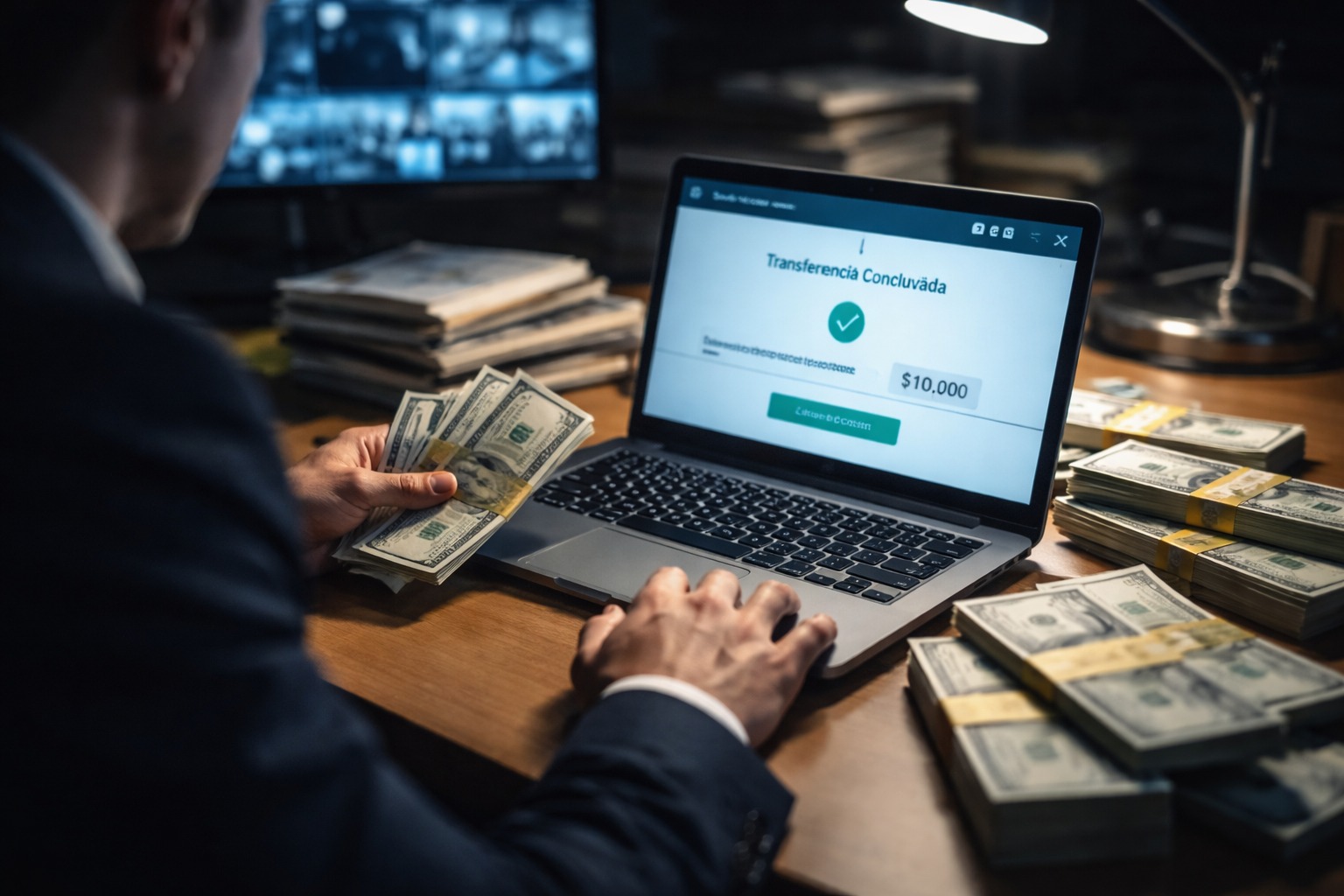
One of the central points of the new model is the payment method. According to the plan presented by Santoro, the buyer makes the payment within the system, but the amount does not immediately go to the seller’s account.
The money remains “blocked” until the document transfer is completed.
This means that while the vehicle is not officially registered in the buyer’s name, the funds remain secured in a safe environment linked to the transaction.
Once the system confirms the transfer of ownership at the State Department, the funds are released to the seller.
This kind of “digital escrow” reduces fears of fraud on both sides, as the buyer knows that they will only pay for a car that will be transferred to their name, and the seller is assured that the money is reserved for the transaction.
End of Notary Requirement and Less Bureaucracy
With the digitization of buying and selling cars, the physical visit to the notary will no longer be central to the process.
Instead, the affirmation of intent and identity confirmation will be conducted through official digital means, integrated into the traffic system.
Santoro emphasizes that “Brazil needs to use technology to reduce costs and promote social inclusion”.
By cutting down on in-person stages and paperwork, the government aims to simplify life for those living far from urban centers, who have difficulty getting around or need to resolve issues outside of traditional working hours.
Additionally, unifying the rules should reduce confusion about what documents are needed, the timeline for reporting the sale, and how to complete the transfer without multiple visits to different public agencies.
Self-Inspection of the Vehicle by the Owner
Another point that the Ministry of Transport wishes to address is vehicle inspection, a step that currently usually requires scheduling with accredited companies or State Department units.
Santoro advocates that, in many cases, the inspection could be carried out by the citizen themselves, in a self-inspection model similar to that already used by insurers when contracting auto insurance.
The logic is simple.
The driver records images and information about the vehicle via the app, sends everything to the system, and the State Department only verifies the submitted data. If something is incorrect, the self-inspection is rejected and the agency requests new records.
According to the secretary, if the insurance sector, considered conservative, already accepts this type of verification, there is no reason why State Departments cannot adopt a similar solution, as long as there are verification and punishment mechanisms in cases of fraud.
When Will the Changes Come into Effect
The changes are not yet in effect. The timeline mentioned by the government points to the launch of the system between January and February 2026, initially focusing on transactions between individuals, with an emphasis on reducing bureaucracy and increasing security.
Implementation will occur gradually, as state Departments of Transport integrate into the national system.
The buying and selling of cars will continue to operate under the current model until each state is adapted, but the goal is that, in the future, the entire process will occur digitally, with minimal paperwork and physical movement.
While final details are not yet announced in an official regulation, the message from the Ministry of Transport is clear: the era of notaries and queues to sell vehicles is numbered, replaced by a simpler, technological, and traceable process.
And you, do you like the idea of making the entire buying and selling process of cars via mobile, with payment blocked until transfer, or do you still prefer the traditional model with a notary and paperwork?







É muita burocracia mesmo, você adquire um veiculo leva em um vistoriador, paga um absurdo depois vai em um despachante paga taxas absurdas pra o governo pra so depois o veicul it pra o seu nome.
Hoje você vai fazer um seguro do veiculo tudo muito simples a vistoria.
E se
O pagamento for em espécie?
Creio que a intenção é acabar com lavagem de dinheiro também, vai ter que depositar pra fazer o pagamento digital
Gostaria de saber quanto a veículos arrematados de leilão, estou neste segmento há muitos anos e cada ano que passa a burocracia aumenta. Então havera alguma mudança que realmente traga facilidade para transferência…