





 Portuguese
  English
  Spanish
  6 min of reading
  22 comments


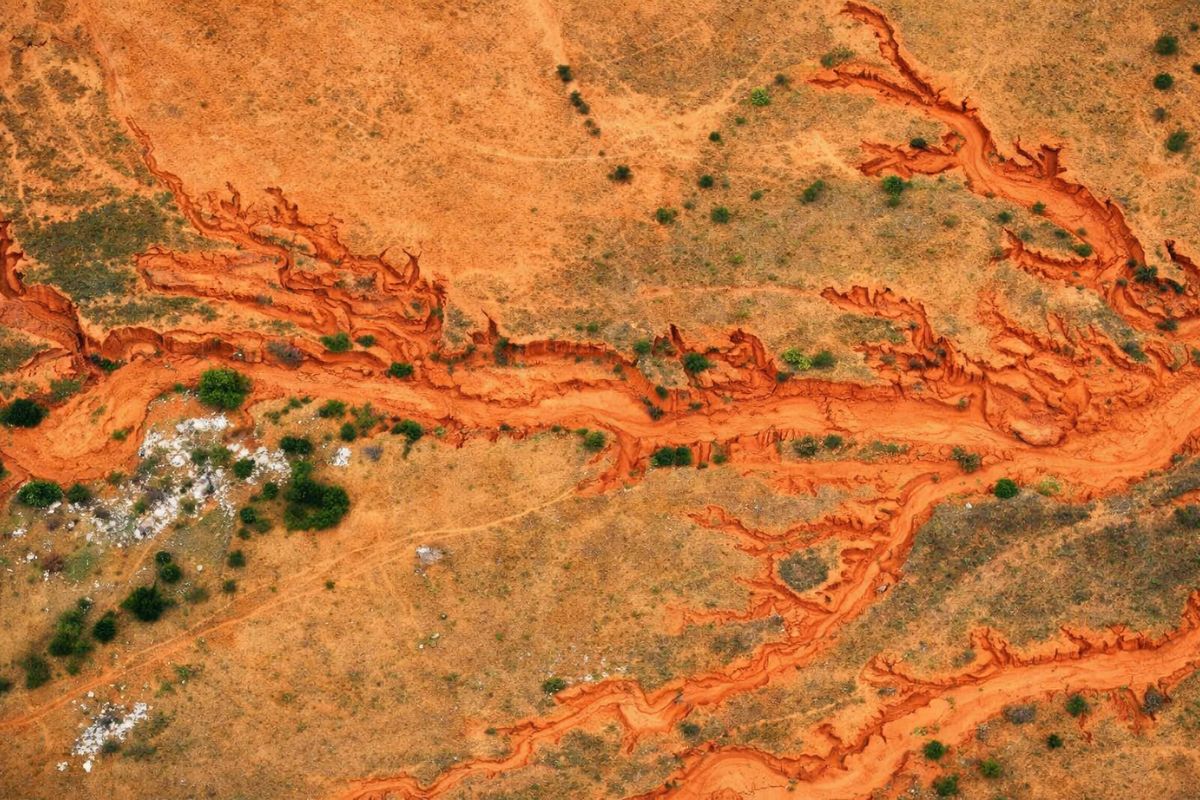


In The Drought-Stricken Region, Communities in Ethiopia Regenerate Entire Forests Without Machines, Seedlings, and Practically No Money, Just Awakening Ancient Roots Hidden Beneath The Soil and Changing The Way They Use The Land Day By Day.
These communities in Ethiopia take areas treated as dead land, devoid of vegetation and water, and transform them into slopes covered with trees, shrubs, and crops, where streams start to flow again and the soil stops cracking. In a few years, they regenerate entire forests covering about 43,000 hectares, creating vibrant ecosystems that capture the attention of the UN and enter the global radar as concrete proof that restoring degraded landscapes is possible with local knowledge, organization, and a lot of persistence.
How Communities in Ethiopia Regenerate Entire Forests Without Planting Seedlings

The first break is mental. Instead of imagining trucks carrying seedlings everywhere, the communities in Ethiopia start from a simple truth: that seemingly dry hill is not completely dead.
Beneath the hardened surface, there are ancient roots, seeds, and dormant shoots, remnants of an underground forest waiting for a chance to breathe again.
-
It took just two days of walking in the jungles of New Guinea to find the plane that historians had been searching for for 80 years: the legendary Marge still had its original red paint and the face of the woman who named the most feared fighter of World War II.

-
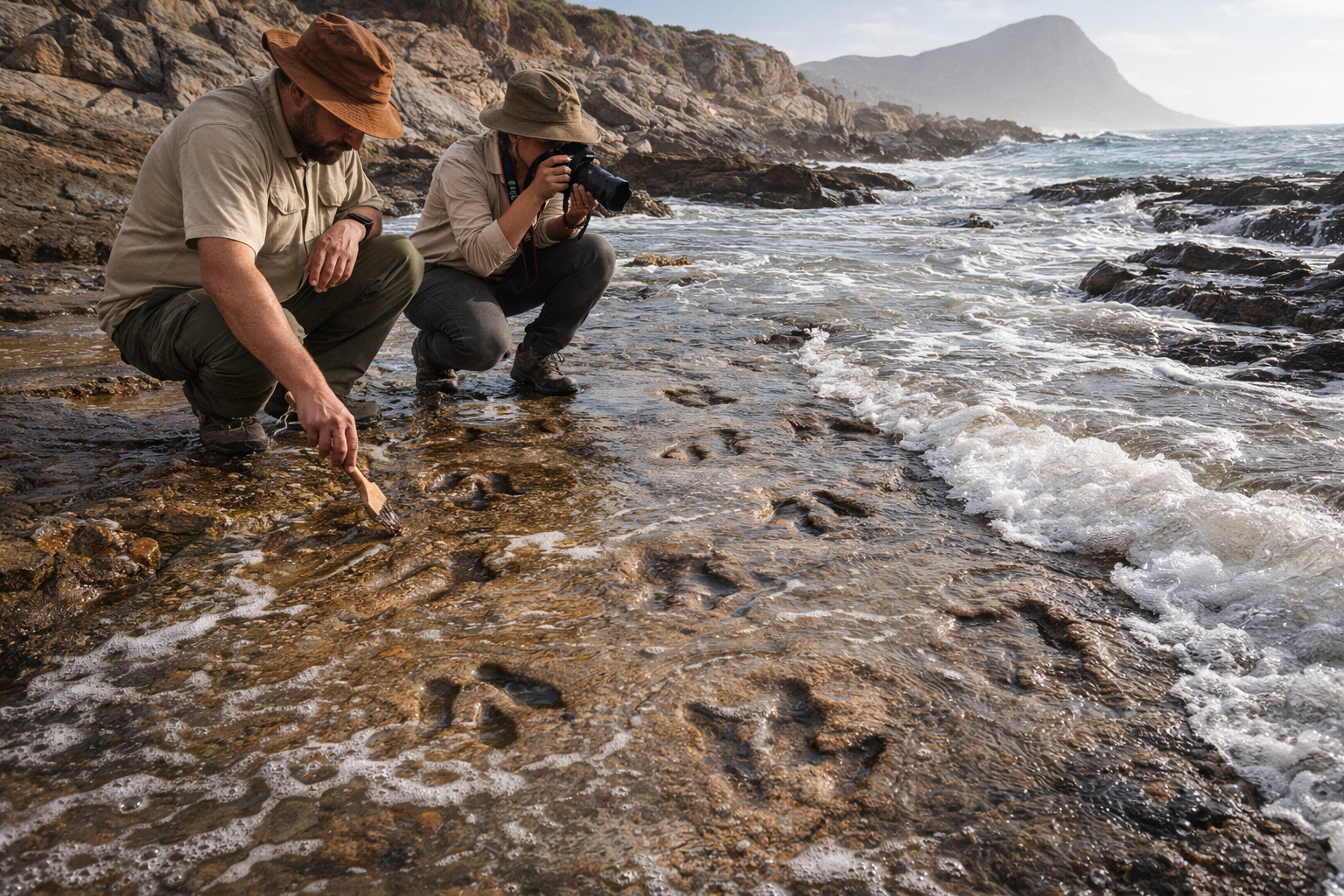
On a rocky stretch of just 40 meters in South Africa, scientists found dozens of footprints that are 132 million years old hidden beneath the tide, revealing the youngest record ever identified in the southern part of the African continent.
-
Artemis 2 makes history by bringing astronauts in a ‘fireball’ at over 40,000 km/h and 2,700 °C in an impressive reentry that challenges human limits.

-
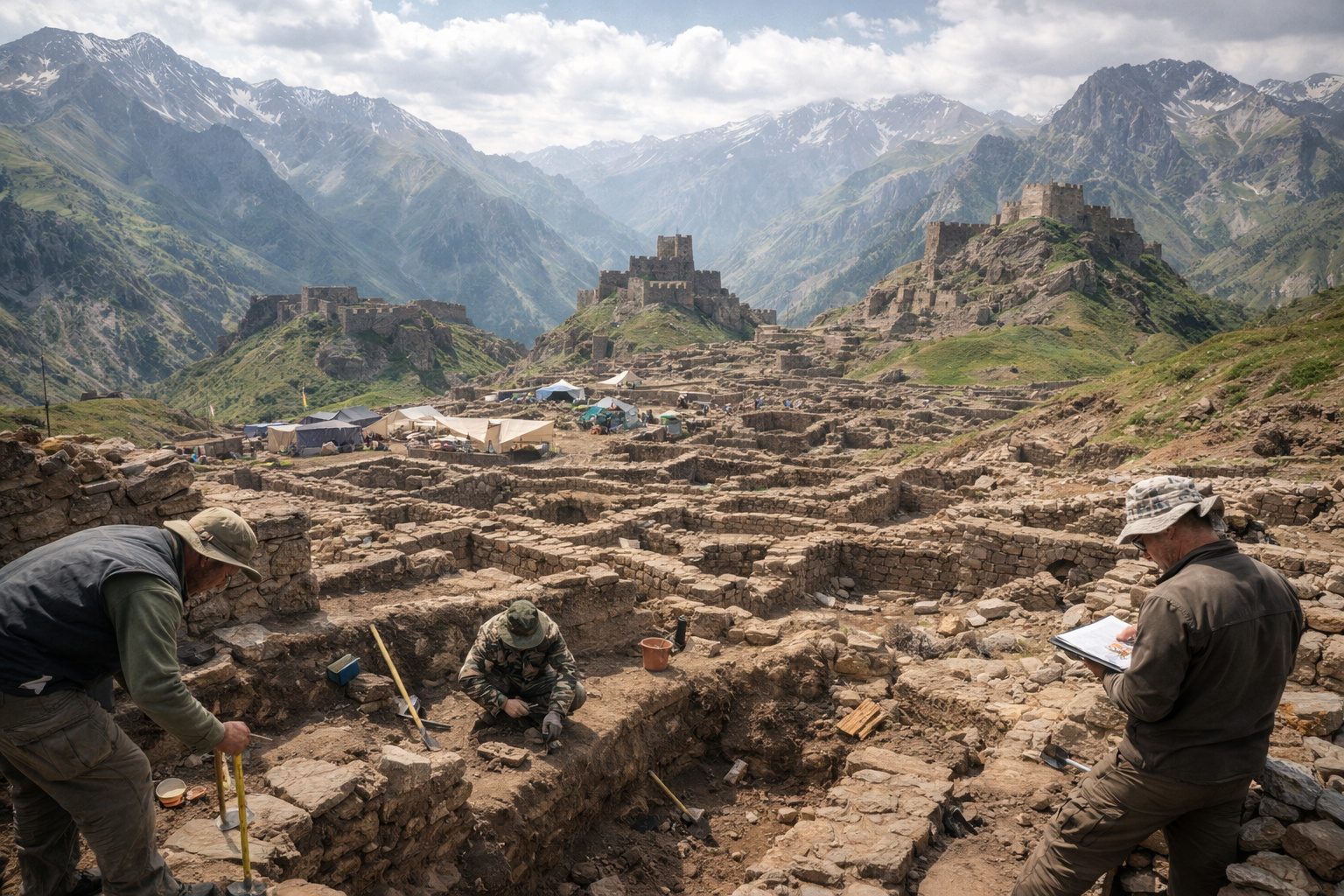
At over 2,000 meters above sea level, archaeologists have found a medieval city spanning 120 hectares with four citadels hidden in the mountains of Uzbekistan. This discovery dismantles the idea that the Silk Road was merely a passage and reveals a colossal urban center where no one imagined.
When rain falls on bare, compacted soil, the water runs off too quickly, dragging sediments and disappearing in minutes.
With the management these communities adopt, the goal is the opposite: to hold the water in place longer, breaking the rigid crust of the soil and allowing moisture to penetrate deeply, exactly where the ancestral roots can reach.
Instead of uprooting any shoot that hinders the crop, farmers start to choose which sprouts to keep, which branches to cut, and which to protect with simple fences.
In each seemingly dead trunk, they look for the skeleton of an ancient tree and transform it into a starting point for a new canopy.
This way, they regenerate entire forests without planting a single seedling, merely guiding what the soil is already capable of producing when given water and protection.
The Underground Forest That Awakens When The Water Stays
The key point is to understand that the landscape is not just what appears on the surface. In many areas of Ethiopia, deforestation has cut the trees but left a huge system of buried roots.
These roots remain alive, even without a canopy, waiting for the right combination of moisture, light, and rest from constant trampling to restart growth.
By improving water infiltration and reducing erosion, the communities create small islands of moisture that nourish this underground forest.
As the water stops running off quickly and begins to penetrate the soil profile, ancestral roots awaken and young shoots start to emerge on their own, recovering vegetation from the bottom up.
Over time, these sprouts are selected. Farmers choose some trunks per stump, prune the weaker branches, and only allow the strongest ones to grow. In a few years, old clumps transform into robust trees.
When this spreads across entire farms and various villages around, the result is visible from afar: hills that were gray and bare begin to exhibit green patches, until entire communities regenerate entire forests on a landscape scale.
From Dead Lands to 43 Thousand Hectares Restored

In the beginning, the areas under management were seen as dead lands. The cracked soil, lack of shade, and constant wind resembled a slowly expanding desert, pushing farmers away from home.
With the advance of natural regeneration, these same lands begin to retain water, hold organic matter, and make space for deep-rooted trees to stabilize the terrain.
As the canopies close, the rain stops hitting directly on the ground, the temperature near the soil drops a few degrees, evaporation decreases, and the cycle of life restarts.
Erosion plummets, fertility rises, and what was once dust becomes dark soil, with leaves, small insects, fungi, and thin roots spread deep.
In areas where the communities of Ethiopia have persisted longer, projects are already regenerating entire forests, totaling about 43,000 hectares, with mosaics of protected areas, cultivation zones, and permanent vegetation strips.
This type of regeneration is not just a beautiful landscape. It directly changes food security.
More trees mean more moisture in the air and soil, more shade for crops, more protection against strong winds, and more products to harvest, such as managed firewood, fruits, fodder for animals, and small timber.
With the fertile soil back, people have a reason to stay, care for, and defend their communities, instead of migrating out of necessity.
Water That Flows Again Where There Was Only Dust
When the communities in Ethiopia regenerate entire forests, it is not only the color of the map that changes. The water cycle also shows clear signs of recovery.
In many hills, rainwater stops turning into destructive runoff and begins to infiltrate slowly, feeding aquifers, springs, and small streams.
The result appears in the lower parts of the landscape. Regions where streams had dried start recording water flow for more months of the year, sometimes flowing all year round.
Small valleys that once accumulated dust now shelter green bands of permanent vegetation, with tall trees on the slopes and more delicate crops in protected areas.
This new availability of water makes agriculture less risky. Even in years with irregular rainfall, soil with trees and deep roots can release moisture gradually, cushioning climatic extremes.
The restoration of 43,000 hectares is not just a number, but a real buffer against droughts, sudden floods, and crop losses that were once almost inevitable.
The Role of Communities and UN Recognition
None of this happens by distant decree. Those who truly regenerate entire forests are the communities in Ethiopia, farmer by farmer, family by family, negotiating land use rules, combining rest periods, controlling grazing, and defining where livestock can or cannot enter.
In many places, local groups take on the role of guardians of regeneration. They patrol, guide neighbors, prevent illegal logging, and ensure that selected sprouts reach adulthood.
Little by little, these initiatives that seemed small enter the radar of larger landscape restoration projects and attract the attention of international organizations.
The UN recognition comes precisely because the model proves something that seemed impossible: it is feasible to transform dead lands into living ecosystems with little financial resources, as long as the underground forest and the practical knowledge of farmers are harnessed.
Instead of relying solely on large projects, the world is beginning to look more respectfully at approaches that arise from the ground up, guided by those who live on the land every day.
What Communities in Ethiopia Teach The Rest of The World
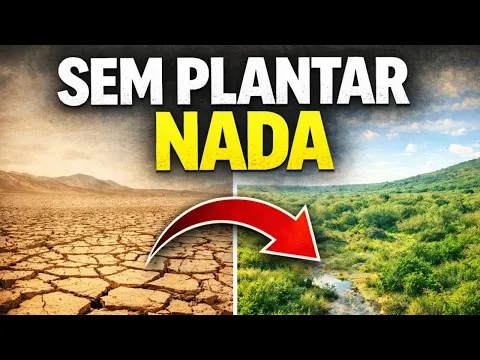

When we observe this process calmly, it becomes clear that it is not just a local story. What communities in Ethiopia do when they regenerate entire forests points a path for other regions in water crisis and degraded soil.
They show that it is possible to combine soil science, landscape reading, and collective decision-making to recover ecosystems at low cost and with high community involvement.
Instead of treating degraded areas as lost causes, the message is different. Often, it’s not that there are no trees, it’s that we fail to look at the roots that are still there, the water that could stay in the soil longer, and the agreements that could limit cutting and trampling at critical times.
What seems impossible today may just be a system waiting for the right conditions to start functioning again.
In the long run, this type of restoration changes not only the environment, but also the local economy, food security, and people’s relationship with the land.
Instead of leaving to seek opportunities elsewhere, many farmers find a better future exactly where they were, now in a territory that has returned to have trees, water, and life.
And you, do you believe that the way communities in Ethiopia regenerate entire forests could inspire similar projects in other regions of dead lands you know?







Iran does the opposite due to its death cult religious heritage. It can survive only by de-islamization as Germany recovered by denazification.
Yes! Save those stumps and nurture the barren plains with wise management and water recovery on a local level. Proof that bigger is NOT better, and that LESS is BEST!
And sharing is caring and there is enough to go around!
Fantastic and the most important; normal people are in charge!