






 Portuguese
  Spanish
  4 min of reading
  0 comments


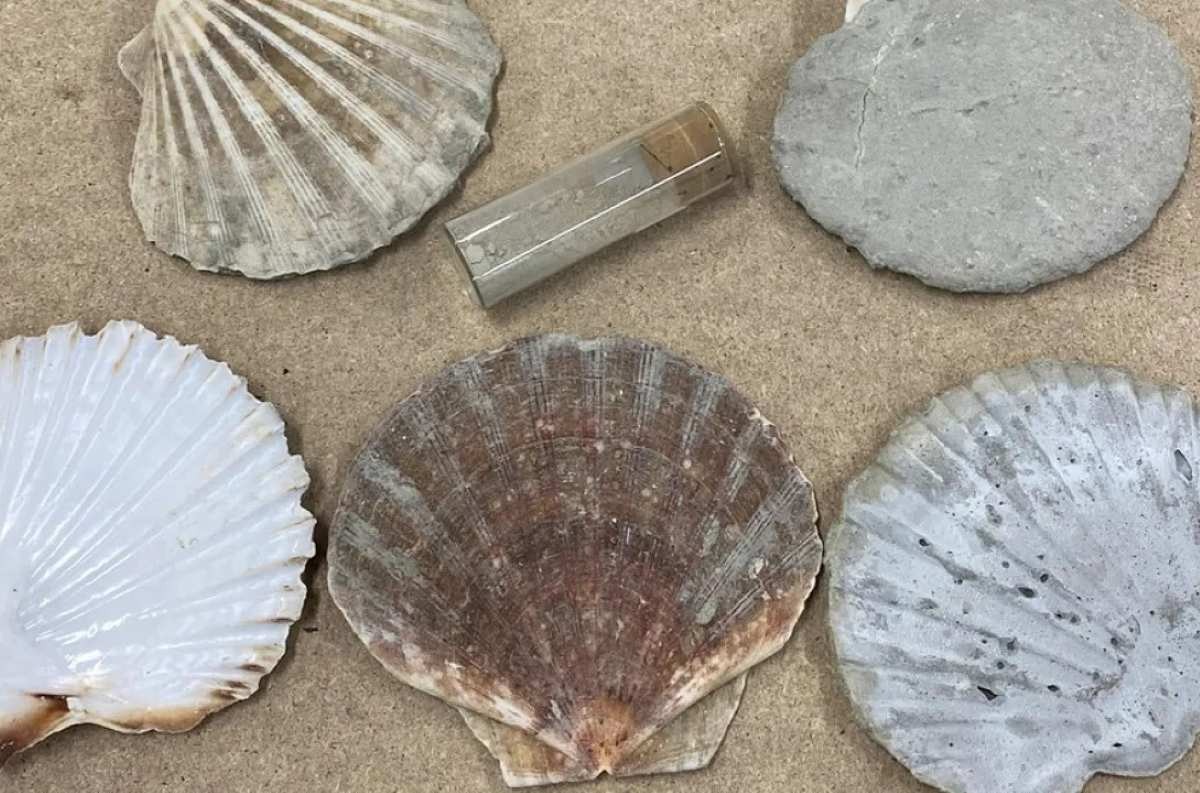
University Of East London Study Demonstrates That Finely Ground Sea Shells Replace Up To 33% Of Cement, Reduce CO₂ Emissions By 36%, And Maintain Required Strength For The Construction Industry
Researchers from the University of East London have demonstrated that marine shells can replace up to 33% of cement in concrete, reducing CO₂ emissions by 36%, maintaining required strength for the industry, and paving the way for large-scale industrial applications.
The study reveals that shell waste, especially finely ground scallops, can simultaneously act as a partial substitute for cement and filler material, preserving structural performance within accepted technical limits.
According to the team, the new material presents a lower carbon footprint and makes use of a widely discarded waste, transforming coastal waste into a productive input for a sector responsible for nearly 7% of global emissions.
-
They wanted artificial intelligence, but they drained the water from a village in Mexico: the water consumption of data centers caused a hepatitis outbreak, and big tech companies Amazon, Microsoft, and Google were forced to halt billion-dollar projects.

-
System created to save lives in disasters turned ‘against’ Brazilians overnight: a hacker attack sent out a false alert from Civil Defense with the word “misantropia” that went off on the phones of half the country, even in silent mode, and took down the Cell Broadcast.
-
In the cold desert of Ladakh, where it hardly rains, engineer Sonam Wangchuk created the ice stupa, a tower that freezes winter water and stores it for irrigating crops in the spring, a simple engineering feat that mimics nature.
-
For the first time in history, solar and wind energy generated more electricity than natural gas worldwide in a single month, April 2026, a milestone in the energy transition that shows renewable sources taking the lead in the global electric system.




The developed concrete maintains adequate mechanical strength and, in some tests, showed improvement in the internal structure of the material, attributed to the high calcium carbonate content present in marine shells.
Dr. Ali Abass, project leader at the University of East London, stated that the solution utilizes a common and undervalued resource, capable of alleviating a significant portion of the emissions associated with cement production, according to researchers’ statements.
This discovery comes at a time of increasing pressure on the construction industry, which is struggling to reduce emissions at the speed recommended by scientific studies aimed at addressing the climate crisis.
CO₂ Reduction And Industrial Limits
The tests confirmed that partial substitution does not significantly compromise the performance required by the industry, maintaining technical standards compatible with conventional structural applications in building and infrastructure works.
The real CO₂ savings occur primarily during the cement production phase, an energy and emissions-intensive step, making the alternative attractive for supply chains looking to reduce environmental impact.
The study highlights that this is not a distant experimental solution, but a simple, scalable circular idea with potential for integration into existing industrial processes.
Regulatory Pressure And Circular Economy
The research fits into a scenario of stricter regulations on emissions throughout the life cycle of materials used in construction, especially in European countries.
United Kingdom, Netherlands, and Denmark already require detailed measurement of carbon footprint from extraction to end of life of materials, increasing interest in lower environmental impact mixtures.
In this context, any solution that reduces CO₂ without raising costs becomes highly attractive to construction companies, engineering firms, and public managers involved in infrastructure and housing projects.
The use of marine shells also aligns with circular economy models, where waste from one sector is repurposed as an input for another, reducing disposal and extraction of natural resources.
European ports like Vigo and Brest are already testing the valorization of marine waste, primarily aimed at agricultural use, while concrete expands the industrial reach of this approach.
Global Scale And Potential Impact
Global cement consumption is around 4 billion tons per year, a number that highlights the potential impact if a fraction of this volume adopts mineral substitutes derived from waste.
If applied partially on a large scale, the accumulated emissions savings would be significant, without relying on complex or high-energy-cost technologies, just on efficient repurposing.
The researchers emphasize that the proposal is not a magic solution, but a direct way to utilize an existing resource that is currently discarded without relevant industrial use.
Bridge To Industry And Next Steps
The next challenge lies in validating the material in real construction projects, a step considered essential to build the sector’s confidence and enable commercial adoption.
Some European construction companies are already testing alternative mineral additives to reduce the carbon intensity of their mixtures, creating a favorable environment for incorporating shells.
The logistics are seen as viable, as marine waste is concentrated in ports and seafood processing factories, allowing relatively stable local supply chains.
Cost is also closely monitored. Although processing the shells requires energy, the fact that they are a low-value waste keeps the solution competitive and potentially advantageous.
The research was published in the journal Construction Materials, reinforcing that relevant advances can emerge from materials previously considered irrelevant or without significant structural application.
Experts point out that repurposing marine limestone can complement other climate mitigation strategies, extending the lifespan of infrastructure and reducing impacts from traditional mining.
Among the practical applications discussed are public projects with carbon reduction goals, local incentives for collecting marine waste, and the development of specific technical standards for material certification.





-

1 person reacted to this.