





 Portuguese
  English
  Spanish
  4 min of reading
  0 comments


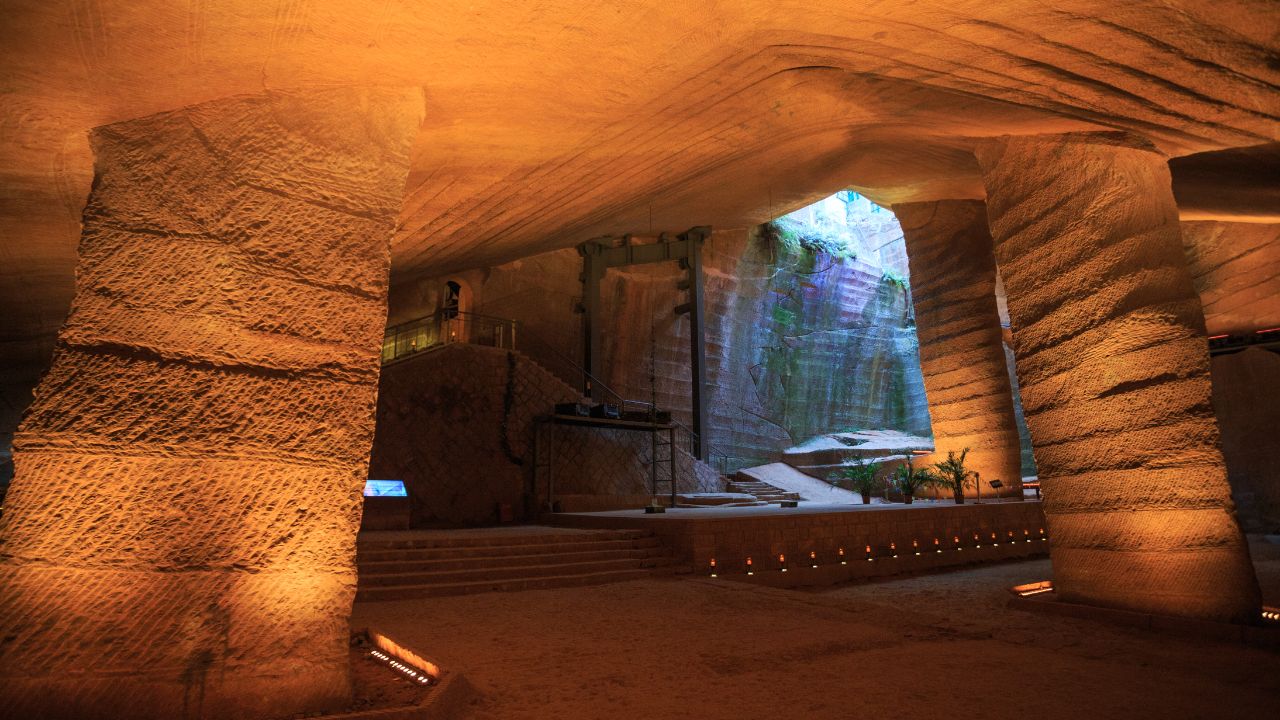
What Seemed to Be Simple Bottomless Ponds in Longyou County Revealed a Colossal Engineering Work That Challenges History and Modern Physics.
According to information compiled by the portal Fatos Desconhecidos, the history of modern archaeology was accidentally rewritten in 1992, in a small Chinese village called Shiyan Beicun. It all began with the curiosity of Wu Anai, a local farmer who, intrigued by the legend of “bottomless ponds” used for generations for subsistence in Longyou County, decided to investigate what really existed beneath the surface. The motivation arose after catching a fish weighing nearly 8 kg, which led the locals to deduce that, to support such life, the ponds would need monumental space.
What followed was an operation that unveiled one of the greatest enigmas of the ancient world. After convincing his neighbors and draining the water for 17 continuous days, Wu Anai found not just the bottom of a lake, but the entrance to a forgotten subterranean world. The structures found in Longyou County date back over 2,000 years and exhibit a level of architectural sophistication that experts believe should not have been possible at the time, turning the region into an epicenter of scientific debates that persist to this day.
Wu Anai’s Bet and the Revelation of the Stairs
The decision to drain the ponds was initially seen as a crazy idea by many residents. The five rectangular ponds were vital for the community: they served for drinking, washing clothes, irrigating crops, and fishing. However, Wu Anai’s curiosity was stronger. After gathering money from neighbors to buy a water pump, the draining began. Initial disbelief turned into astonishment when, in less than a week, the water level dropped enough to reveal rigid structures.
-
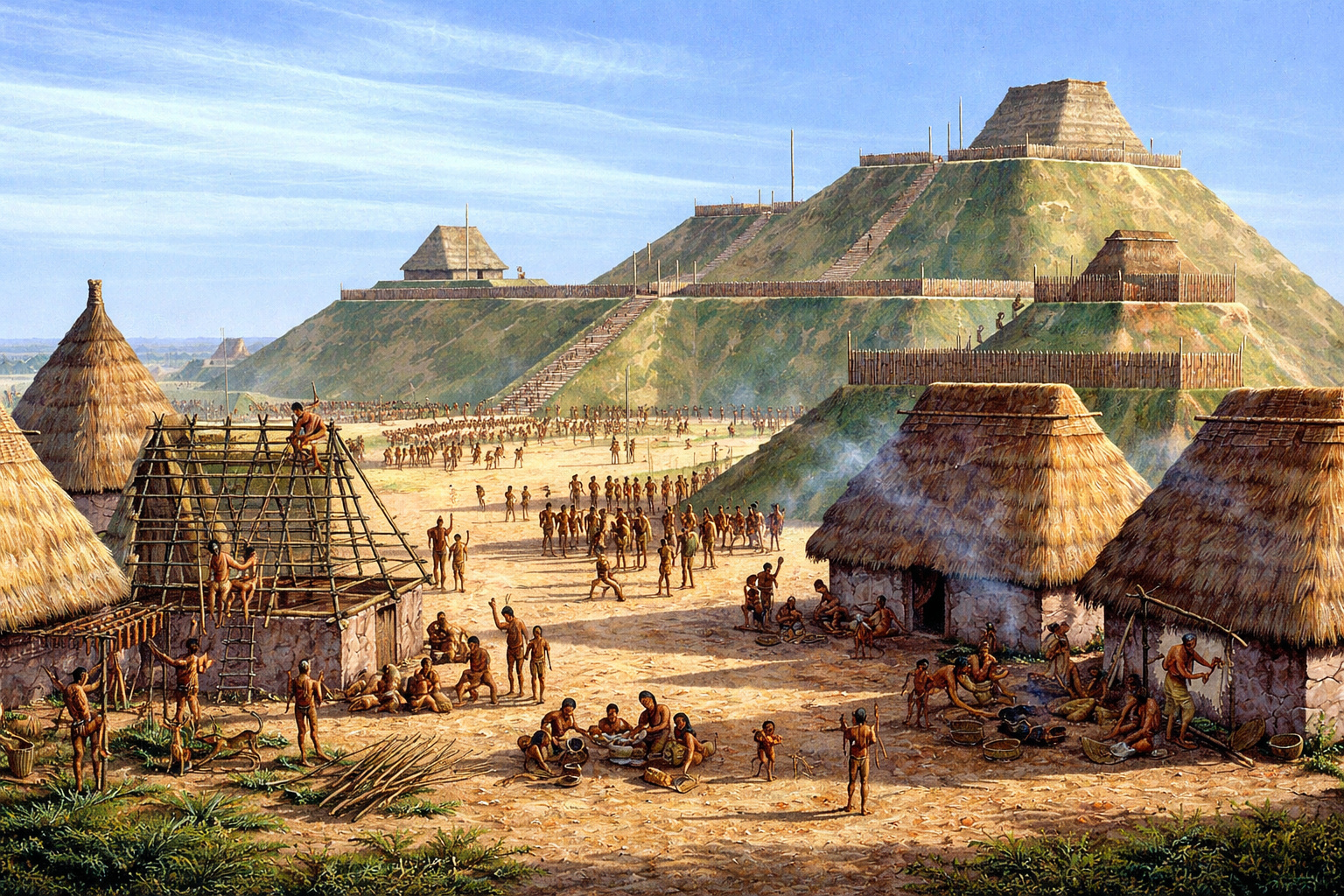
With over 14 million baskets of earth moved, an ancient North American metropolis built a monumental pyramid of 30 meters and established a city with 20,000 inhabitants nearly a thousand years ago.
-
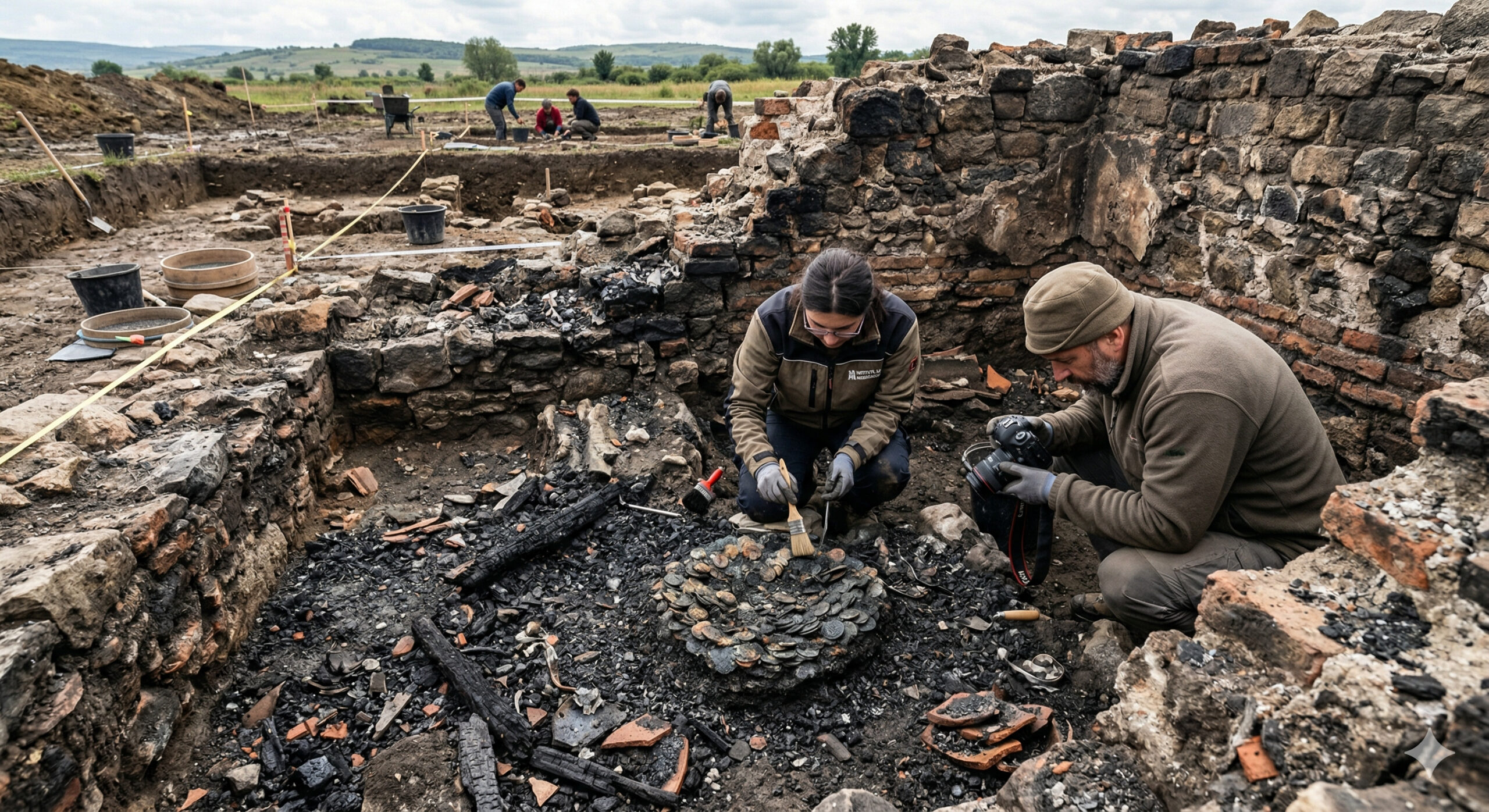
A 1,900-year-old treasure emerges from a Roman house destroyed by fire and sealed since antiquity in Romania, with coins and metals fused among the ashes.
-
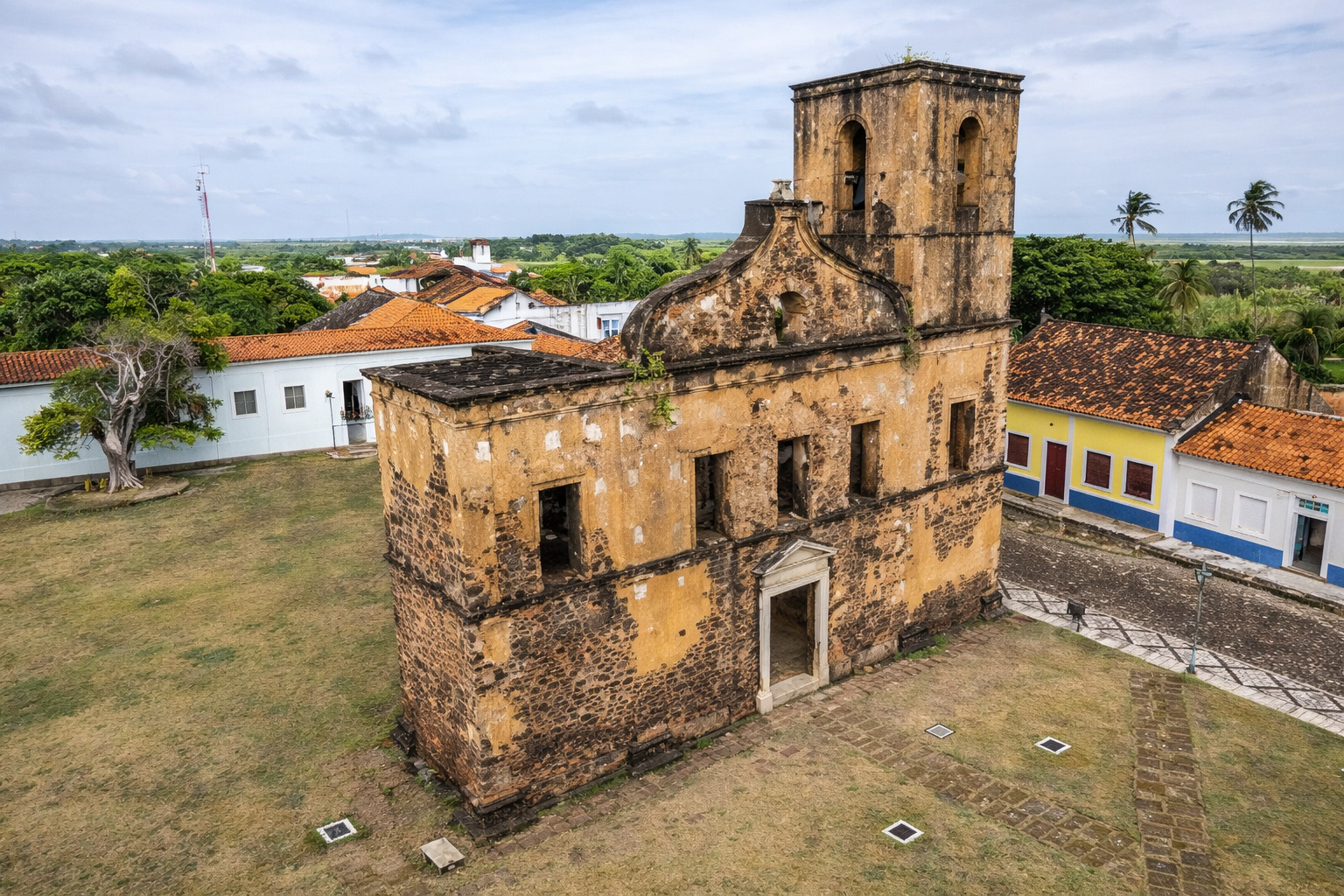
The Brazilian colonial city that stopped in time and shares territory with a rocket launch base.
-
79-year-old woman challenges limits, visits 193 countries in the world after 56 years of planning and reveals the behind-the-scenes of a global journey that few have managed to accomplish.


They were not natural formations. What emerged from the murky water were stairs precisely carved with millimeter accuracy, with perfect angles made by human hands. As the water receded, the certainty that it was something artificial grew. When Wu Anai, armed only with a flashlight, descended the slippery steps coated with millennia-old slime, he encountered a huge subterranean hall. The discovery in Longyou County revealed massive stone columns supporting a 30-meter-high ceiling, and tool marks indicated intentional and colossal work.
An Impossible Engineering for Ancient Times


The magnitude of the discovered complex shocked the scientific community. What Wu found was only part of a system of 24 distinct caves, spread across a compact area. Subsequent analyses indicated that about one million cubic meters of stone were removed to create these chambers. To put this into perspective, this would be enough to fill around 400 Olympic-sized swimming pools. However, the great mystery lies in the precision: the walls, ceiling, and pillars have parallel and uniform grooves, almost decorative, that required advanced chiseling techniques.
Beyond aesthetics, the structural engineering is perplexing. The caves are not interconnected; they are separated by walls of rough rock that, at some points, are only 50 centimeters thick. Experts say that excavating multiple neighboring chambers underground, in total darkness, while maintaining that level of separation without breaking the walls, is a theoretically impossible task for the technology of the Western Han Dynasty (circa 230 B.C.), the estimated period of construction. The drainage system and the inclination of the walls show a planning that ensured the integrity of the caves for over two millennia.
The Silence of Records and the Unexplained Anomalies
Ancient China is famous for its meticulous maintenance of historical records, but, curiously, there is not a single mention of the construction of these caves in ancient texts or local legends. A project that would require, according to modern calculations, at least 1,000 workers operating day and night for six years, left no documentary traces. Some researchers suggest that records may have been deliberately erased by an emperor’s order, keeping Longyou County under state secrecy.
Other physical anomalies deepen the mystery. There are no traces of the excavated rock anywhere in the region; it is as if the extracted material vanished. Additionally, in an era before electricity, lighting would have been done with torches, which would inevitably leave soot marks on the ceilings. However, there are no signs of soot in the caves. How the workers managed to carve such precise details in the deep darkness of the underground remains a mystery that neither geologists nor archaeologists can answer.
Theories About the Purpose and Current Legacy
In light of the lack of clear evidence, theories about the functionality of the Longyou County caves multiply. The absence of funerary artifacts or signs of habitation weakens hypotheses that they were tombs or subterranean palaces. A plausible theory suggests that they could be gigantic water cisterns, given the design, but the decorative complexity seems excessive for a simple reservoir. Another possibility, that they were quarries, is refuted by the absence of rock debris nearby.
Today, the site is revered by many in China as the “ninth wonder of the ancient world.” Only one of the caves is open to tourism, showcasing sculptures of a horse, a fish, and a bird, whose original dating is still debated. Even with international symposiums bringing together global experts, such as the one held in 1999, the silence of the stones remains. The mystery discovered by farmer Wu Anai continues to be one of the greatest gaps in understanding human history and ancient engineering.
In light of a work that required the removal of one million cubic meters of stone without leaving traces, what is your theory? Do you believe it was a lost technology or something deliberately kept secret? Share your opinion in the comments; we want to read the best hypotheses.







-

-

-

5 pessoas reagiram a isso.