





 Portuguese
  English
  Spanish
 5 min of reading
  3 comments


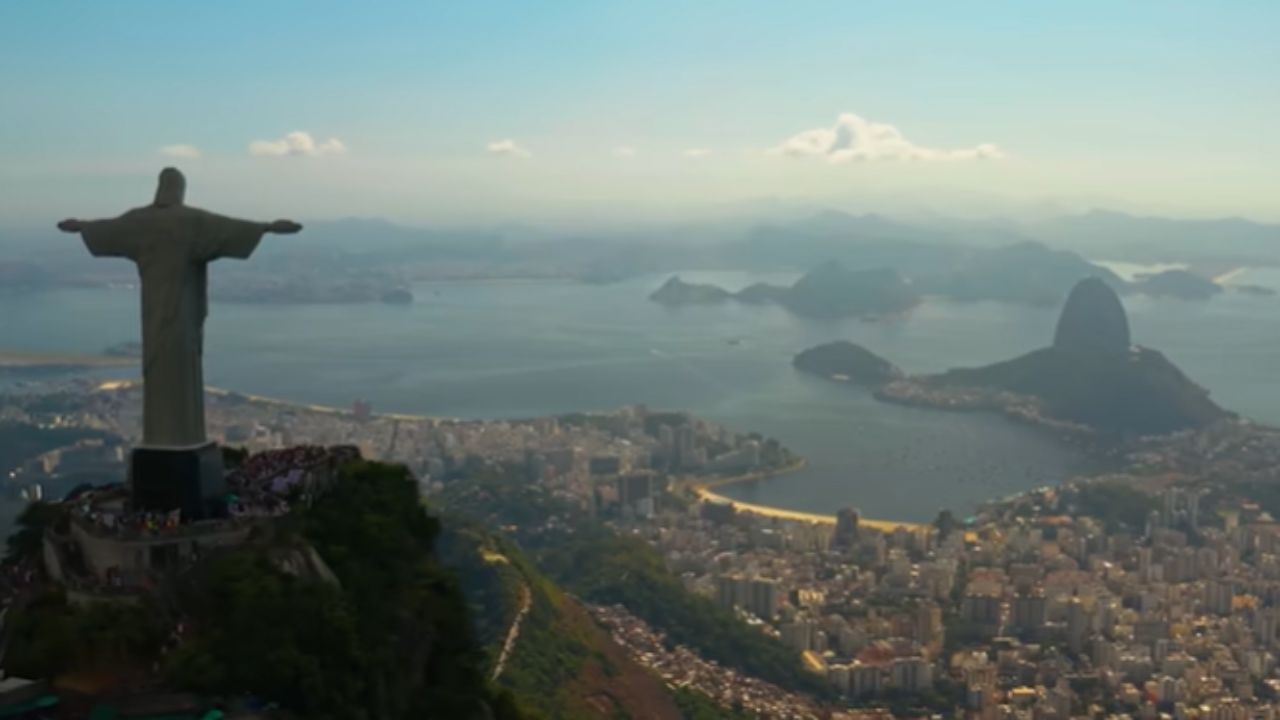


Details of Engineering, Materials, and the History Behind the Carioca Icon That, According to Fatos Desconhecidos, Had No Deaths During Its Construction.
The construction of Christ the Redeemer is undoubtedly one of the greatest feats of Brazilian engineering, resulting in the country’s most famous monument. Located at the top of Corcovado, at a 700-meter altitude in Rio de Janeiro, the 38-meter statue is a global icon. But the story of how it was erected, facing immense logistical challenges, is as impressive as the view from the site.
The initial idea, which originated in the 19th century to honor Princess Isabel, was shelved with the Proclamation of the Republic. As detailed by the portal Fatos Desconhecidos, the project only came to fruition in the 1920s, thanks to the efforts of the Catholic Circle of Rio de Janeiro, which mobilized society to raise funds and signatures.
The Origin of the Idea and the Winning Project
The first proposal for a Christian monument on Corcovado dates back to the 1850s. The priest Pedro Maria Bóss suggested the project in homage to Princess Isabel, daughter of Dom Pedro II. Although the princess supported the idea, she rejected the name “The Redeemer”, insisting that the tribute be made to the “true Redeemer of mankind,” Jesus Christ. However, with the Proclamation of the Republic and the official separation between Church and State, the plan was abandoned.
-
Church from 1888 becomes a mansion of over 330 m² in Canada after a renovation of R$ 3.4 million and is eventually sold for nearly R$ 4.3 million.
-
How an innovative city combines high technology, well-being, and sustainability to become the largest reference in clean energy on the planet.
-
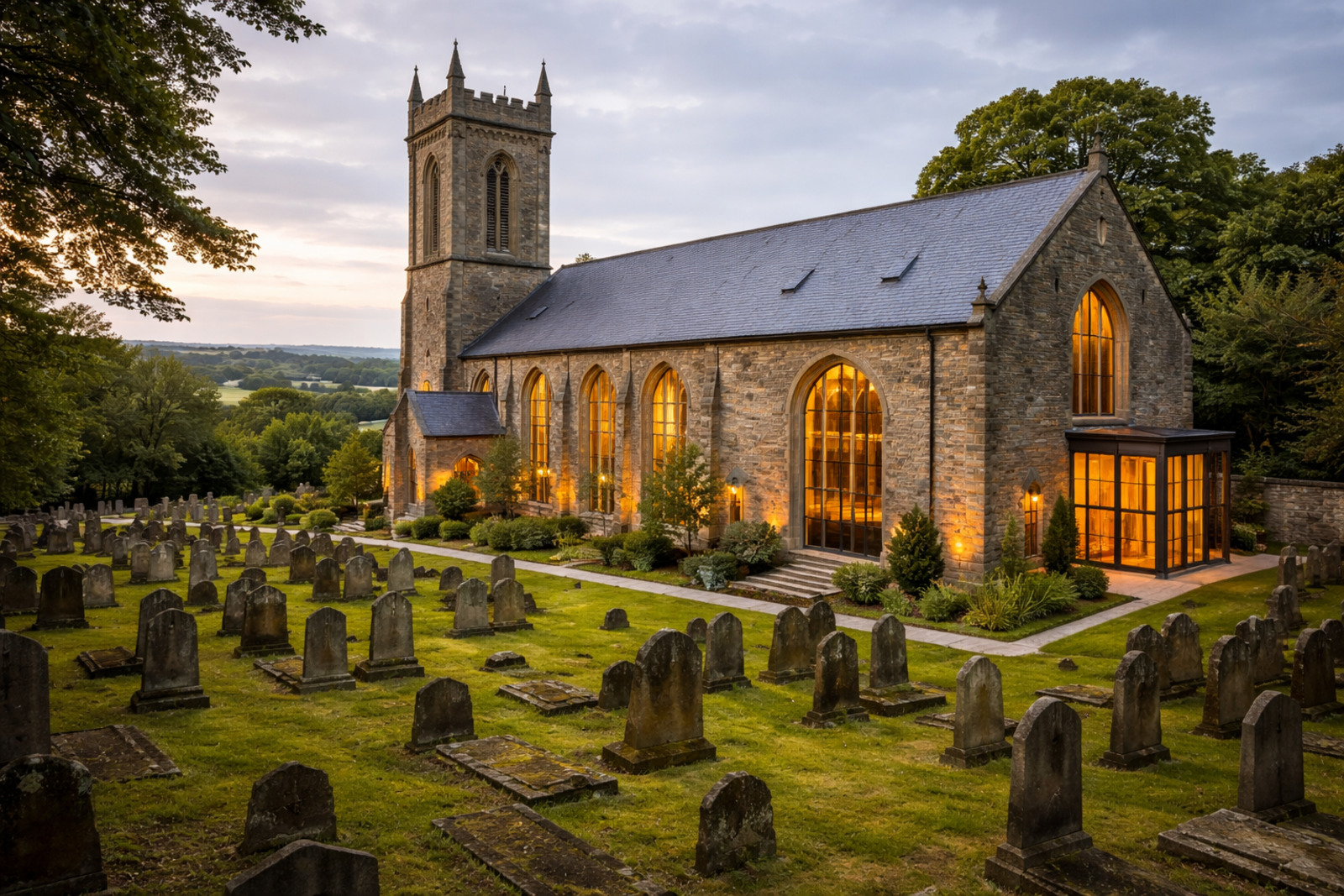
Couple buys 1846 church in ruins for R$ 660,000, invests R$ 3.2 million in renovations, transforms it into a millionaire mansion, and even preserved a historic cemetery with over 300 graves.
-
He started running at 66 years old, broke records at 82, and is now a subject of study for having a metabolic age comparable to that of a 20-year-old, in a case that is intriguing scientists and inspiring the world.


The idea resurfaced strongly around 1921, driven by the Catholic Circle of Rio de Janeiro. The group, as noted by Fatos Desconhecidos, organized the “Monument Week” to raise funds. The social mobilization was massive, including a petition signed by over 22,000 women, who appealed to the president of the time, Epitácio Pessoa, for authorization for the project.
The initial project was different, suggesting a Christ with a globe in his hands and a pedestal symbolizing the world. However, the winning design was the one we know today: the statue with arms open and head tilted downwards, symbolizing protection and blessing over the city. The responsible engineer was Heitor da Silva Costa, who won the competition, working alongside Brazilian artist Carlos Osvaldo and French sculptor Paul Landowski.
Engineering and Logistics: The Work at the Top of the Hill
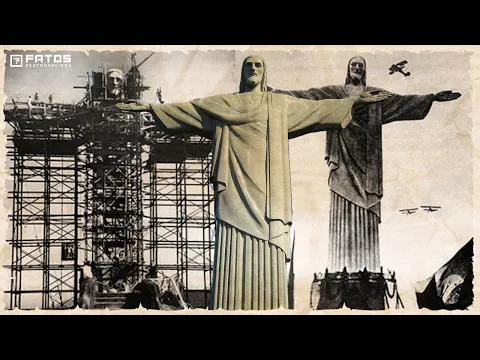

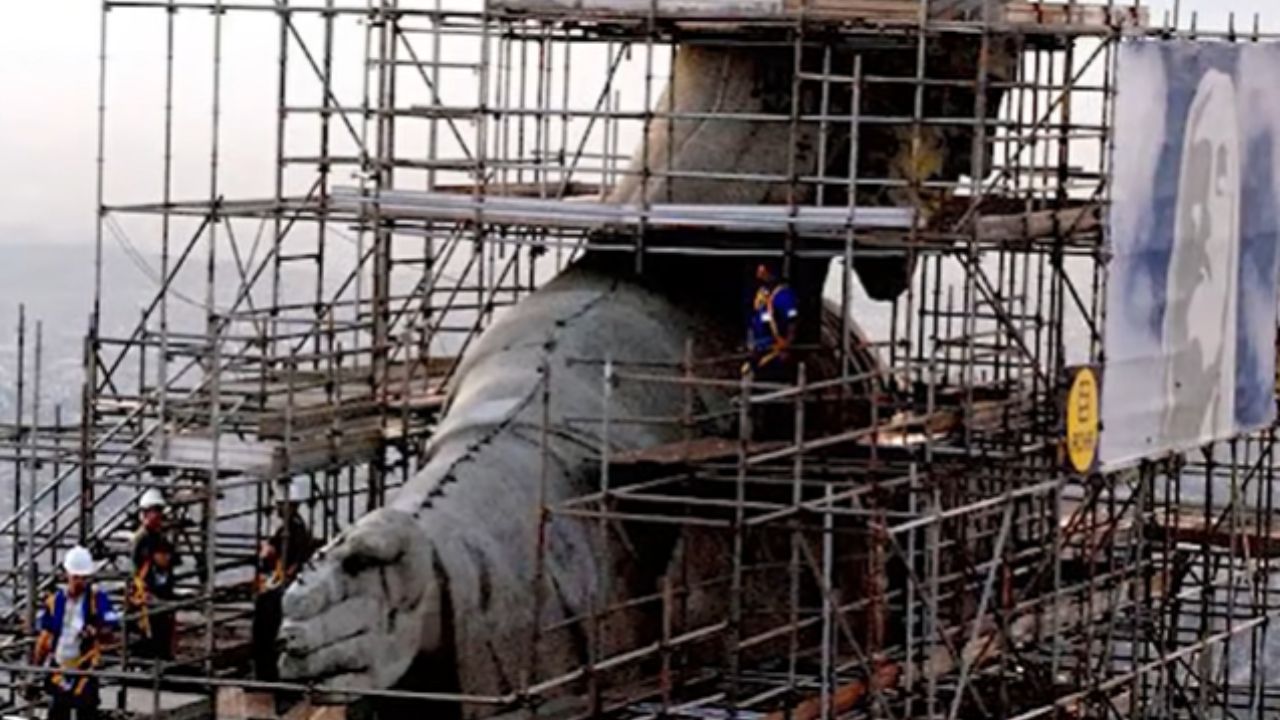
The construction of Christ the Redeemer faced monumental logistical challenges. The construction site was at an altitude of 700 meters, in a hard-to-reach location, where workers suffered from intense heat, storms, and lightning.
The transportation of materials and pieces was made possible by the Corcovado Railway. The railway line, which had existed since 1884 and was the first electrified in the country, was fundamental for carrying cement and pieces up the hill. Engineer Heitor da Silva Costa set up his office where the current Chapel now stands, to closely supervise all the details of the complex work.
To optimize work, the construction site was divided into two parts. One was at the top, concentrating storage, scaffolding, a crane, a freight elevator, and a concrete mixer. The second part was lower down, with areas for cutting, welding, storage, and the workers’ common area, including bathrooms and dormitories. A platform transported materials from the lower part to the upper part, which was later replaced by stairs.
From French Plaster to Brazilian Concrete
Although the structure is a feat of national engineering, many mistakenly think that Christ was 100% Brazilian. The more detailed parts, such as the head and hands, came from France. Sculptor Paul Landowski created the plaster molds, which were shipped by boat to Rio de Janeiro. The head alone consisted of about 50 different pieces, and the hands measured over 3 meters in length.
The internal structure, planned by Heitor da Silva Costa, is made of reinforced concrete and is essentially hollow. It has four pillars and 12 internal floors, allowing for circulation. Assembly on Corcovado began with the arms, which from end to end total 28 meters in length. Next, the assembly of the head (done from the top down) and the hands began.
Finally, the entire concrete structure received its iconic covering. The monument is clad in thousands of small triangular soapstone pieces, which give it its characteristic appearance and provide protection.
The Legacy: Safety, Restoration, and Recognition
The construction of Christ the Redeemer lasted an incredible nine years, finishing in 1931. The official inauguration took place on October 12 of that year. A curious and notable fact, highlighted by Fatos Desconhecidos, is that, despite all the difficulties, the work at height, and the risks involved, no workers died during the construction.
The monument was designed to be robust, prepared to withstand winds of up to 250 km/h and has lightning rods installed on its head and arms. Over the decades, it has undergone various maintenance. In 1990, the first major restoration took place. In 2003, elevators and escalators were installed to facilitate tourist access. In 2010, a new restoration replaced the mortar and over 60,000 soapstone pieces, sourced from the same quarry used for the original statue.
The grandeur of the work earned it the global recognition it deserves. On July 7, 2007, Christ the Redeemer was voted one of the New Seven Wonders of the World in a global poll that exceeded 100 million votes, securing its place alongside icons such as the Great Wall of China and the Colosseum.
Now we want to hear from you: What detail about the construction of Christ the Redeemer surprised you the most? Did you know that the head came from France in 50 separate pieces or that no workers died during the construction?







Paz na Terra Glória Deus nas alturas.
Cristo Redentor já viveu essa experiência sim visitamos familiares brasileiros e estrangeiros excepcional a trajetória de trabalho Paz e sao um dos maiores desafios da história.
Embora a construção de imagem de escultura seja contra a vontade de Deus (Ex.20 v3), Ele usou de misericordia com os trabalhadores e nenhuma vida se perdeu com a obra.