





 Portuguese
  English
  Spanish
 4 min of reading
  0 comments


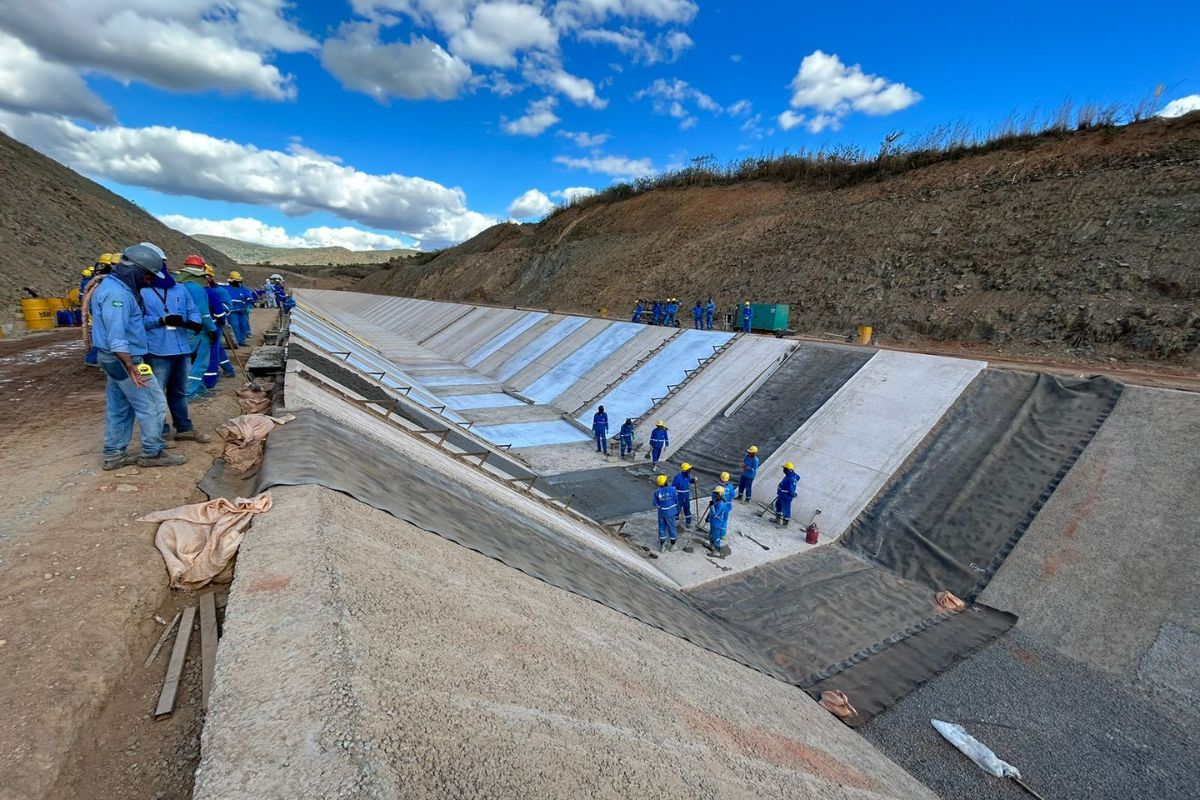
With 1,252 km and R$ 2 billion Invested, Northeast Project Ensures Water Security in Ceará with a Flow of 30,000 Liters/Second
The Brazilian semi-arid region has, for centuries, been a scene of resistance and scarcity. Ceará, in particular, has always been an emblematic portrait of this reality, marked by long periods of drought, collapsing reservoirs, and a routine that depended almost religiously on water trucks. But this narrative began to change with the arrival of a monumental project that promises to rewrite the state’s water future: the Ceará Water Belt (CAC).
The Monumental Project That Defies Climate and Geography
The project, which integrates a complex system of canals, tunnels, and siphons, aims to redistribute the waters of the São Francisco River throughout the Ceará territory with precision and efficiency. With more than 1,250 kilometers of planned extension and mostly operating by gravity, the CAC stands as one of the largest water infrastructure projects in Brazil, with a regional impact comparable to international systems like the National Water Carrier in Israel and China’s South-North Water Diversion Project.
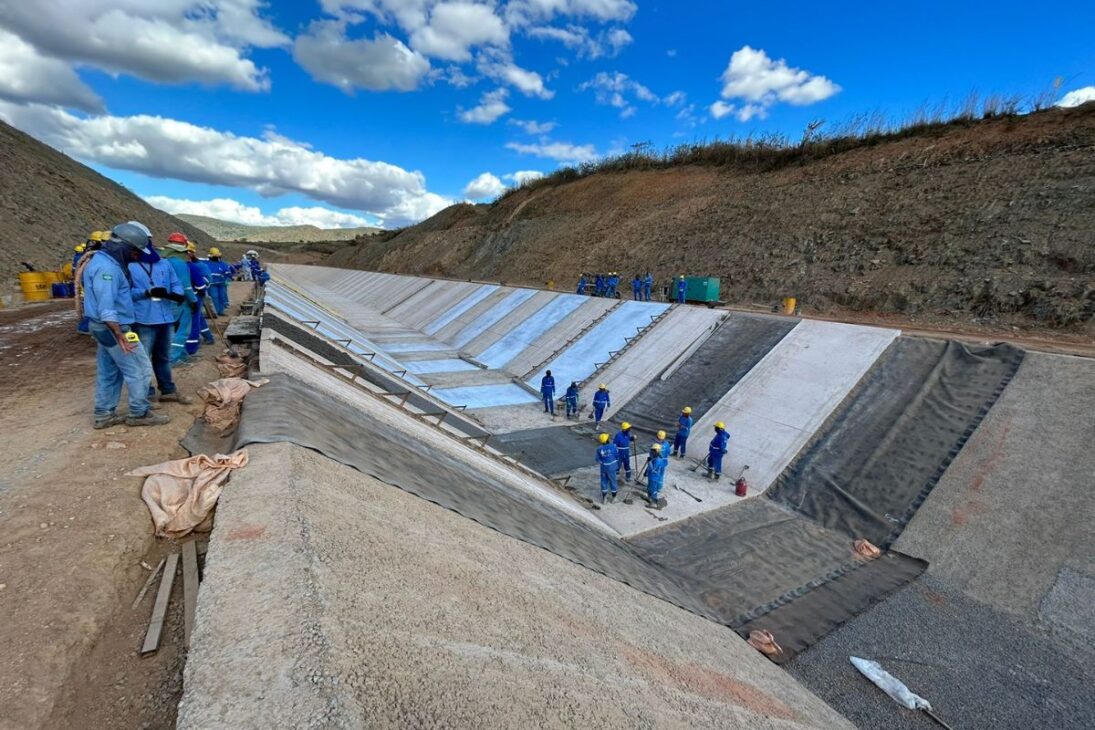
From the Jati Dam to the Heart of Ceará
The water capture occurs at the Jati Dam, in the southern part of the state, the entry point for the waters of the São Francisco, diverted by the Northern Axis of the federal transposition. From there, the water follows its course through open channels, excavated tunnels, and inverted siphons, overcoming hills, valleys, and unstable soils until it reaches dozens of municipalities and large reservoirs.
-
He started running at 66 years old, broke records at 82, and is now a subject of study for having a metabolic age comparable to that of a 20-year-old, in a case that is intriguing scientists and inspiring the world.

-
Oldest tree on the planet reappears after 130 years of searches: Wattieza, 385 million years old, was 10 meters tall and had no leaves or seeds; Gilboa fossils in New York solved the mystery in 2007.

-
A 48-square-meter house assembled in hours with 4,000 bricks made of recycled plastic that does not absorb moisture, has natural thermal insulation, and costs less than 90,000 reais in a complete kit.

-
Luciano Hang revealed that Havan’s air fleet has already accumulated more than 20,000 landings, 10,000 flight hours, and 6 million kilometers traveled, and he says that without the planes, the company would never have grown so quickly.


Phases That Advance and Ensure Results
The Water Belt has been strategically divided into three main sections. Section 1, the most advanced, extends 145.3 km between the Jati Dam and the Cariús River. Currently, about 83.5% of this phase is already completed, according to data from the Ministry of Integration and Regional Development. Once finished, this section will be capable of directly serving 24 municipalities and more than five million people, especially in the Metropolitan Region of Fortaleza. Section 2, covering 271 km, will transport water to the divide of the Jaguaribe and Poti river basins, while Section 3, with 137 km, is expected to reach the headwaters of the Acaraú and Banabuiú rivers. There are also secondary branches in planning, which should reach more remote and needy areas.
Engineering Designed to Last and Adapt
The structure of the CAC is the result of engineering adapted to the semi-arid conditions. In Section 1, more than 119 km consist of open channels lined with plastic geomembrane and concrete, designed in a trapezoidal shape to prevent losses and facilitate water transport. The inverted siphons — carbon steel pipes with a diameter of 2.8 meters — ensure underground crossing in regions of rugged terrain. Additionally, nine tunnels were built, totaling 5.7 km in length, with special mention to the Venice Tunnel, nearly 2.8 km long, drilled through the Araripe Mountains.
All these structures operate with automated control. The system includes metal gates, drainage bores, bridges, and walkways, designed to adapt to the rural environment and neighboring communities. The goal is to ensure not only the water supply, but also safety and functionality at all stages of the journey.
Water to Irrigate Development and Drive the Economy
The strategic importance of the Water Belt extends beyond domestic supply. The project also strengthens irrigated agriculture and the industrial sector. According to the Ceará State Development Agency (Adece), the growth of the Ceará industry in the first quarter of 2025 was 3.5%, the highest in the country, a result that is partly due to the water stability provided by the CAC.

A Government Commitment to the Future
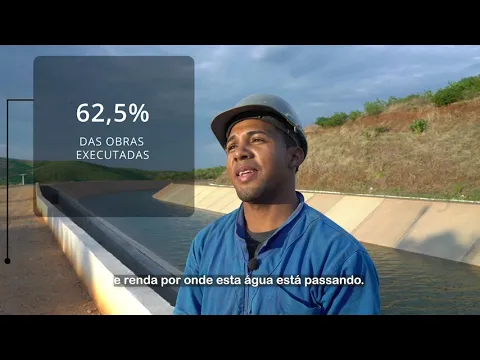
Governor Elmano de Freitas has defended the project as one of the management’s priorities. During a recent visit to the construction site, he stated that “attention is not only for the Cariri region but for all of greater Fortaleza in the future… the investments are high and are guaranteed.” Minister Waldez Góes also highlighted that the project is among the most important of the Growth Acceleration Program (PAC), with investments exceeding R$ 2 billion, of which R$ 1.7 billion have already been applied.
The expectation is that lots 3 and 4 of Section 1 will be delivered by mid-2026, with approximately 600 workers and 200 machines mobilized on the job sites. As a result, an additional 800,000 people are expected to be directly benefited.
A Definitive Response to the Water Crisis
Even without the notoriety of the São Francisco River transposition, the Ceará Water Belt has already established itself as a watershed — literally — in the semi-arid scenario. It not only ensures the arrival of water at critical points but also establishes the foundations for a new stage of sustainable development, where drought no longer dictates the fate of those living in the hinterland.









-

-

3 pessoas reagiram a isso.