





 Portuguese
  English
  Spanish
  4 min of reading
  0 comments


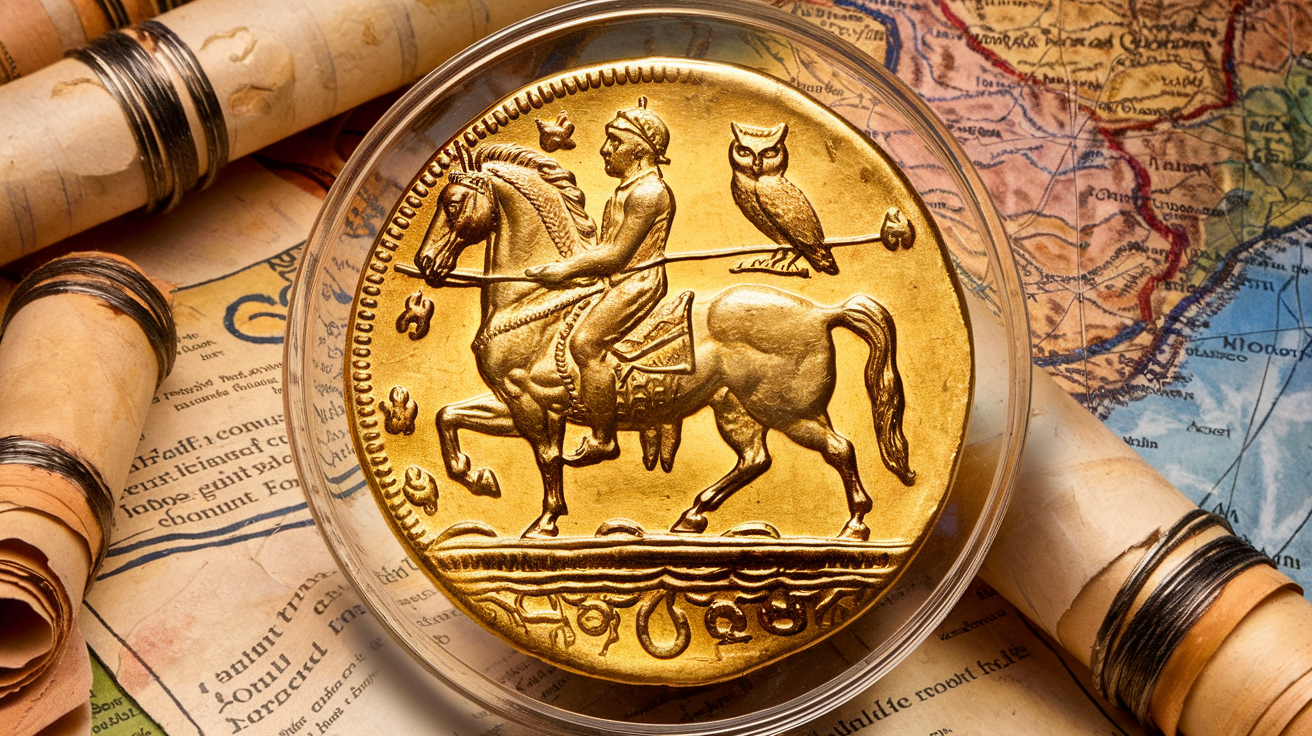
Discover The Fascinating History Of The Currency That Gave Rise To The Gold Standard, Shaped Global Trade, And Influenced The Global Economy Over 2,500 Years Ago.
The invention of the world’s first gold coin marked a turning point in global economic history. During the 6th century BC, King Croesus, ruler of the Kingdom of Lydia, minted the first coin made of pure gold, thus establishing one of the most influential financial concepts in history: the gold standard. This innovation was responsible for bringing greater predictability and stability to trade, facilitating transactions and boosting the economic development of the civilizations of the time.
The Kingdom of Lydia, located where western Turkey is today, thrived thanks to the abundant gold deposits of the Pactolus River.
King Croesus, known for his vast fortune, saw an opportunity to standardize the system of commercial exchanges by creating a coin of fixed value, replacing the electrum coins – an unstable alloy of gold and silver used by his father, Alyattes.
-
A 68-year-old pizza delivery driver went off route to buy a soda that was missing from a visually impaired customer’s order, refused an extra tip, and now Dan Simpson has over R$ 546,000 in donations from people around the world who want to ensure he can retire peacefully on April 30.

-
Amateur archaeologists were searching a forest in Poland with metal detectors when they found a ceramic pot buried for over 1,500 years. Inside was a pure gold necklace weighing 222 grams, folded to fit in the vessel, and when experts examined the piece, they discovered it was the first Gothic torque ever found in Polish territory.

-
Millions of people have been eating pomegranates for centuries without knowing that this ancient fruit contains punicalagins, which scientists are studying for their possible effects on memory and vascular health.

-
Argentina patrols the South Atlantic with ships built in France and monitors over 1.1 million km² with 87 m OPVs, a range of 7,500 miles, 360° radar, and a 30 mm cannon against illegal fishing in the 200-mile zone.

The Transition From Electrum To Pure Gold: Croesus’s Monetary Innovation
Before the invention of the coin responsible for the gold standard, commercial transactions were based on the weight and composition of precious metals, leading to inconsistencies in value assessment.
Electrum, being an alloy of gold and silver in variable proportions, made it difficult to standardize exchanges. To address this problem, Croesus established mints in Sardis, the capital of Lydia, to refine the metals and produce gold and silver coins of fixed purity.
Each coin from 2,500 years ago that changed trade had a standardized weight and a consistent value, ensuring greater security in commercial transactions. This structured monetary system consolidated Lydia as an important commercial center and inspired future civilizations to adopt similar models.
The Expansion Of Lydian Currency And Its Influence On The Ancient World
The success of the world’s first gold coin soon spread. Greek, Persian, and Egyptian merchants quickly recognized the efficiency of this system and began to adopt it.
The coins minted by Croesus featured a lion and a bull on one side, symbols of strength and prosperity. This iconic design helped to establish the reliability of Lydian currency and to make it an accepted medium of exchange across various territories.
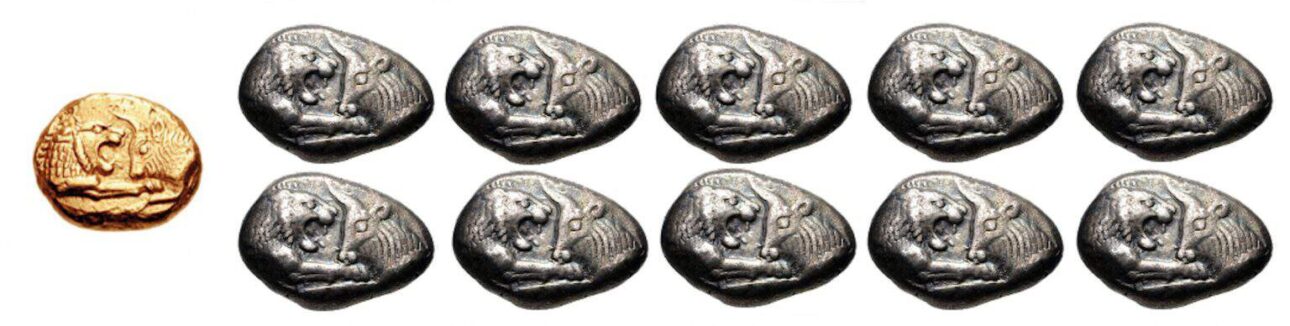
In 546 BC, the Persian Empire, led by Cyrus the Great, conquered Lydia. Despite the fall of the kingdom, the monetary system created by Croesus continued to influence Persian economic policies and, later, those of other powers such as Greece and Rome. The adoption of the gold standard coin established itself as a global model, transcending eras and shaping future economies.
The Impact Of The Gold Standard On The Global Economy And Its Modern Relevance
Over the centuries, the concept of linking the value of a currency to pure gold expanded to various civilizations. In modern times, the gold standard became the foundation of the financial systems of many nations, ensuring exchange rate stability and facilitating international trade.
During the 19th and 20th centuries, countries around the world officially adopted the gold standard, allowing their currencies to be converted into fixed amounts of gold. This system remained in place until the mid-20th century when it was replaced by fiat models, in which trust in the issuing government began to determine the value of money.
Despite this change, gold remains a safe benchmark of value, especially in times of economic crisis.
The 2,500-Year-Old Coin That Changed Trade And Its Legacy For The Future
The impact of the world’s first gold coin transcends the barriers of time. Its creation not only revolutionized commercial transactions in antiquity but also established a standard of security and reliability that echoes to this day. The concept of monetary standardization developed by King Croesus influenced countless generations of economists and politicians, shaping the foundations of modern financial systems.
Even though the gold standard has been officially abandoned, its essence persists in the way global markets operate. Gold remains one of the most valued assets in the world, serving as an essential store of value for governments, central banks, and investors.
The story of the 2,500-year-old coin that changed trade is a powerful reminder of the impact that financial innovation can have on society. From antiquity to the present day, the search for more efficient and stable monetary systems continues to drive global economic development.
Source: Olhar Digital









-

-

4 pessoas reagiram a isso.