





 Portuguese
  English
  Spanish
  5 min of reading
  48 comments


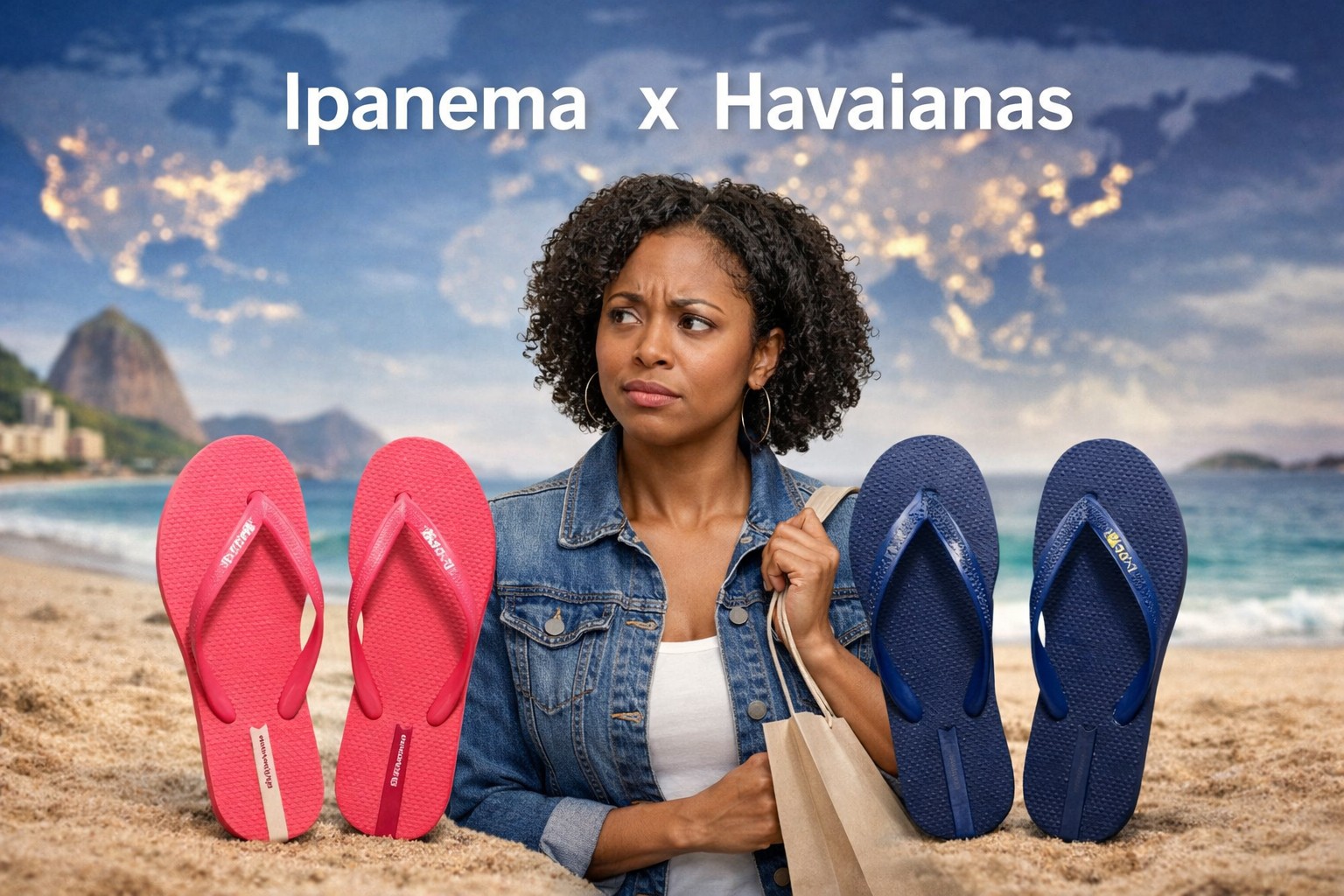


Recent Controversy Involving Commercial Reignites Debate on Advertising, Consumption, and the Strength of Brazilian Brands in the Global Market
The recent controversy involving a advertising commercial in the footwear sector, which brought Havaianas Sandals back into the public debate, reignited discussions about advertising language, institutional positioning, and the role of major Brazilian brands in communicating with consumers. Amid this scenario, interest is also growing in Ipanema flip-flops, a direct competitor of Havaianas in Brazil and one of the national brands with the largest international presence. The debate surrounding the commercial, advertising, and representativity — often linked to renowned figures in Brazilian drama, such as Fernanda Torres — has expanded public attention to other giants in the sector, including Ipanema, which is now present in over 100 countries.


In this context, understanding the trajectory of Ipanema flip-flops, their origin, commercial numbers, and the historical rivalry with Havaianas Sandals has become a relevant topic not only from the perspective of consumption but also from that of the industry and the Brazilian economy.
The Origin of Ipanema Flip-Flops and the Context of Their Creation
Ipanema flip-flops were launched in the early 2000s by the Grendene group, at a time when Brazil was consolidating its position as one of the largest footwear producers in the world. The brand was born with an international vocation and a clear proposal to translate the Brazilian lifestyle into affordable, modern, and competitive products in the global market.
-
The Argentine government celebrates the lowest poverty rate in 7 years, but experts warn that the methodology has changed, real wages have fallen, unemployment has risen, and the number of people on the streets of Buenos Aires has increased by 57% since Milei took office.

-
7.8 magnitude earthquake in Indonesia frightens the population, triggers tsunami alert, and hits an island with over 200,000 inhabitants this Thursday.

-
Google will finally let you change that embarrassing Gmail address you created in your teenage years without losing any accounts, logins, or old emails: the feature is already available in the United States.

-
Heading to Brazil in a Bonanza F33 single-engine aircraft: a couple departs from Florida on a visual flight, makes technical stops in the Caribbean to refuel and organize paperwork, and begins the staged crossing until they reach the country.


The choice of the name Ipanema, inspired by the neighborhood and beach in Rio de Janeiro, sought to associate the brand with values such as freedom, diversity, tropical climate, and Brazilian cultural identity. From the beginning, the strategy was different from that of more traditional brands: Ipanema emerged integrated into a group with strong industrial, logistical, and export capabilities.
Who Controls the Ipanema Brand and the Structure of the Grendene Group
Grendene is one of the largest footwear manufacturers in the world by volume. According to the corporate profile of the company, available on the Investor Relations website, the group has installed capacity to produce up to 250 million pairs of footwear per year, distributed across its industrial units in Brazil. Source: corporate profile of Grendene on the official IR site
In addition to Ipanema flip-flops, the company controls brands such as Melissa, Rider, Cartago, and Grendha, operating in different market segments. This diversification allows for risk dilution and greater financial stability, supporting continuous investments in design, innovation, and international expansion.

Product Portfolio of Ipanema Flip-Flops
Ipanema flip-flops feature a broad and diverse portfolio, catering to female, male, and children audiences. The brand develops everything from basic models to collections with unique designs, exclusive prints, and licensed collaborations, tailored to both the Brazilian market and international markets.
This diversity is one of the factors that allow Ipanema to compete directly with Havaianas Sandals, especially in markets where price, variety, and distribution are decisive for the end consumer.
Rivalry Between Ipanema Flip-Flops and Havaianas Sandals
The competition between Ipanema flip-flops and Havaianas is one of the most established rivalries in the Brazilian consumer goods industry. While Havaianas belongs to the Alpargatas group, Ipanema has forged its trajectory within a distinct industrial structure, focusing on production scale, market diversity, and a strong presence in emerging countries.
Industry analysts point out that, over the years, this competition has helped raise the standards of quality, design, and logistical efficiency of both brands, strengthening Brazil’s positioning as a global reference in sandals and flip-flops.
Commercial Numbers, Production, and Financial Performance
The numbers from the Grendene group help gauge the relevance of Ipanema flip-flops in the global market. According to a report from FashionNetwork, the company shipped 139.4 million pairs of footwear in 2024, recording a consolidated gross revenue of approximately R$ 3.2 billion during the period. Source: report “Grendene Records 20.5% Growth in Recurring Net Income”
These numbers reflect the performance of the group as a whole but highlight the strategic importance of brands with a strong international appeal, like Ipanema, within the company’s portfolio.
Additionally, financial reports and market communications show that Grendene continues to make ongoing investments in industrial modernization, product development, and commercial expansion.
Exports and International Presence in Over 100 Countries
One of the main differentiators of Ipanema flip-flops is their extensive international presence. The brand is present in over 100 countries, with a strong presence in Europe, North America, Latin America, Asia, and the Middle East. This information is reiterated in institutional materials from Grendene itself and in databases from the international footwear sector.
Ipanema’s international strategy involves model adaptation, local communication, and strong engagement with major retail chains, contributing to the brand’s consolidation outside Brazil.
Advertising, Commercials, and Consumer Perception
The recent discussion involving advertising commercial and brand positioning has again highlighted the importance of communication in the consumer sector.
Although the controversy mainly revolved around campaigns associated with Havaianas Sandals, the episode has increased interest in competing brands like Ipanema, which historically adopts a communication style more focused on lifestyle, diversity, and global reach.
This more institutional positioning contributes to a perception of stability for the brand, especially in periods of more intense public debate.
The Role of Ipanema Flip-Flops in the Future of the Sector
With a strong industrial base, robust production numbers, consolidated international presence, and a diverse portfolio, Ipanema flip-flops remain one of the main assets of the Brazilian footwear sector. The rivalry with Havaianas Sandals, far from being merely commercial, continues to drive innovation, competitiveness, and international visibility for Brazilian brands.








Só contrário das Havaianas, as sandálias dessa marca escorregam. Minha irmã já caiu e foi para o hospital.
Já faz tempo que troquei a Havaianas pela Ipanema. Chinelos Ipanema são mais macios, também são antiderrapante e o preço bem mais em conta.
Mentira, Ipanema é um borracha dura, desconfortável, ontem tive que usar o dia todo, a parte de baixo no calcanhar ficou apertando, e ficou doendo!
Ipanema não se compara com havaianas, borracha macia, não endurece, super confortável
Adoro Havaianas ,a maioria do ser homem estão precisando de Deus e de um tratamento psicológico,a cada estão ficando mais doente do já são.
Concordo! Estão apodrecendo por dentro e o cérebro tbm