





 Portuguese
  English
  Spanish
  2 min of reading
  4 comments


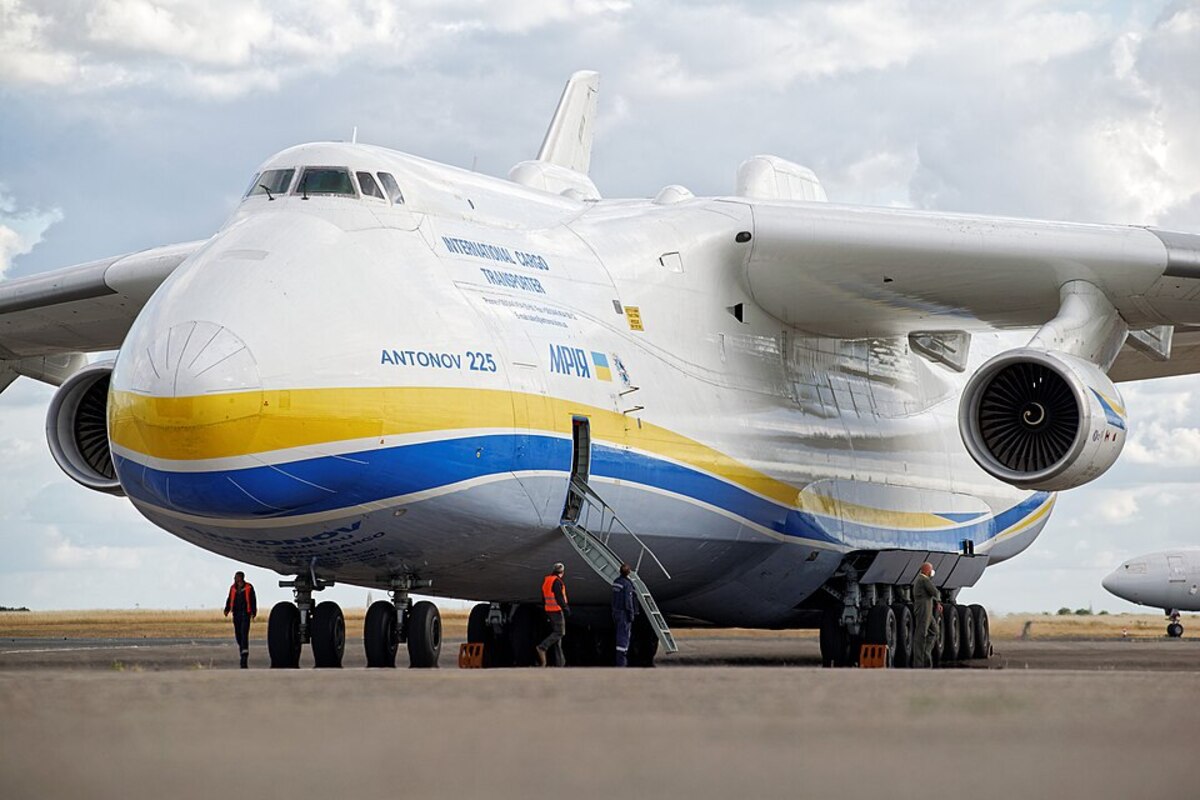


The Antonov An-225 Impressed With Power, Capacity, and Size. Giant Tanks, Six Engines, and Space for Turbines and Rockets
The Antonov An-225 Mriya was more than just an airplane. It was a monumental machine. With a length of 84 meters and a wingspan of 88.4 meters, it was the largest airplane ever built in terms of length and maximum takeoff weight.
Created to transport the Soviet space shuttle, it stood out as the only one in the world capable of performing certain logistics missions. Its destruction in 2022, during the Russia-Ukraine war, ended a unique chapter in aviation history, but the numbers of this giant continue to impress.
Unmatched Size and Power
The An-225 had a height of 18.1 meters and a maximum takeoff weight of 640 tons. Its payload could reach an incredible 250 tons.
-
With over 14 million baskets of earth moved, an ancient North American metropolis built a monumental pyramid of 30 meters and established a city with 20,000 inhabitants nearly a thousand years ago.

-
A 1,900-year-old treasure emerges from a Roman house destroyed by fire and sealed since antiquity in Romania, with coins and metals fused among the ashes.

-
The Brazilian colonial city that stopped in time and shares territory with a rocket launch base.

-
79-year-old woman challenges limits, visits 193 countries in the world after 56 years of planning and reveals the behind-the-scenes of a global journey that few have managed to accomplish.


It was powered by six ZMKB Progress D-18T turbofan engines, each generating a thrust of 229.5 kN. No other aircraft in the world combined such power with such transport capacity.
Tanks That Fed the Colossus
The fuel capacity of the An-225 was also impressive. It was about 300,000 kilograms of Jet A-1 fuel, equivalent to approximately 373,000 liters or 98,700 US gallons.
The average consumption was 20,000 liters per hour of flight. With this, the airplane could fly up to 4,500 km with full load. When lightly loaded and with full tanks, the range reached 15,400 km.
The tanks were organized into 18 units distributed across the wings, with three tanks per engine. They were located in the internal sections numbered from 2 to 6 and from 13 to 17.
The outermost sections of the wings did not contain fuel to avoid structural overload during maneuvers.
Gigantic Internal Space
The cargo compartment of the An-225 measured 43.3 meters in length, 6.4 meters in width, and 4.4 meters in height. The total volume was 1,220 cubic meters. This space allowed for the transport of locomotives, turbines, and even rocket parts. Few aircraft came close to this capacity.
Eternal Legacy
The Antonov An-225 was destroyed in 2022. But its data continues to challenge what is understood as a limit. With immense tanks, brute force, and colossal space, it remains a symbol of extreme engineering.






O comunismo é como um cilindro onde passa esmaga tudo só sabem destruir o que está bom, russos ****
Se foi eles que fizeram fala asneiras não pelo amor de Deus
sim , foi destruido, mas não se consegue mais construir outro igual aquele???
Tem um outro,porém inacabado…segundo o fabricante o custo é muito pra terminar a montagem. Vamos torcer para aparecer alguém e colocar o gigante de novo no céu.