





 Portuguese
  English
  Spanish
  5 min of reading
  0 comments


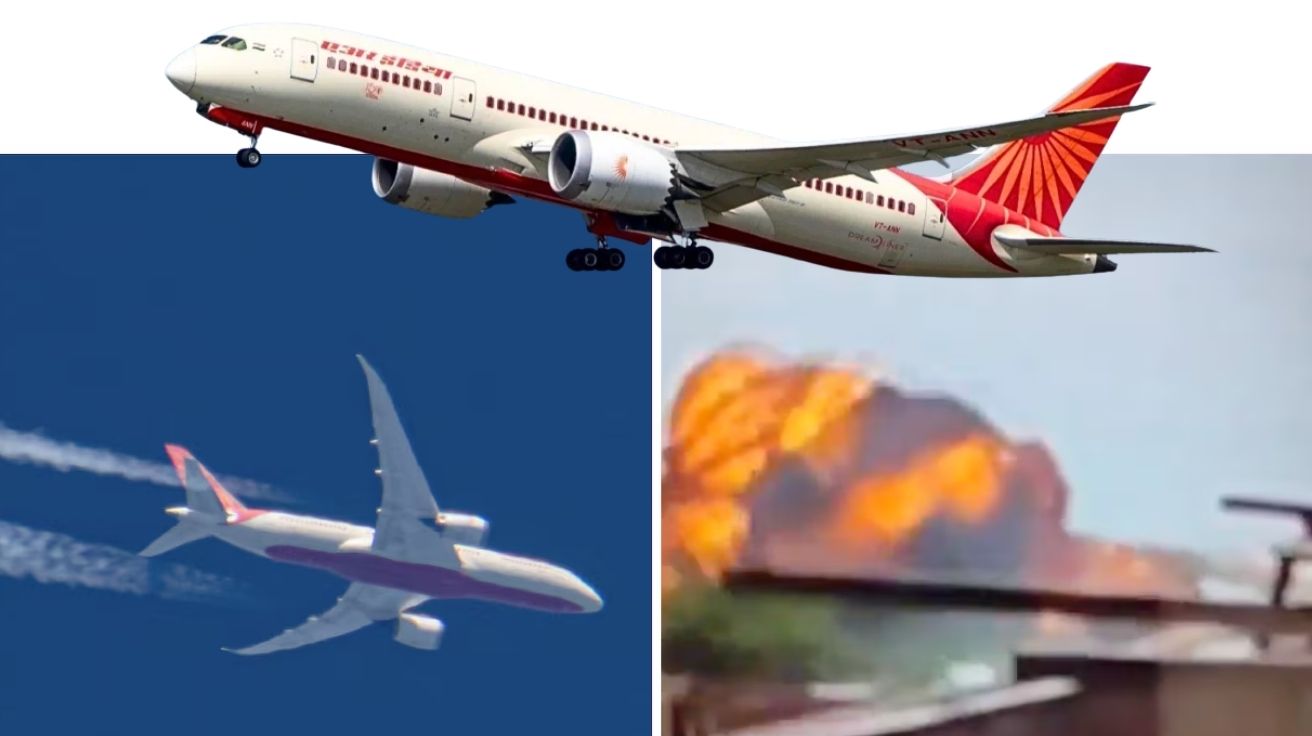
Accident with the Boeing 787-8 on Flight AI171 of Air India Happened Today Just After Takeoff to London; More Than 240 People Were on Board, Including Indian, British, Portuguese, and Canadian Citizens
The Boeing 787 Dreamliner, one of the most advanced commercial aircraft in the world, suffered its most serious accident since being commercially launched in 2011. Flight AI171 of Air India, which departed from Ahmedabad to London, crashed seconds after takeoff, in the early afternoon of June 12, 2025, causing a large-scale tragedy in the largest city of the state of Gujarat, India.
With 242 passengers and crew on board, the aircraft lost altitude shortly after emitting a mayday, hitting residential buildings and the campus of a local medical university. The causes of the accident are still being investigated by Indian authorities, but initial reports suggest a catastrophic failure during the initial phase of the flight. This episode reignites global concerns about the safety and operational challenges of the Boeing 787.
Get to Know the Airplane Involved in the Accident: The Advanced Boeing 787 Dreamliner
The Boeing 787-8, the version involved in the tragedy in India, is a twin-engine widebody long-range aircraft developed to revolutionize aviation with energy efficiency, lightweight, and comfort. Launched in 2007 and commercially introduced in 2011, the Dreamliner stood out as the first Boeing aircraft primarily built with composite materials, significantly reducing its weight and increasing its fuel efficiency.
-
Elevator Plummets From Tenth Floor in Commercial Building in Recife, Raising Concerns About Safety and Engineering of Vertical Transport Systems Used Daily in Urban Buildings
-
Cyclist Hit by Car in Sobradinho, DF Is Rescued After Traffic Accident This Sunday

-
Chaos On Airplane Could Be Expensive: Proposal Aims To Prevent Disruptive Passengers From Flying For Up To 1 Year In Brazil And Face Fines Of Up To R$17,500

-
Civil Defense Issues Alert and Advises Evacuation in 51 Streets of Juiz de Fora After Risk of Instability; See the Complete List of Affected Neighborhoods


With a capacity to carry between 242 and 296 passengers, depending on the internal configuration, the 787-8 can fly up to 13,600 kilometers non-stop, enough for intercontinental routes between Asia and Europe. The crashed aircraft was headed to Gatwick Airport in London, departing from Sardar Vallabhbhai Patel International Airport in Ahmedabad.
The model is equipped with General Electric GEnx or Rolls-Royce Trent 1000 engines, both with high performance and efficiency. In the case of AI171, the company has not publicly confirmed which engine was installed, but both have undergone several overhauls over the years after incidents related to overheating and structural failures.
Emergency Shortly After Takeoff and Devastating Crash
The disaster began at 1:39 PM local time. Minutes after leaving the runway, the crew of Air India’s Boeing 787 issued a mayday, the highest emergency alert in aviation. Moments later, the plane crashed outside the airport perimeter, hitting the student residence of BJ Medical College UG, where dozens of people were having lunch at the time of impact.
According to the Indian Ministry of Health, the accident caused the immediate death of dozens of people, both inside the aircraft and in the buildings hit. Local sources informed Reuters that at least 30 bodies were retrieved from the rubble, with others injured in critical condition. The total number of victims is still being updated.
Among the passengers were 169 Indian citizens, 53 British, seven Portuguese, and one Canadian. Air India confirmed that the plane was carrying two experienced pilots and ten flight attendants. Captain Sumeed Sabharwall, with 8,200 flight hours, and co-pilot Clive Fundar, with 1,100 hours, were in command.
History of the Boeing 787: Innovation Marked by Incidents
Although a technological landmark in aviation, the Boeing 787 has not been free of problems. Since its launch, it has faced several production delays, criticism for excessive outsourcing, and technical failures — especially with the lithium-ion batteries, which caused onboard fires in 2013 and forced the global grounding of the fleet for three months.
The model has also undergone several software updates and structural reinforcements to ensure its reliability. Still, incidents continue to be reported. In Brazil, for example, a Boeing 787-9 from Air Canada was recently escorted by firefighters at Guarulhos Airport after the pilot declared a “PAN PAN”, a sign of operational urgency.
Despite these episodes, the Dreamliner continues to be used by dozens of airlines around the world for its efficiency and range. To date, more than 1,100 units have been delivered, and the plane has accumulated millions of flight hours.
Investigation Underway and How Boeing is Responding
After the accident, the Directorate General of Civil Aviation of India (DGCA) initiated a detailed investigation. The preliminary analysis of the voice recorder and flight data will be crucial in determining the cause of the tragedy. Air India is assisting the victims’ families and has set up a hotline for information.
Boeing released a statement saying it is closely monitoring the case and cooperating with Indian authorities. The American manufacturer has not yet issued recommendations regarding the use of the 787 model by other airlines, but experts are already calling for a reassessment of the safety protocols for the Dreamliner.
The episode also reignites discussions about the growing dependence on complex software and electrical systems in modern aircraft. The Boeing 787 is considered a “digital airplane,” with highly integrated systems, including fly-by-wire, electric de-icing, and automated pressurization — elements that, if they fail, can compromise the control of the aircraft.
The Impact of the Tragedy on Global Aviation and the Legacy of the Dreamliner
This accident could represent a turning point in the history of the Boeing 787, which until now has maintained a relatively safe record despite technical setbacks. With dozens dead and the aircraft completely destroyed, international authorities, including the FAA (U.S.) and the EASA (Europe), are closely monitoring the case.
Furthermore, the disaster in Ahmedabad raises an alert for the aviation sector in Asia, a region that has been experiencing a significant increase in long-haul flights. The reliability of the aircraft operating on these routes is essential to ensure the safety of millions of passengers every year.
Amidst mourning and investigations, the world awaits answers. Confidence in the model may be shaken if systemic failures or operational negligence are discovered. For Air India, the episode is a severe blow to its reputation, especially at a time when it is trying to modernize and compete in the international market.









-

Uma pessoa reagiu a isso.