





 Portuguese
  English
  Spanish
  3 min of reading
  0 comments


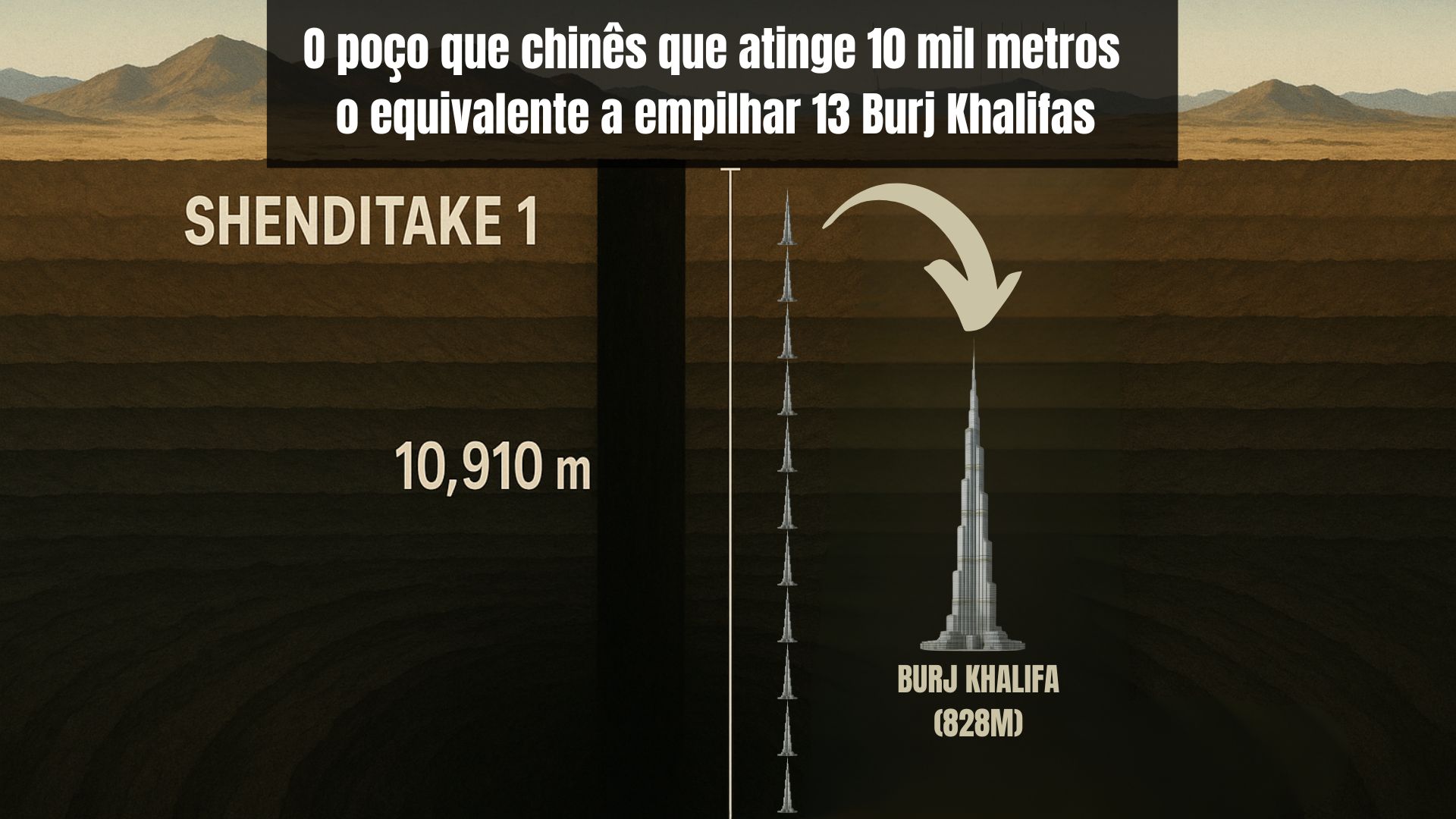
At 10,000 Meters Deep, the “Hole to Hell” in China Crosses 12 Geological Layers and Promises to Revolutionize Oil and Gas Exploration in Extreme Regions.
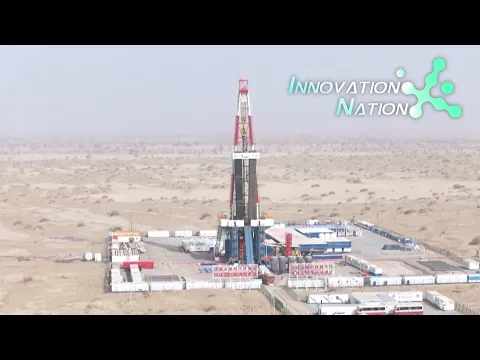
In an achievement that drew global attention, China completed the drilling of a well with a depth of 10,910 meters in the remote Tarim Basin, Xinjiang region. Informally nicknamed the “Hole to Hell” for its extreme depth and inhospitable conditions faced, the well’s primary purpose is the exploration of oil and gas, but it has also opened new possibilities for the geological study of the Earth’s deeper layers.
The well, named Shenditake 1, is the deepest in Asia and one of the largest in the world in straight vertical depth. The project took more than 580 days to complete, involving advanced technologies and extreme challenges, such as temperatures above 210 °C and pressures exceeding 145 MPa.
Drilling in Extreme Conditions
Located in the Taklamakan Desert, one of the most inhospitable in the world, the project required highly precise engineering solutions. The drilled soil crossed 12 geological layers, including formations over 500 million years old.
-
A major turn in the Justice system suspends tax increases and directly impacts oil and gas companies in Brazil by affecting costs, contracts, and financial planning, leaving uncertain what could happen to the sector if these costs had increased.

-
Brava Energia begins drilling in Papa-Terra and Atlanta and could change the game by reducing costs in oil while increasing production and strengthening competitiveness in the offshore market.
-
Petrobras surprises the world again by announcing a new discovery in the pre-salt with excellent quality oil.
-
Offshore industrial demand in Macaé skyrockets with the recovery of oil and gas and could grow by up to 396% by 2026 in the Campos Basin.

The operation was conducted by the China National Petroleum Corporation (CNPC), which utilized the world’s first automated drilling platform capable of reaching depths greater than 12,000 meters. Special tools were developed to withstand the severe conditions of heat, pressure, and abrasiveness of the underground.

Oil, Gas, and Scientific Advancement
Although the central objective is the exploration of oil and gas, Chinese researchers claim that the project also has scientific significance. The depth achieved allows for the study of layers that are typically only accessible through ocean drilling or in geologically rare environments.
The Tarim Basin contains more than 80% of China’s deep oil and about 64% of natural gas at depths below 6,000 meters. With the Shenditake 1 well, China significantly expands its extraction capacity in ultradeep reservoirs, essential for ensuring long-term energy security.
A “Hole to Hell” in Practice
The informal nickname “Hole to Hell” is not just sensationalism. In the last 910 meters of drilling, the operation took more than 300 days, revealing the extreme difficulty of dealing with nearly impassable geological materials. The well was successfully completed in February 2025, establishing new world records in the field of land drilling:
- Deepest drilling with continuous casing cementing;
- Deepest image recording via monitoring cable;
- Deepest straight-line drilling ever recorded on land.
Challenges and Technological Innovation of the Chinese Well
The technical complexity required the development of unprecedented control and drilling systems. Special fluids were used to prevent internal collapses, and the casing pipes underwent thermal and corrosion resistance treatment to withstand the hostile underground environment.
Additionally, real-time sensors allowed for continuous monitoring of the well’s trajectory, ensuring safety and accuracy at every stage. This level of control is essential to prevent accidents at such high depths.
Implications of China’s Achievement for Global Energy
China’s achievement marks an important advance in the race to explore energy sources in hard-to-reach locations. Ultradeep wells are strategic for countries with reserves in ancient sedimentary basins, such as Tarim. They also pave the way for the use of technology in other locations around the planet, including oceans and mountainous regions.
With the Shenditake 1 well, China strengthens its position as an energy and technological powerhouse, becoming one of the few nations in the world with proven operational capacity in ultradeep drilling.
Geological Data Will Serve as a Basis for Future Scientific and Energy Projects
The geological data obtained from the drilling of the Hole to Hell will serve as a basis for future scientific and energy projects. Besides the potential for oil and gas production, the well can help better understand tectonic processes and the formation of continents.
CNPC itself stated that the knowledge generated will be shared with research centers and universities, as part of a policy to encourage technological innovation applied to energy.









Seja o primeiro a reagir!