





 Portuguese
  English
  Spanish
  4 min of reading
  4 comments


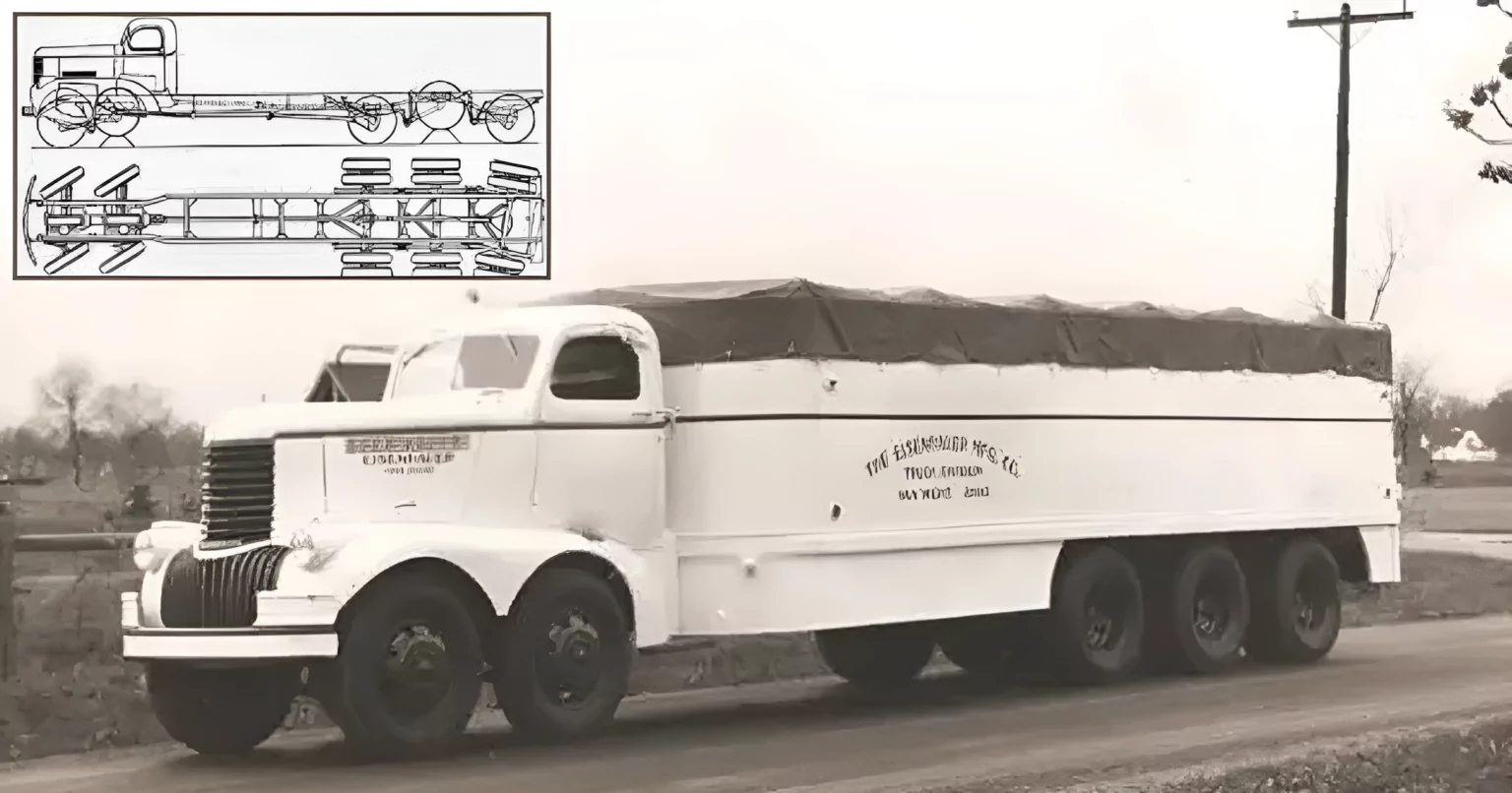


Explore The History Of The Eisenhower Truck, An Impressive Machine With 5 Axles And Two Chevrolet Engines, Symbol Of Powerful And Almost Forgotten Engineering From The Automotive Past.
The Eisenhower truck, with its five bi-directional axles, two Chevrolet engines, and a combined power of 93 horsepower, represented an audacious attempt to revolutionize heavy cargo transport.
Although it never reached mass production, its unique design and advanced mechanical features distinguished it from its contemporaries, leaving a legacy in the transportation engineering world.
The Origins Of The Eisenhower Truck – Had Two Chevrolet Engines
The development of the Eisenhower truck occurred during a period of rapid transformation in transportation infrastructure. The increasing demand for vehicles capable of transporting ever-larger loads over long distances drove engineers to seek innovative solutions.
-
OMODA & JAECOO grows in Europe in 2026 with an integrated strategy of sales, innovation, local production, and technological advancement in the United Kingdom, Italy, and Spain.
-
OMODA & JAECOO expands after-sales service in Brazil with competitive maintenance, a 7-year warranty, and high availability of parts for technological SUVs.

-
OMODA & JAECOO appoints Alessandra Souza as executive marketing director in Brazil and accelerates brand expansion with a focus on innovation, networking, and hybrid portfolio.

-
Jaecoo 7 with super hybrid SHS system exceeds 1,200 km of combined range with a 1.5 turbo engine, high-density battery, and intelligent energy management.

Why Was This Truck Created?
- Need for Greater Stability: The five-axle configuration was designed to distribute weight more evenly, allowing for the transport of heavier loads with greater safety. This reduced the risk of tipping and accidents.
- Innovation in Bi-Directional Steering: Unlike traditional trucks, the Eisenhower had wheels that could turn in multiple directions. As a result, maneuverability was significantly improved, making it easier to navigate tight spaces and uneven terrain.
- Dual Engines for Enhanced Power: The use of two Chevrolet engines represented an attempt to increase torque and efficiency. This allowed the truck to better overcome terrain challenges and transport heavy loads over long distances with greater ease.
The Influence Of Eisenhower’s Infrastructure Vision
The truck’s name is a tribute to President Eisenhower, a fervent advocate for modernizing the U.S. transportation system.
His vision, inspired by the German Autobahn, led to the creation of the Interstate Highway System, which required more capable and efficient vehicles. The Eisenhower truck, with its innovative design, represented a step in that direction.
Engineering Features
The Eisenhower truck was an engineering experiment that challenged the conventions of its time. Its unique features set it apart from any other vehicle in circulation.
Main Features Of The Eisenhower Truck
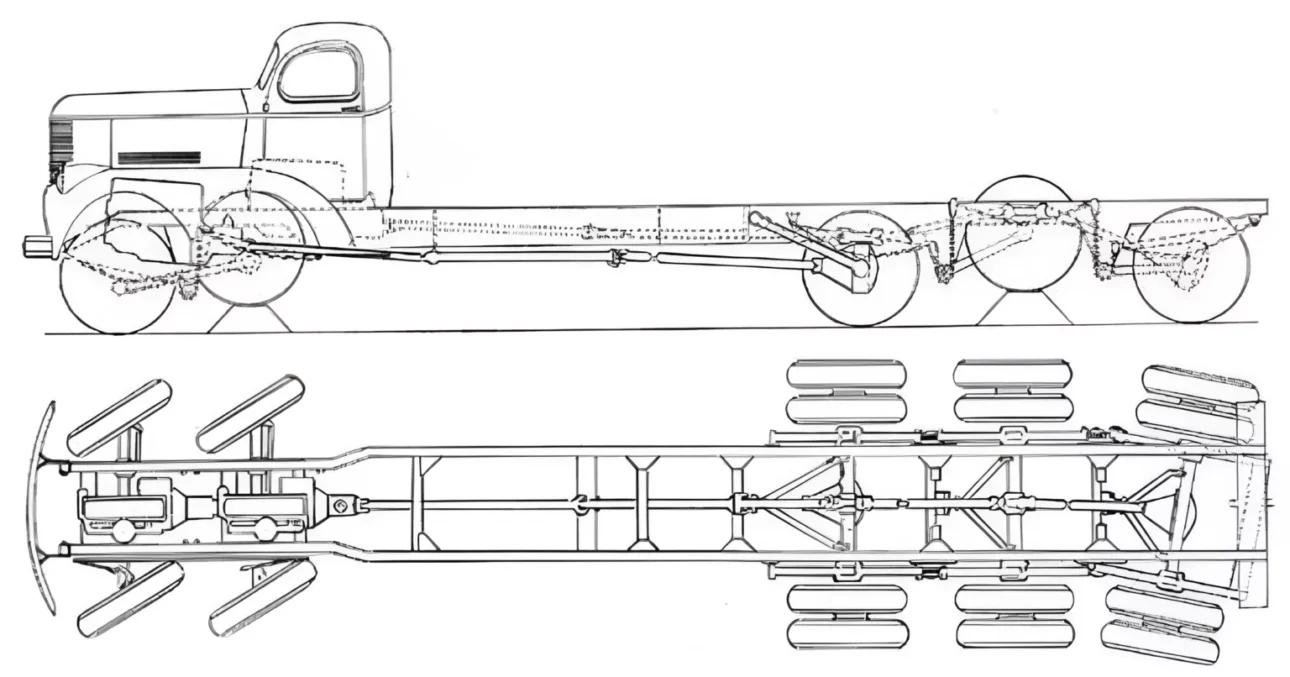
- Five Bi-Directional Axles: The most distinctive feature was undoubtedly its five axles, each independently controlled. Additionally, this design allowed for tighter turns and greater stability, even with heavy loads.
- Dual Chevrolet Engines: The combination of two Chevrolet engines working together provided a combined power of 93 horsepower, which was remarkable for the time. As a result, weight distribution was optimized, and power was delivered more efficiently.
- Heavy-Duty Suspension System: To support the weight of loads and ensure a smoother ride, even on rough terrain, the truck was equipped with reinforced suspension and multiple shock absorbers.
- Aerodynamic And Streamlined Design: Unlike traditional trucks, the Eisenhower featured a rounded front grille, contributing to better airflow and, consequently, greater fuel efficiency.
- Advanced Chassis And Steering Mechanism: The chassis design was highly complex, integrating various steering mechanisms that allowed for precise control over movement and load balance.
Why The Eisenhower Truck Did Not Succeed?
Despite its innovative design and promising features, the Eisenhower truck never reached mass production. Several factors contributed to this outcome.
Reasons For Its Limited Adoption
- Design Complexity: The five-axle system and dual engine configuration made maintenance and repair of the truck extremely complex and costly. Additionally, it required specialized mechanics and parts, which elevated operational costs.
- High Production Costs: The advanced engineering of the truck resulted in a significantly higher manufacturing cost compared to traditional models. As a result, it became less attractive to companies seeking more affordable options.
- Concerns About Fuel Efficiency: The simultaneous operation of two engines resulted in higher fuel consumption, making the truck less economical for long-distance transport.
- Competition From Simpler Trucks: Other manufacturers were developing simpler trucks with single engine configurations that met industry needs more cost-effectively. Consequently, companies opted for more conventional models that were easier to operate and maintain.
- Infrastructure Limitations: The road infrastructure of the time was still under development. The unconventional steering system and axle layout of the Eisenhower could pose challenges on narrow or poorly constructed roads.
Legacy And Influence On Modern Trucks
Although the Eisenhower truck did not become a commercial success, its innovations left a legacy, influencing the design of subsequent trucks.
What Did It Contribute To Truck Engineering?
- Multi-Axle Configurations: Modern heavy trucks, especially in sectors like military, construction, and logistics, frequently use multi-axle configurations to distribute weight more effectively.
- Advances In Suspension Systems: Engineers continued to refine suspension technology, inspired by the stability goals of the Eisenhower truck.
- Experimentation With Dual Engines: Although most commercial trucks use single engines, modern hybrid-electric trucks incorporate multiple power sources for greater efficiency, a concept that traces back to the Eisenhower.
- Improved Maneuverability In Modern Transport: The truck’s bi-directional axle concept paved the way for innovations in all-wheel drive (AWD) and electronic steering technology prevalent in modern vehicles.







Era muito lindo, porém sofria com o sério problema da praticidade,e da economia.
Ideia boa,mais difícil de ser colocada em prática de forma efetiva.
Uma pena 🙃✌️
Tecnologia muito mais à frente da sua época!
Caminhão Eisenhower uma história fascinante. Uma obra prima. Engenharia de ponta. Verdadeiro peso pesado da categoria. Merece ser homenageado, tanto o possante caminhão, como também seus criadores. A própria Chevrolet superando tudo.