





 Portuguese
  English
  Spanish
  4 min of reading
  3 comments


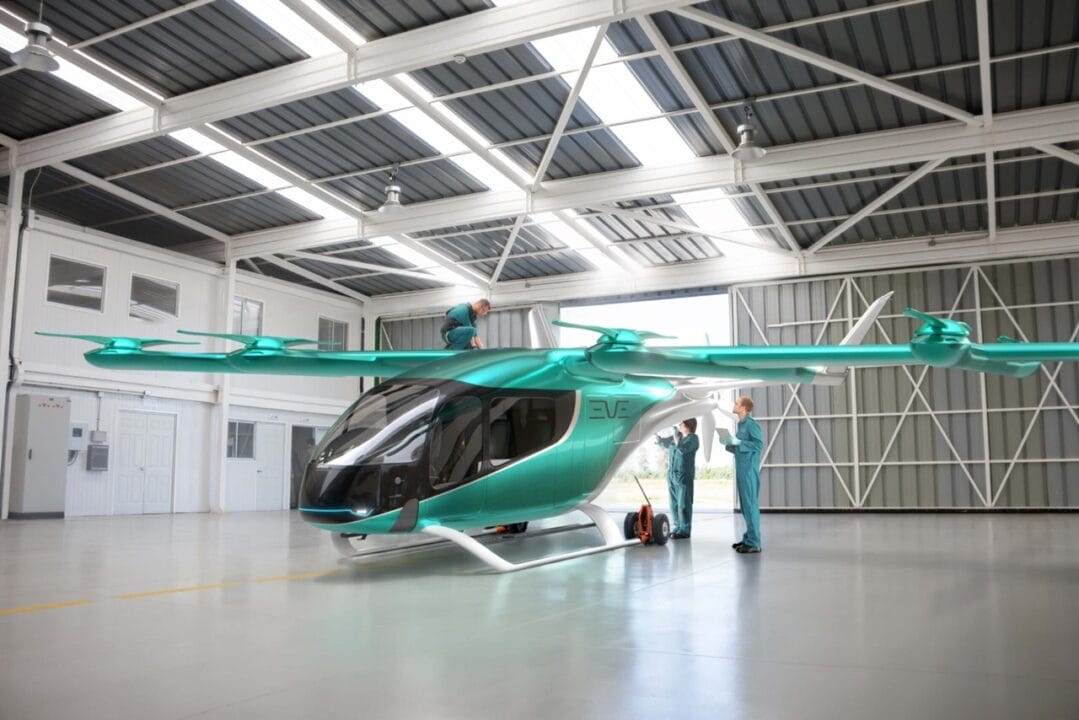

A Study of Operation Carried Out by the Company Priced at R$ 99 for a Trip Between Barra da Tijuca and Galeão Airport in Rio de Janeiro.
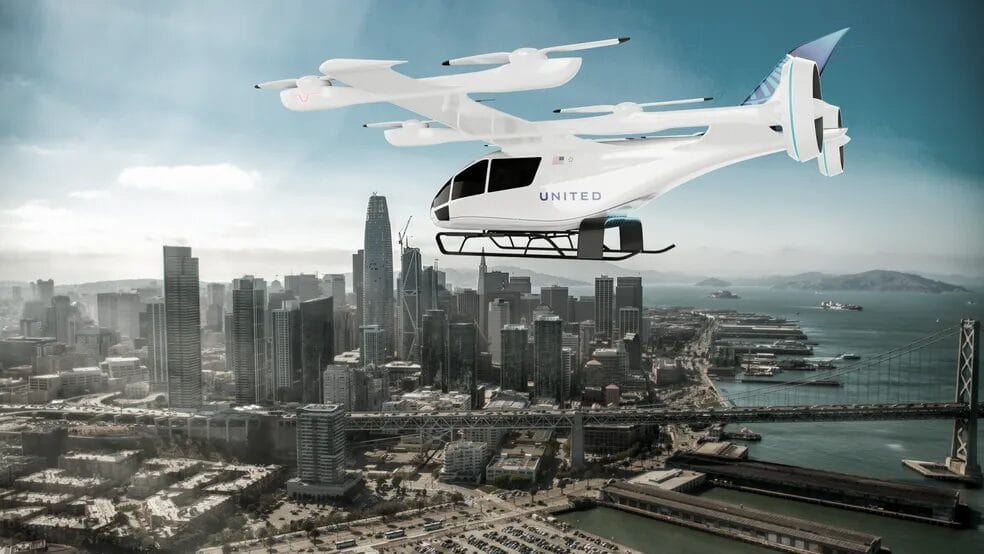
Have you ever imagined flying through the skies of the city in a vertical takeoff and landing electric vehicle, known as eVTOL? Well, Embraer is making this dream a reality with its latest innovative project: the “flying car” EVE-100, produced by Eve Air Mobility, its urban mobility company.
Embraer’s flying cars are eVTOLs, electric vehicles that promise to revolutionize urban transport. With a maximum range of 100 kilometers, these vehicles will reduce trips that used to take an hour to just 15 minutes, covering 99% of intercity routes. They have lower operational and maintenance costs than helicopters, as well as reduced noise emission and zero CO2 emissions, thanks to their electric propulsion.
The flying cars will operate on specific routes, such as transportation to airports and vertiports (a type of helipad). There are also plans for tourist flights. The first locations to receive these vehicles will be São Paulo, Rio de Janeiro, Rio Grande do Sul, and San Francisco, in the United States. Additionally, clients in other countries, such as Norway, Australia, Kenya, Dubai, and the United Kingdom, are also interested in this innovation.
-
Less than a Tera TSI, up to 710 km of range and charging in 9 minutes: the new BYD Song Ultra expands the Chinese brand’s bet on increasingly faster, more technological, and competitively priced electric SUVs.

-
BYD Dolphin 2027 gains more power, increases in size, changes interior, and abandons controversial feature to face new competition in Brazil.
-
With a 1.0 engine producing 75 hp and costing less than R$ 70,000, Fiat’s car returns to the podium as the cheapest in the country; a temporary promotion for the 2026 Like version reduces the price of the Fiat Mobi.
-
With a mild hybrid system of 48 V, 176 hp and a price of R$ 175,990 in the Sahara version, the new Jeep Renegade changes mostly on the inside, improves slightly in fuel consumption, and remains almost the same car.

Affordable Pricing and Diverse Clients: Democratizing Urban Flights
The company estimates that the price of a trip in a flying car will be closer to the cost of a ride-hailing service than to a helicopter flight, making urban flights more accessible. A study of operation carried out by the company priced at R$ 99 for a trip between Barra da Tijuca and Galeão Airport in Rio de Janeiro.
With letters of intent for up to 2,850 eVTOLs (representing over US$ 8 billion) from helicopter operators, airlines, leasing companies, and shared flight platforms, Eve has a diverse clientele around the world.
Capacity and Operation of Embraer’s Flying Cars
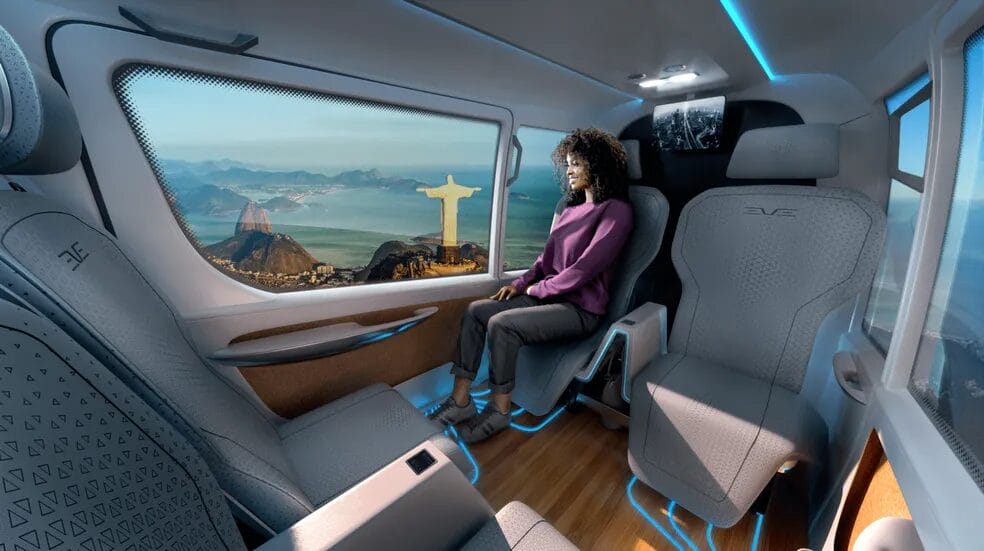
Each flying car from Embraer will have the capacity for four passengers and one pilot. The eVTOLs are called “flying cars” because they integrate into urban mobility, connecting communities from point A to point B similarly to ground transportation. The idea is that the service will be offered through ride-sharing applications, like car-hailing services.
Regulation and Sector Consultation at Anac: The Certification Process for Flying Cars
With nearly three thousand orders and an expected start of operations in 2026, Embraer’s flying cars are undergoing a regulation process at the National Civil Aviation Agency (Anac), responsible for overseeing civil aviation activities in Brazil. Recently, Anac opened a sector consultation to receive suggestions and ideas that could integrate the certification of the eVTOLs manufactured by the Brazilian company.
The sector consultation will remain open until next Friday (15) and can be accessed on the official agency website. The goal is to gather comments on the airworthiness criteria to be established for the Eve model. Anac explained that comments are accepted regarding various requirements, such as weight and center of gravity, structures used, navigation characteristics, among others.
Currently, there is no specific regulation for eVTOLs, as the model is new to aviation. Therefore, the airworthiness criteria used for Embraer’s flying car will be based on the requirements contained in the Brazilian Civil Aviation Regulations (RBAC). According to aviation expert Fernando Capuano, this consultation is fundamental for creating a set of rules and standards for a completely new category of aircraft.
“Each aircraft model needs to follow international criteria and those specific to the country where they are manufactured. But with flying cars, everything is new. It’s a new category that did not exist until now. There is still no set of rules for ‘eVTOLs’ and for the EVE-100,” he explains.
“So it is necessary to create a set of rules and standards when a new category arises. And this consultation serves to spark discussions and let interested parties in the field speak and suggest ideas. Their moment is now. This is very important, as great care must be taken in forming this type of regulation,” he adds.
Capuano emphasizes that the consultation serves to spark discussions and allows interested individuals in the field to suggest ideas. With flying cars, everything is a great novelty, representing a new category that did not exist until then. Therefore, it is crucial to be cautious in forming this type of regulation, ensuring the safety and efficiency of these aircraft.
The Future of Urban Mobility: The Impact of Embraer’s Flying Cars
With the EVE-100, Embraer is leading a revolution in urban mobility. The flying cars promise not only to transform the way we move around cities but also to open new transportation possibilities, making urban flights more accessible and efficient. With certification underway at Anac and an expected start of operations in 2026, the future of flying cars seems ever closer.
Embraer’s flying cars represent a true revolution in civil aviation and urban mobility. With nearly three thousand orders and a certification process underway at Anac, these eVTOLs are about to change the way we move around cities. With a capacity of four passengers and one pilot, these electric vehicles promise to reduce travel time and make urban flights more accessible. With the opening of sector consultation by Anac, the participation and contributions of the aviation community are essential to ensure the safety and efficiency of these aircraft.
Source: fanoticias.com, March 13, 2024








Salvar vidas, primeira a ser resolvida ou seja, com o recurso de paraquedas assim evitando os acidentes que podem ocorrer.
Avanços enormesl da tecnologia nacional via Embraer e sua confiabilidade de seus produtos a níveis mundiais., faz que seu carro voador o Vtol que será lançado em 2026, já tenha encomendas de quase 3.000 unidades do seu carro voador, no valor de pefidos de cerca de US$ 08 bilhoes de dolares .
Quando estamos em uma pista em uma rua, avenida ou estrada com nossos veículos terrestres estamos limitados a uma pista ,por exemplo, de média de 08 mts. de largura e ns msioria dos casos em uma extensa fila de veículos muitas vezes atrás e outros à nossa frente. Ou seja, nosso espaco de circulacao é limitado. é estressante e muitas vezes moroso e perigosi..
Ora, o carro voador é uma revolução a níveis mundiais no sistema de transportes das grandes oncentrações urbanas , pois , o espaco aereo nao tem limitações e ,e’ livre e o veiculo nao tera limites de espaços e chegará ao seu destino com segurança e rapidez. No futuro próximo , todos os cidadoes moradores de grandes metropoles e até de cidades menores e no meio rural etc a niveis mundias ,em vez de terem carros que não voam, deverão optar terem carros voadores .
Por que chamar isso de carro voador? Pra ser carro voador teria que rodar junto com todos nas vias terrestres. Isso não deixa de ser um helicóptero com mais facilidade de pilotagem.