





 Portuguese
  English
  Spanish
  5 min of reading
  0 comments


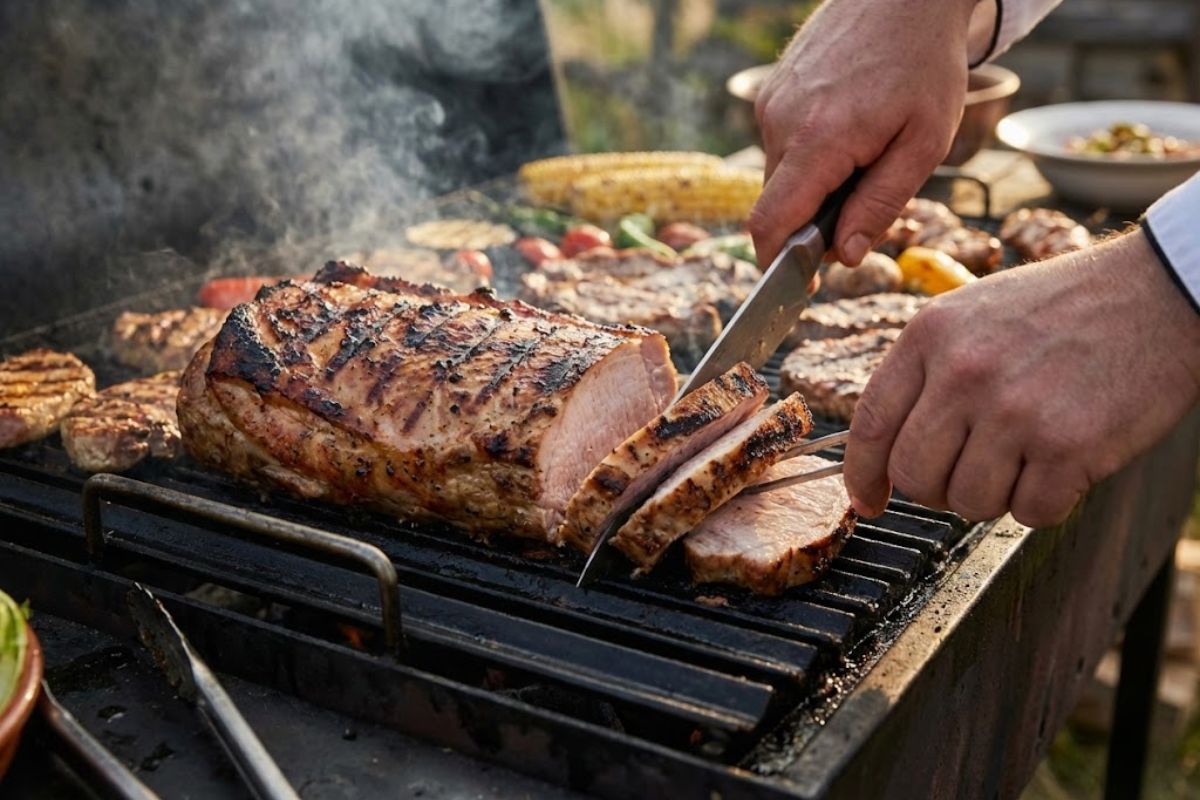
With a Price Around R$ 25 in Promotions, Pork Loin Has Stepped Out of the Secondary Category and Into the Center of Domestic Barbecue: It Is Versatile, Grills Quickly, Works Well in Steaks, Skewers, and Sandwiches, Reduces Purchase Costs, and Maintains Juiciness When the Preparation Respects Heat and Rest on the Final Grill.
The Pork Loin has ceased to be just an emergency alternative and has taken on a noble space in weekend barbecues, especially among those who want to serve well without relying on more expensive beef cuts. The change has an objective reason: it combines affordable price, yield, and consistent results on the grill.
In practice, the movement has gained strength among families, groups of friends, and home grillers who have started to compare cost per meal, preparation time, and table acceptance. When the budget tightens, the cut that previously was underestimated emerges as a real solution: lighter purchase, simple preparation, and a dish that does not lose presence.
The Cut That Stepped Out of the Shadows and Became the Protagonist

For a long time, Brazilian barbecue was concentrated on a few traditional cuts while pork was treated as a complement. This pattern began to change when consumers realized that pork loin delivers natural tenderness due to its fine fibers and a structure that responds well to the heat of the grill.
-
In Sweden, Embraer subjects the KC-390 to rigorous testing in extreme cold, conducts operations in the snow with 100% success, and expands its presence among NATO countries.

-
An 8-kilometer submerged city discovered 36 meters deep in the Arabian Sea may be 9,500 years old and, if confirmed, would be older than any known civilization and coincide with the legendary Dwarka described in Hindu texts.

-
Roman game becomes an enigma for 40 years in the Netherlands, until AI and 3D scanning test 100 rules, run 1,000 simulations, and identify a “blocking game” that no one has been able to decipher since 1984.

-
A scientist proved with a thermal camera that the fan does not cool the environment but reduces the temperature of your skin by up to 6 degrees thanks to a natural mechanism of the human body that almost no one understands how it really works.


Another decisive point is versatility. The same cut can be prepared in larger pieces, thick steaks, or cubes for skewers, making it easier to adapt the menu to the size of the gathering. Instead of relying on a single meat for everything, many people started to create a balanced barbecue with variety and lower costs per person.
Price, Yield, and Purchasing Decisions in Daily Life
When priced around R$ 25 in promotions, pork loin competes directly with more expensive cuts in the shopping cart. This price not only serves as a “price bait”: it changes the logic of purchasing because it allows buying a larger quantity without compromising other weekly expenses.
In addition to the initial cost, there is culinary yield. Since the cut accepts simple seasonings—garlic, coarse salt, and herbs—the final preparation cost remains controlled. This matters for those who organize frequent barbecues: it’s not just about paying less for the cut, it’s about maintaining spending predictability from the market to the table.
How to Prepare Pork Loin on the Grill and Preserve Juiciness
In preparation, three decisions make a difference: meat temperature before going to the fire, heat intensity, and resting time after grilling. Taking the cut out of the refrigerator in advance prevents a sudden thermal shock, helping to achieve more uniform cooking. Subsequently, sealing over higher heat creates a golden surface and toasted flavor.
After sealing, the ideal is to finish over moderate heat to cook through without drying out. Another important consideration is not to pierce the meat during the process, as this accelerates juice loss. Seal, control the heat, and respect the resting time is the trio that transforms a cheap cut into a high-level result.
Serving Formats: Steaks, Skewers, and Sandwiches
One reason for the rise of pork loin is the ease of presentation. In thicker steaks, it serves as the main piece of the dish. In skewers, it becomes a practical option for serving many people with standardized portions. In thinner slices, it gains new life in barbecue sandwiches, with a tender texture and strong flavor.
This flexibility aids in different events: family lunch, quick gathering in the late afternoon, or larger barbecues with guests. The same cut adapts to the host’s style and the profile of the guests without requiring complex techniques. It is a meat that simplifies planning and reduces last-minute improvisation.
Where Pork Loin Fits Best on the Menu
On the menu, pork loin performs well as the main axis when the goal is to save without sacrificing barbecue experience. It can also serve as a “balancing cut”: while other pieces bring fat and intensity, pork loin delivers a lighter profile and broadens the menu’s appeal to different preferences.
In terms of routine, it especially serves those who frequently barbecue and do not want to turn every gathering into an expensive purchase.
The combination of lower costs, straightforward preparation, and good acceptance creates a new logic: less focus on cut ostentation and more focus on final results, fellowship, and sustainable repetition of barbecues throughout the month.
Common Mistakes That Diminish the Quality of a Good Economic Cut
Even though it is simple to prepare, pork loin can disappoint when certain mistakes are repeated. The first is excessive heat from start to finish, which browns quickly on the outside and dries out on the inside. The second is ignoring the thickness of the cuts: very thin pieces lose juiciness easily if grill control fails.
Another frequent issue is excessive handling: flipping constantly, pressing the meat against the grill, and cutting too soon. Small habits like these can cost dearly in the final result.
Cheap only pays off when the preparation respects basic techniques, as this preserves texture, flavor, and quality perception on the plate.
Real Savings Without a “Bland” Barbecue
The rise of pork loin indicates a clear shift in consumption: the public seeks balance between price, practicality, and the pleasure of eating well.
When an affordable cut can deliver tenderness, versatility, and good performance on the grill, it ceases to be a “plan B” and becomes a strategic choice for those contemplating the complete barbecue experience.
Now it’s worth comparing with your routine: in your neighborhood, does pork loin already rank among the top purchasing options for barbecue? And in your grill test, has it completely replaced more expensive cuts or come as a complement to the menu?










-

-

-

4 pessoas reagiram a isso.