Portuguese
  Spanish


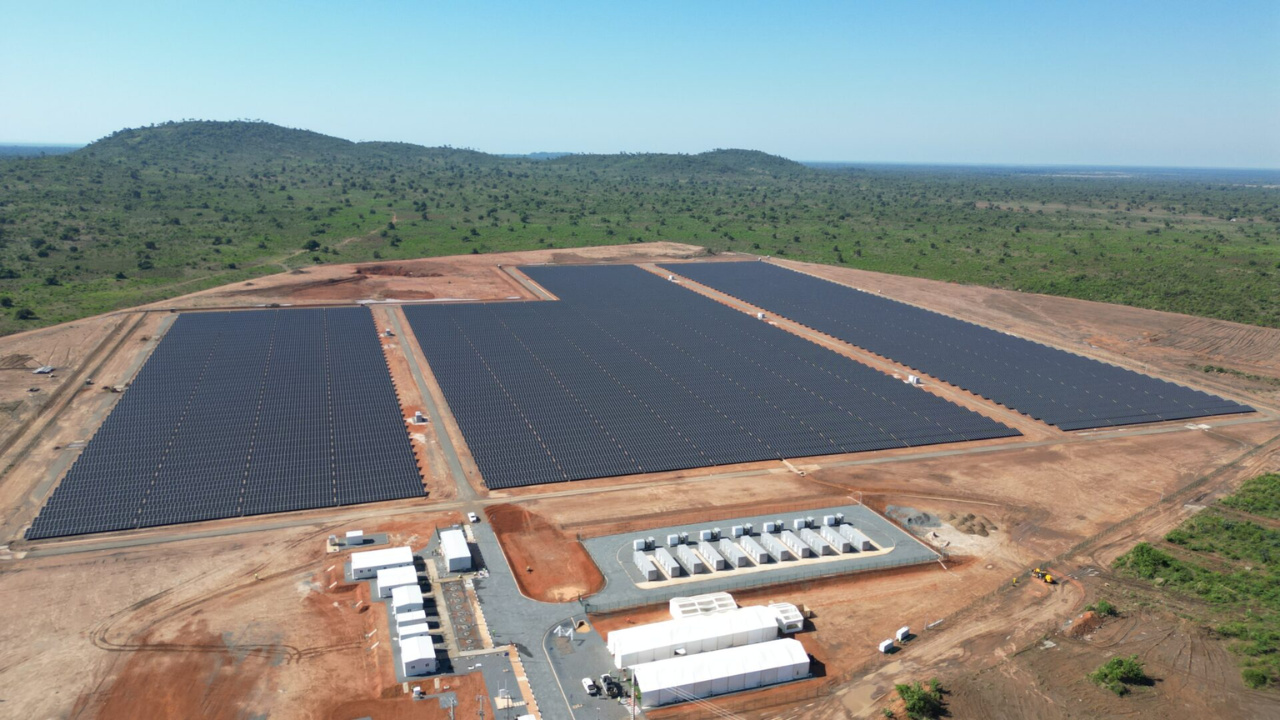

The Largest Off-Grid Solar Power Plant in Africa Began Operation in Cazombo, Eastern Angola. The Project Uses Solar Energy with Batteries, Reduces Fossil Fuels, and Benefits Over 136 Thousand People.
Solar energy has taken a central role in the electricity supply of eastern Angola. In Cazombo, the capital of Moxico Leste, the largest off-grid photovoltaic power plant on the African continent has officially come into operation.
The infrastructure ensures, for the first time, continuous electricity supply to the region, including during the night, thanks to a battery storage system.
The project represents a milestone for the energy transition in rural areas. Additionally, it inaugurates the first autonomous system of its kind in the country, significantly reducing dependence on diesel generators, which for decades have been the only available alternative for many communities far from major urban centers.
-
Island in Brazil Innovates by Installing 184 Solar Panels on Urban Lagoon to Generate Clean Energy

-
Japanese Island of 417 Residents to Test Living Half the Year Solely on Solar Power, Reducing Dependence on Diesel Brought by Ship
-
Brazilian Fishermen Use Solar Power to Produce Nearly One Ton of Ice Daily, Preventing Fish Spoilage Before Reaching Market
-
Brazil, known for its river-powered energy, installs solar plant in mountains to boost winter electricity production



Infrastructure Invests in Solar Energy with Large-Scale Storage
Developed and executed by the MCA Group, the photovoltaic plant features over 40 thousand solar panels installed. The unit has a capacity of 25.40 MWp and a storage capacity of 75.26 MWh, which ensures stability in electricity supply throughout the day and night.
As a result, the system was designed to serve over 136 thousand people, promoting greater predictability in consumption and eliminating the frequent fluctuations that characterized local supply.
The intensive use of stored solar energy also contributes to a significant reduction in operational and environmental costs.
According to project data, the operation of the plant will save about 10 million liters of fuel per year. At the same time, it is estimated that approximately 37 tons of carbon dioxide (CO₂) will be reduced, reinforcing the alignment of the initiative with environmental and climate goals.
During the construction phase, the project generated over 300 jobs, boosting the local economy. Thus, in addition to its energy impact, the undertaking also had direct effects on family income and the dynamism of the region.
Rural Electrification Progresses with Sustainable Solar Energy
The commissioning of the plant marks the practical start of the Rural Electrification Project, which aims to bring solar energy to 60 Angolan communes.
This is one of the largest public investments in renewable energy in the interior of the country, focusing on universal access to electricity.
According to Manuel Couto Alves, chairman of the MCA Group, the initiative demonstrates the adaptation of technology to specific contexts and reinforces the social benefits of the project. “This project represents, for us, not only a technical challenge overcome with excellence but also a significant transformation in the quality of life for the populations,” he stated.
The official also highlighted the symbolism of seeing “people’s homes with electric light from green energy.”
Cazombo Now Has Its First Major Source of Electricity
With an estimated population of around 411 thousand inhabitants, Cazombo has faced serious limitations in energy supply for decades.
The city, now the capital of the new political-administrative region of Moxico Leste, has never had a structured source for electricity production and distribution.
In this context, the photovoltaic plant assumes a strategic role. Solar energy becomes the basis for local electricity supply, expanding access to lighting, improving essential services, and creating more favorable conditions for economic and social development.
Initiated in 2023, the Rural Electrification Project is set to be completed by 2026. The initiative involves the MCA Group and the Angolan Government, through the Ministry of Energy and Water and the Ministry of Finance.
The financing is led by Commerzbank AG, with a guarantee from the German export credit agency Euler Hermes (ECA).
The global plan envisions the implementation of 46 isolated solar mini-grids. In total, the expansion is expected to benefit over one million people in 60 communes, with 256 MWp of installed photovoltaic power, 595 MWh of storage, and more than 202 thousand household connections.
Sustainability and Social Inclusion Guide the Projects
The projects developed by MCA follow principles of sustainability and social responsibility. The company operates with integrated solutions in energy, urban infrastructure, water supply, and health. Additionally, it invests in social programs designed in partnership with local institutions.
According to the company, the central objective is to strengthen communities, increase regional resilience, and prepare the country for a future based on solar energy and other renewable sources. In this scenario, the Cazombo plant emerges as a reference for new investments and for the consolidation of a clean energy matrix in Angola.