





 English
  Francês
  Alemão
  Italiano
  Japonês
  Norueguês
  Portuguese
  Spanish
  3 min of reading



NR 18 – Simplification of Health and Safety Standards in Construction Enhances Worker Safety and Promotes Modernization
More safety for construction workers! The approval of the new NR 18 – Safety and Health in the Construction Industry, published last Tuesday (11) in the Official Gazette by the Special Secretariat for Social Security and Labor of the Ministry of Economy, brought more safety and modernization to workers in the sector.
Read Also
- After More Than 45 Years, Government Completes Paving Works on BR-163 Between Pará and Mato Grosso
- 5,000 Job Openings in Construction for the New Phase of Klabin’s Puma II Project
- Many Approved Construction Projects in 2020 Will Result in an Alarming Growth of Job Openings in the Sector
NR 18 establishes guidelines for administrative order, planning, and organization aimed at implementing control measures and preventive safety systems in processes, conditions, and the work environment in the construction industry.
-
For 45 years, Spain and Morocco have been trying to connect Europe to Africa through a project of just 14 kilometers in the Strait of Gibraltar, and an active tectonic fault on the seabed continues to make the project nearly impossible.

-
Goodbye expensive water tank: residents replace traditional system with a cheaper and more efficient solution that reduces water consumption and reuses rainwater.

-
Mexico is building a 300-kilometer railway corridor that connects the Pacific to the Atlantic in just seven hours and wants to compete directly with the Panama Canal, which is already facing water scarcity issues.

-
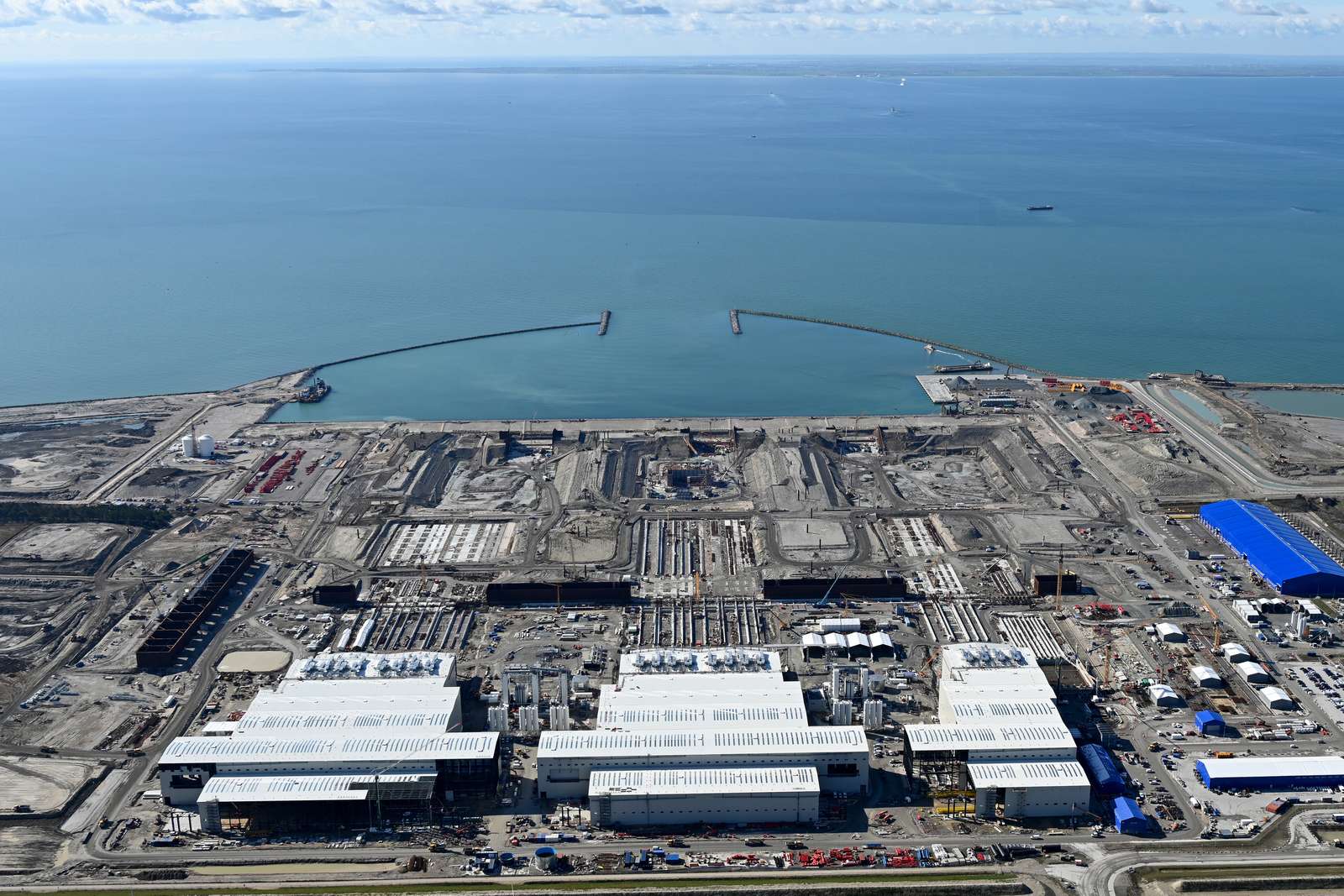
The largest tunnel module factory in the world was built from scratch on a beach in Denmark to produce 89 concrete blocks and will be demolished after the project: each structure weighs up to 10 times the Eiffel Tower and will be installed on the bottom of the Baltic Sea with an accuracy of 12 millimeters in a tunnel that will halve the travel time between Hamburg and Copenhagen.

The new NR 18 is simpler, more straightforward, and easier for authorities to oversee. At a time when construction is leading the economic recovery, there was a need for simpler, less bureaucratic standards that still ensure the health and safety of workers.
The standard now states what needs to be done, not how it should be done. In other words, the responsibility lies with the contractor and the individuals who will care for the health and safety of work.
Companies will have 24 months to abolish the use of the compressed air shaft, a task considered high risk for construction workers. Manual excavations will be limited to a depth of 15 meters.
Additionally, air conditioning will be mandatory in self-propelled machines (with their own movement) weighing over 4,500 kilograms and in crane equipment.
Companies will not be allowed to adapt containers for workers’ living areas, such as cafeterias, changing rooms, or construction offices.
The new standard also brings safer rules for performing excavations and for tasks involving heat, such as welding and grinding.
Modernization of NRs
Since February 2019, in addition to NR 18, NR 1, which deals with general provisions on health and safety; NR 3, about embargoes and interdictions; NR 12, on safety in machinery and equipment; NR 20, about flammable and combustible materials; NR 24, which addresses hygiene and comfort conditions in workplaces; and NR 28, concerning inspections and penalties, have all been completely revised.
NR 2, regarding prior inspection, has been revoked. There has also been a revision of the heat annex in NR 15 and the item regarding the hazard of fuel for personal consumption in NR 16.
Estimates from the Economic Policy Secretariat of the Ministry of Economy indicate a cost reduction of nearly R$ 5 billion in the construction industry over 10 years with the new wording coming into effect.
The calculation is based on information from the Brazilian Chamber of Construction Industry (Cbic), considering the simplification presented by the new text, the possibility of adopting better management practices, and the improvements in health and safety regulations.
See the full text of Ordinance 3.733/2020.










Seja o primeiro a reagir!