





 Portuguese
  English
  Spanish
  5 min of reading
  0 comments


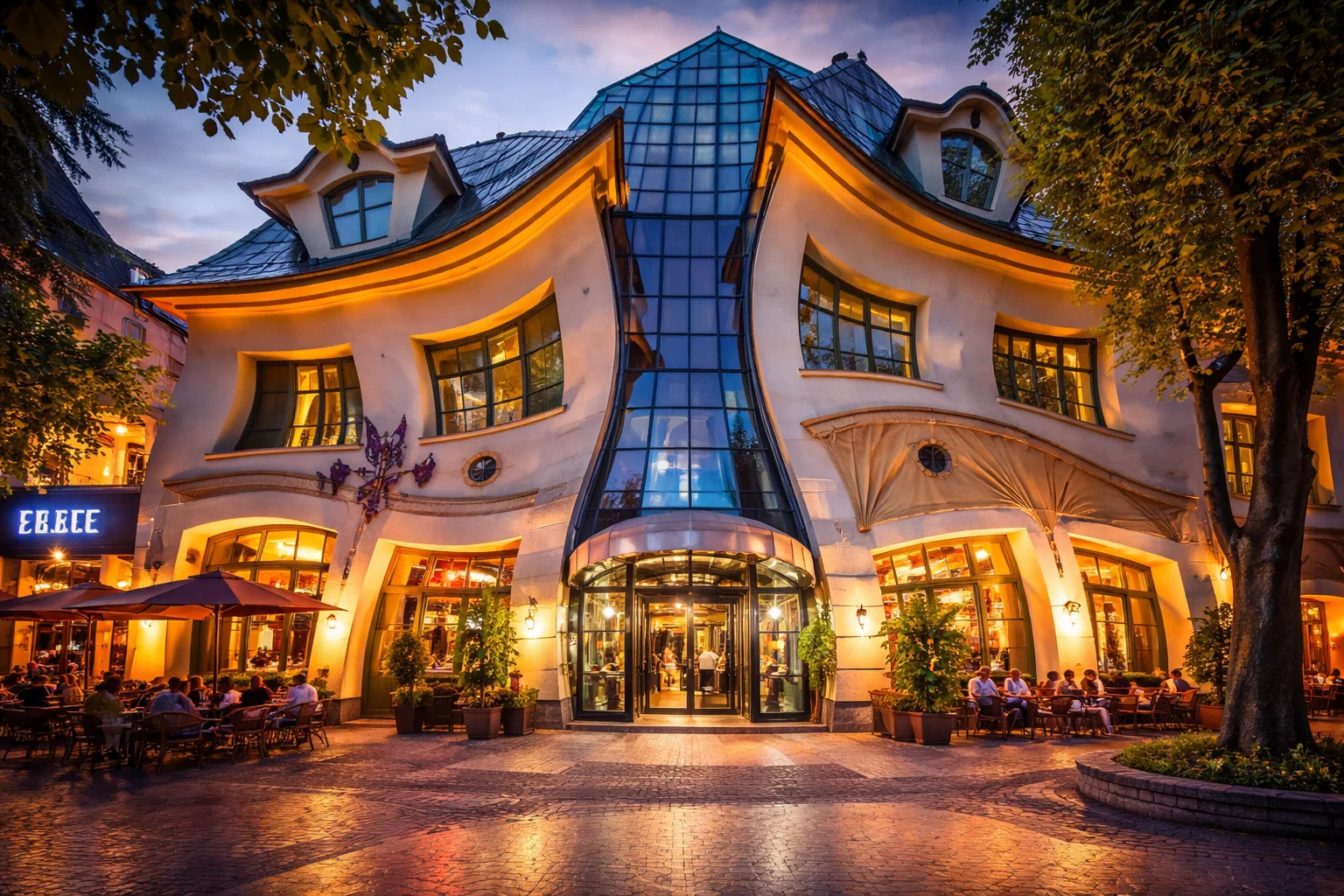
Surreal Construction on the Coast of Poland, the Crooked House Hides Precise Engineering Behind the Wavy Facade and Is Now Transforming Into Sopot’s First Gastronomic Market, Bringing Together Restaurants, Bars and a New Urban Consumption Model
The Crooked House of Sopot, internationally known as Krzywy Domek, gained worldwide fame precisely for challenging visual logic. Now the building enters a new phase and begins to host the city’s first large gastronomic market, bringing together restaurants and bars in a space that was already one of the most photographed tourist spots in Poland.


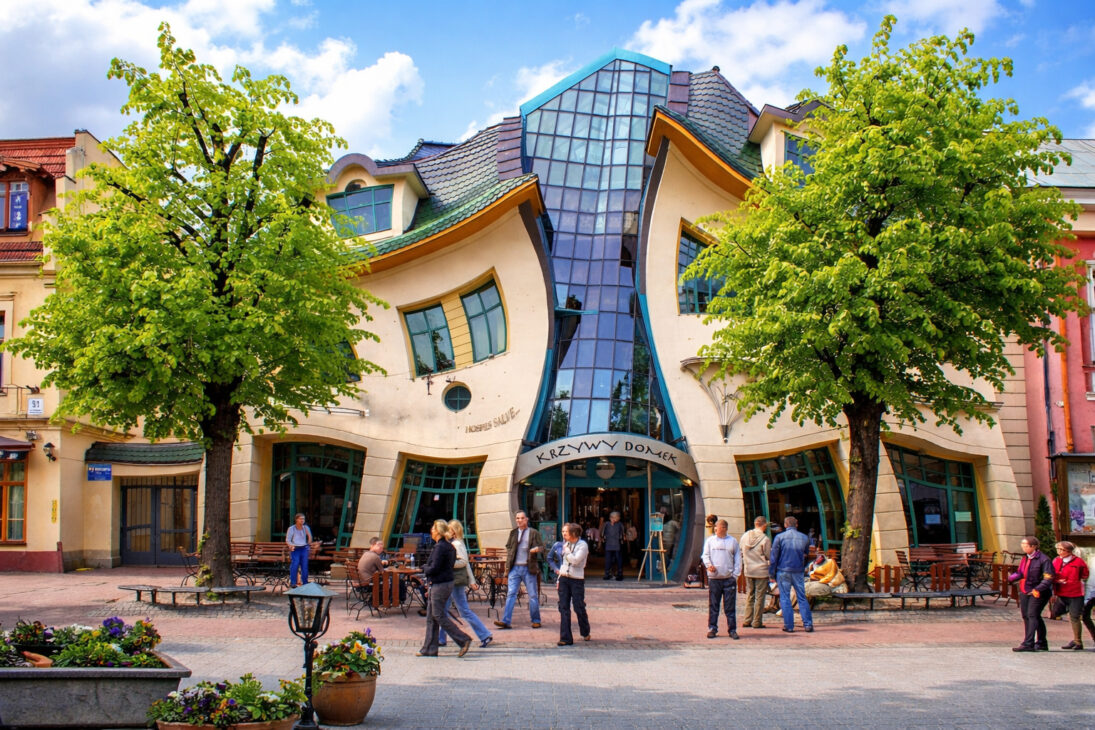
At first glance, it seems that the building has been pushed, crushed, or even melted by the heat. The walls undulate, the windows appear slanted, and the roof gives the impression of dripping. But what seems like a construction error is, in fact, one of the most calculated architectural projects in Europe.
The Building That Appears to Melt Challenges Perception, But Hides a Classic Structure of Concrete and Steel That Supports Almost Four Thousand Square Meters
The Crooked House was inaugurated in 2004, in the center of Sopot, a coastal city known for tourism on the Baltic Sea.
-
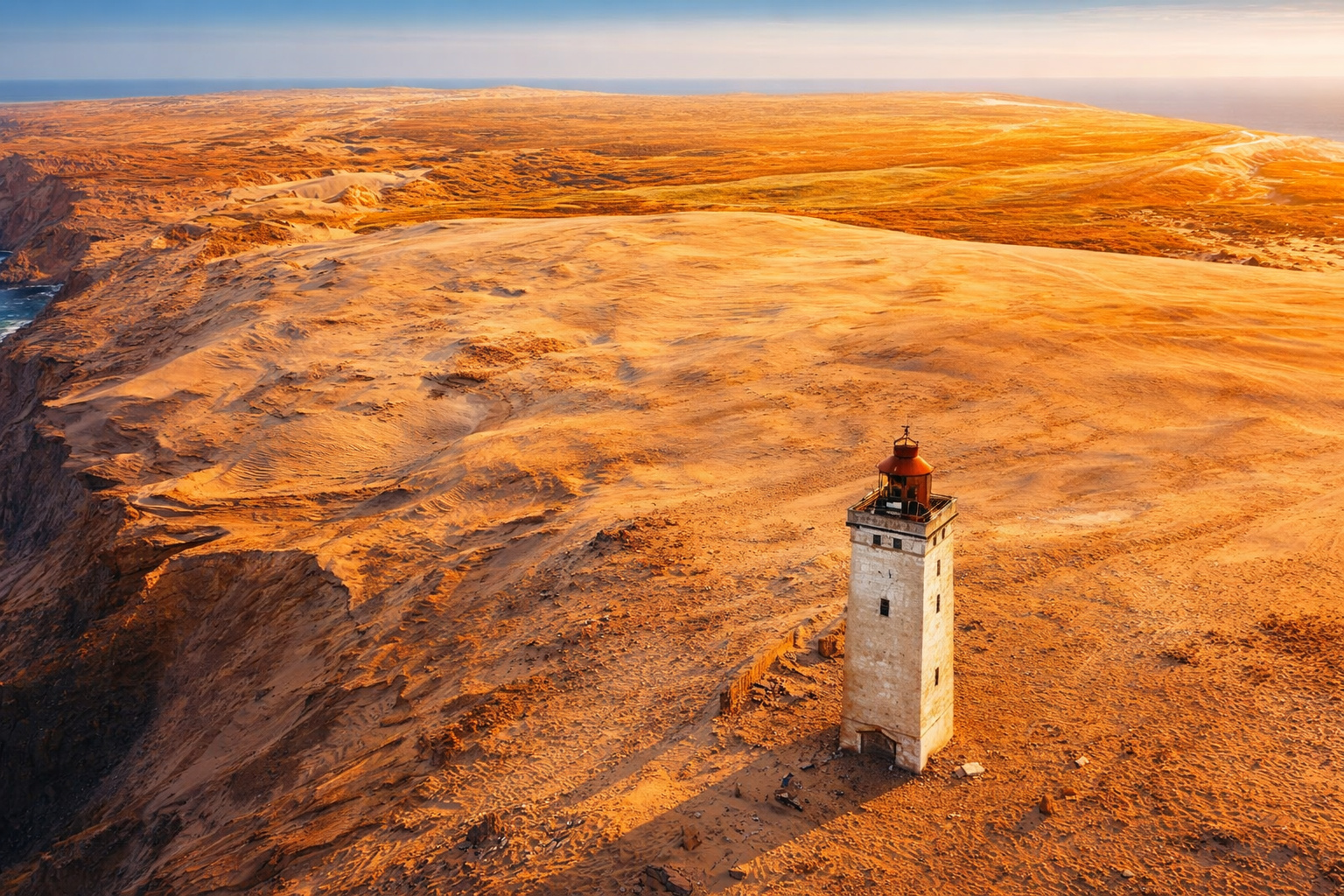
Attracting around 250,000 people a year, a lighthouse 200 meters from the sea, on a 60-meter high cliff, on the North Sea coast in Denmark, becomes one of the most impressive examples of how nature can threaten historical buildings.
-
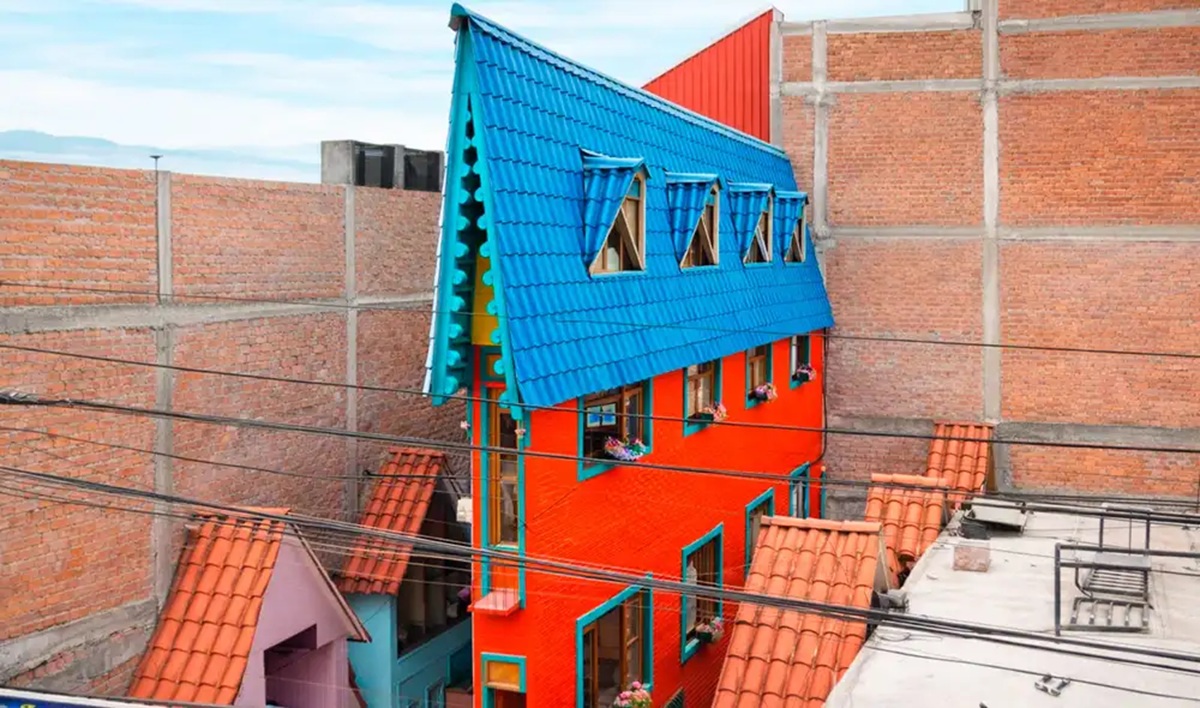
The narrowest house in the world is only 63 centimeters wide, but inside it can accommodate a bathroom, kitchen, bedroom, office, and even two staircases.
-
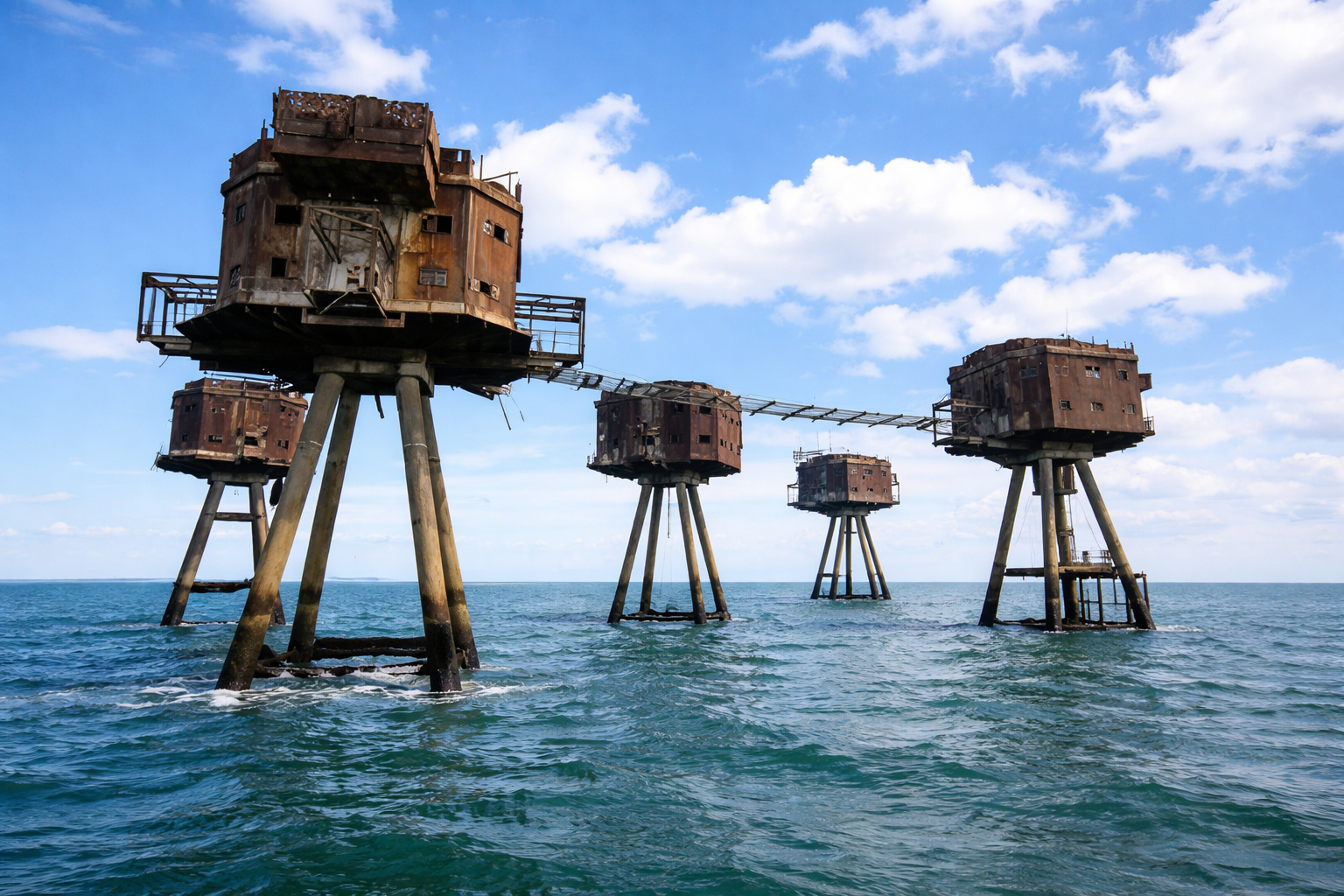
In the middle of the sea, these enormous concrete and steel structures, built by the British Navy to protect strategic maritime routes, look like they came straight out of a Star Wars movie.
-
For years, no one could cross a neighborhood in Tokyo because of the tracks, but an impressive solution changed mobility and completely transformed the local routine.

The building has about 4 thousand square meters and is part of a commercial complex called Rezydent.
Despite its almost surrealist appearance, the main structure follows classic principles of civil engineering.
The pillars are vertical, the beams follow conventional structural standards, and the building’s loads are distributed in a traditional manner. The impression of distortion is created by the facade, designed with curves and carefully planned undulations.
The architects responsible for the project were inspired by illustrations from children’s books created by Polish artists, which depicted crooked houses and fantastic scenarios.
The result was a building that appears to have been drawn by a cartoonist, yet calculated with millimeter precision.
Irregular Facade and Slanted Windows Reveal One of the Most Curious Secrets of Contemporary European Engineering
The deformed appearance of the Crooked House did not arise by chance.
Each curve of the facade required specific construction solutions.
Much of the external pieces were custom-made, as the surfaces do not follow repeated patterns. This means that many structural elements of the facade needed individual adaptation during construction.
This type of construction raises costs and complexity but creates something rare in the world of modern architecture: a building that is impossible to confuse with any other.
Another detail draws the attention of engineers.
Even with its irregular appearance, the internal structural elements remain aligned with the basic laws of physics. Gravity continues to be adhered to. What changes is only the building’s “skin.”
This architectural technique, referred to by specialists as architectural visual distortion, creates a sense of instability without compromising safety.
Wavy Roof and Curved Surfaces Required Industrial Solutions Similar to Those Used in Iconic Architectural Projects
One of the greatest challenges of the construction was the roof.
The top of the Crooked House seems bent as if made from a malleable material. To create this effect, engineers used lightweight structures combined with molded metallic coverings.
The curves needed to be calculated to ensure three essential factors.
Proper waterproofing, structural resistance, and uniform weight distribution.
Projects with this type of geometry often require manufacturing processes closer to those in the shipbuilding or aerospace industries, where curved pieces are custom-made.
According to architecture specialists, the success of the building lies precisely in this balance between visual fantasy and structural logic.
The Surreal Building Is Now Transforming Into an Urban Gastronomic Market That Follows International Trends in Major European Centers
After two decades of functioning with bars, restaurants, and commercial spaces, the Crooked House is undergoing a new transformation.
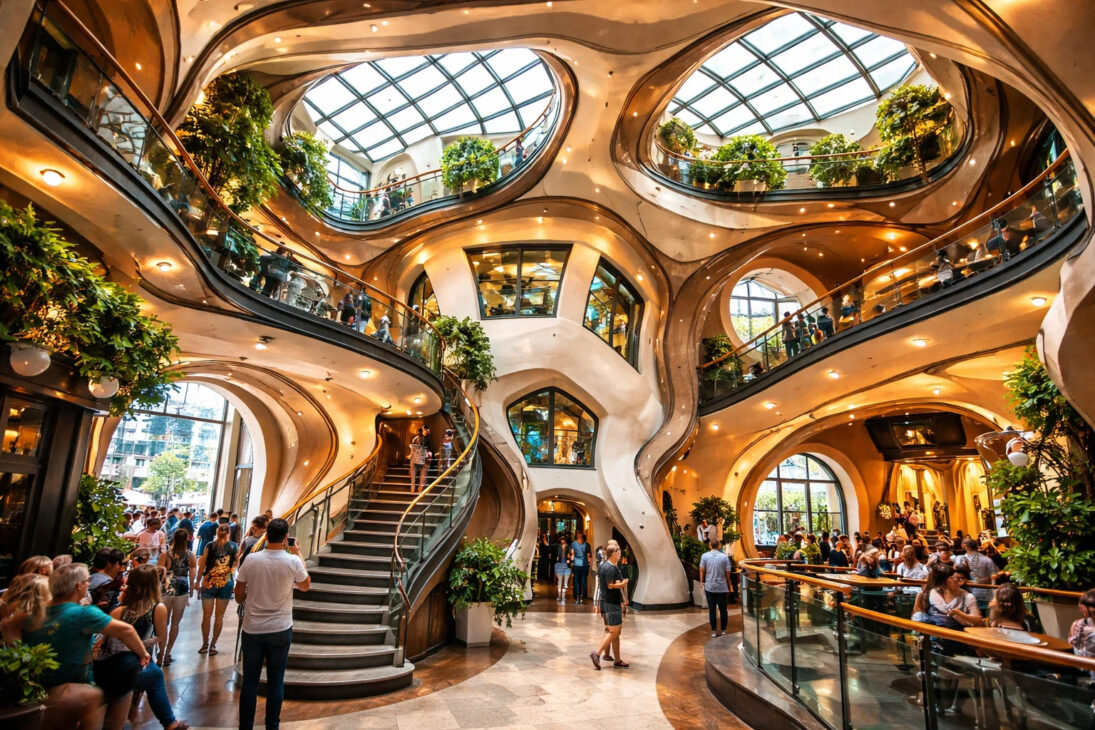
The building now houses an urban food hall, a model that brings together different cuisines in a single shared space.
The concept has already spread to cities like Lisbon, Madrid, and New York.
In the case of Sopot, the new gastronomic market brings together various restaurants, bars, and communal areas in an indoor environment that also hosts cultural events.
Estimates suggest that the space has about 160 seats for visitors, as well as areas designated for presentations and gastronomic gatherings.
This transformation aligns with an important urban trend.
Tourist cities are converting iconic buildings into gastronomic and cultural centers to increase visitor flow throughout the year.
Architecture That Challenges Logic Becomes a Powerful Tool for Tourism and Urban Economy
The success of the Crooked House goes beyond architectural curiosity.
The building has become a symbol of Sopot and frequently appears in international rankings of the most curious constructions in the world.
This reveals a growing phenomenon in modern cities.
Architecture has also become an economic strategy.
Visually unique structures attract tourists, thereby boosting commerce and creating urban identity.
In the case of the Crooked House, the equation combines three powerful elements.
A seemingly impossible design, precise engineering, and now a new gastronomic hub that extends visitors’ stay in the city.
This type of project illustrates how architecture, tourism, and the economy can work together.
The Crooked House of Sopot continues to intrigue those who pass by it for the first time. The building seems to challenge the laws of physics, but in reality, it shows exactly the opposite. Behind the chaotic appearance lies precise engineering, rigorous structural calculation, and now a new urban chapter that transforms the building into a gastronomic center that promises to attract even more visitors to the Polish city.
If you have seen photos of the Crooked House or would visit such a building, let us know in the comments. Would you have the courage to enter a building that looks this crooked?






Seja o primeiro a reagir!