





 Portuguese
  English
  Spanish
 5 min of reading
  4 comments


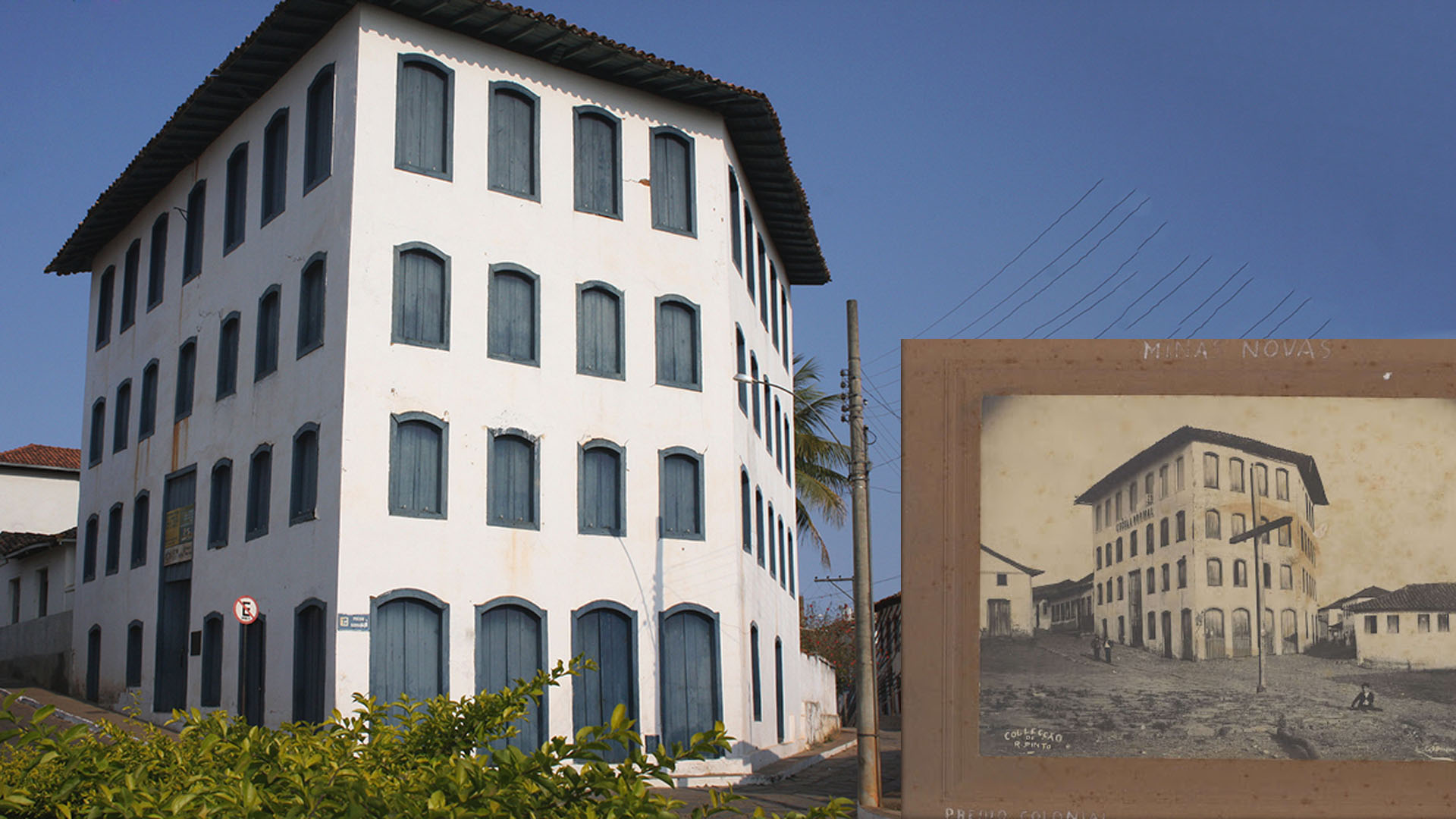


Built in 1821 with wattle and daub and wood structure, the “Sobradão” of Minas Novas (MG) was restored by Iphan in 2021 and housed a jury in 2022. The building is known as the “first skyscraper” of Colonial Brazil and remains a symbol of the Jequitinhonha Valley.
The “Sobradão” of Vila do Fanado, in Minas Novas, is a rare case of large-scale colonial architecture built of wattle and daub and wood. Built in 1821, it has four floors and a volume that contrasts with the surrounding buildings. For this reason, it is locally known as the “first skyscraper” of Colonial Brazil.
After conservation work completed in May 2021, the property regained stability and usability. The investment was R$ 886.7 thousand, according to Iphan, responsible for the intervention. The doors and windows were restored, ensuring the reading of the original typology.
In May 2022, the Tribunal de Justiça de Minas Gerais (TJMG) held a jury session at the “Sobradão,” reinforcing the building’s connection to local public life. The act also highlighted the building’s capacity to host contemporary programs.
-
These living root bridges and ladders are over 700 years old and help indigenous people survive in one of the rainiest regions in the world.

-
From sertanejo star to international investor: Ana Castela invests millions in a mansion in the USA, creates a themed accommodation in Orlando, and shows that the “boiadeira” also wants to grow away from the stage.

-
The 10 most stunning motorhomes in the world: a $3 million trailer with a rooftop nightclub and garage for a Ferrari, “palaces on wheels” with Italian marble, private cinema, and five-star hotel luxury for billionaires.

-
Trump wanted to spend $400 million on the White House, but the courts prohibited the million-dollar construction.


The City Hall informs that the “Sobradão” is the main architectural reference of the city. The municipal plan provides for cultural use on the upper floors, with museums and tourist services, consolidating the building as a hub of historical tourism in the Jequitinhonha.
Where It Is and Why the “Sobradão” Gained Fame as the “First Skyscraper of Brazil”


The building occupies a central position on Getúlio Vargas Avenue, in Minas Novas, in the Jequitinhonha Valley. The presence of four floors in a single block, surrounded by single-story buildings and sobradões, creates the contrast that sustains the nickname. For the resident and the visitor, the relative height explains the aura of “skyscraper.”
The designation appears in documents and local reports and has been adopted by public agencies in institutional texts.
In technical literature, the term is used contextually, as it refers to Colonial Brazil, long before the metal buildings of the 20th century. The value of the “Sobradão” lies in its exceptionality for its time.
For the purposes of cultural heritage, the nickname helps communicate the uniqueness of the asset to a broad audience. Even though it is not a skyscraper in the modern sense, the building serves as an urban icon and a symbol of identity for Minas Novas.
Structure in Wattle and Daub and Wood: 4 Floors, 59 Windows, and a 3.6 m Door
The “Sobradão” was erected in 1821 using traditional techniques, combining wood structures and wattle-and-daub walls. This solution allowed for a rare volume for the period, maintaining lightness and stability when well preserved. Iphan describes the property as “a construction of large dimensions, unusual for this system.”
The main facade has four storefronts on the ground floor. On the sides, the set adds up to 59 windows and three storefronts, in addition to the main door, which measures 3.60 m in height. These numbers help understand the scale of the building and its cross ventilation.
Technical inventories and local memory confirm the count of windows and doors, reinforcing the uniqueness of the design. The repertoire derives from a functional logic: commerce on the ground floor and various uses on the upper floors. This solution is typical of colonial mining centers, but expanded here into four levels.
The external volumetric reading is also educational for students of architecture and restoration. The generous eaves and the rhythm of the openings express the adaptation of construction knowledge to the climate and topography. Proper conservation prevents common pathologies in exposed wattle-and-daub.
Restoration in 2021 and Approved Cultural Occupation Plan
The works delivered in May 2021 prioritized frames, coatings, and painting, after an emergency phase on the roof and floors between 2017 and 2018. With the structure stabilized, the priority shifted to reactivating public use and safety. The total investment reported was approximately R$ 886 thousand.
The City Hall developed the Occupational Plan for the Sobradão, approved by Iphan. The ground floor is expected to host a handicraft store, a Tourist Information Center, and a library; the upper floors would house museums of sacred art, Jequitinhonha craftsmanship, and a historical collection, as well as spaces for memory and training.
By linking preservation and social use, the plan aims to generate tourist flow and local employment. This strategy aligns with cultural economy policies and the regional circuit of Precious Stones, strengthening the narrative of Jequitinhonha.
From Forum and Political Projects to the Jury of 2022
The “Sobradão” served for long periods as the seat of the Forum of the district, reinforcing its civic centrality. Historical records cite proposals from the 19th century to make it the administrative headquarters of a province planned for the region, illustrating its relevance.
On May 17, 2022, a session of the Tribunal do Júri was held in the building, in a joint action with the TJMG. The event marked the building’s return to the public agenda and was celebrated by local authorities as a symbol of belonging and memory.
The Ministério Público de Minas Gerais highlighted, on the same occasion, the reach of the Jury Mutirão in the state and the civic dimension of the act in Minas Novas, which also connected with the celebrations around the building’s age. The ceremony projected the “Sobradão” nationally.
Is It a “Skyscraper” Really? The Term in the Context of Colonial Brazil
In current technical vocabulary, “skyscraper” refers to metal structures and elevators from the late 19th century onwards. However, in the mining context of the early 19th century, a building of four floors made of wattle and daub and wood was exceptional and, by comparison, “scraped the sky” of the urban landscape. The nickname is historical and contextual.
The regional press adopted the term to communicate the uniqueness of the asset and raise awareness for its preservation. This communicative pragmatics facilitates public engagement with heritage preservation and does not intend to rival with landmarks like the Martinelli Building, from 1929. The aim is educational.
The “Sobradão” is not a “skyscraper” by modern standards, but it is unique in its time and place. The historical, architectural, and symbolic value is what matters for Minas Novas and for the Jequitinhonha.
Do you think it is correct to call the “Sobradão” the “first skyscraper of Brazil” due to its exceptionality in the 19th century, or should the term be reserved only for the metal buildings of the 20th century? Leave your comment.








Fantástico. Mais de 200 anos de construído e permanece íntegro.
As casas modernas mal alcançam 50.
Importante dizer que em 1821 já não éramos mais colônia, mas reino unido.
Portanto, para o correto enquadramento da construção na história, trata-se do primeiro arranha-céu do Brasil como reino unido a Portugal e Algarve.
A independência foi proclamado em 1822
O Solar Ferrão é um excelente exemplo de arquitetura do período colonial. Localizado em Salvador, BA, na Rua Gregório de Matos (Pelourinho/Maciel), foi implantado na encosta e alcança uma altura equivalente a 6 andares na parte de trás, e ostenta 3 pavimentos na fachada principal. Tal obra não é hoje ilustrada como um “arranha-céu” do período colonial.
Outra edificação colonial alta na mesma região é a Casa dos Sete Candeeiros no Beco dos Sete Candeeiros (próximo ao Pelourinho). Datas de edificação documentadas que remontam ao final do século XVII e início do XVIII.
Habitar um sobrado (e especialmente um sobrado grande e alto) no período colonial significava riqueza e status social, o que motivava a construção de edificações imponentes.
Portanto talvez tratar construções como o igualmente majestoso “Sobradão” de Minas Novas simplesmente por sua caracterização original – Solar – e não como “Arranha-céu”, contribuísse adequadamente para disseminação do verdadeiro sentido social de construções deste tipo no período colonial
O sangue negro jorra do alicerce ao teto desse sobrado.