





 Portuguese
  English
  Spanish
  3 min of reading
  0 comments


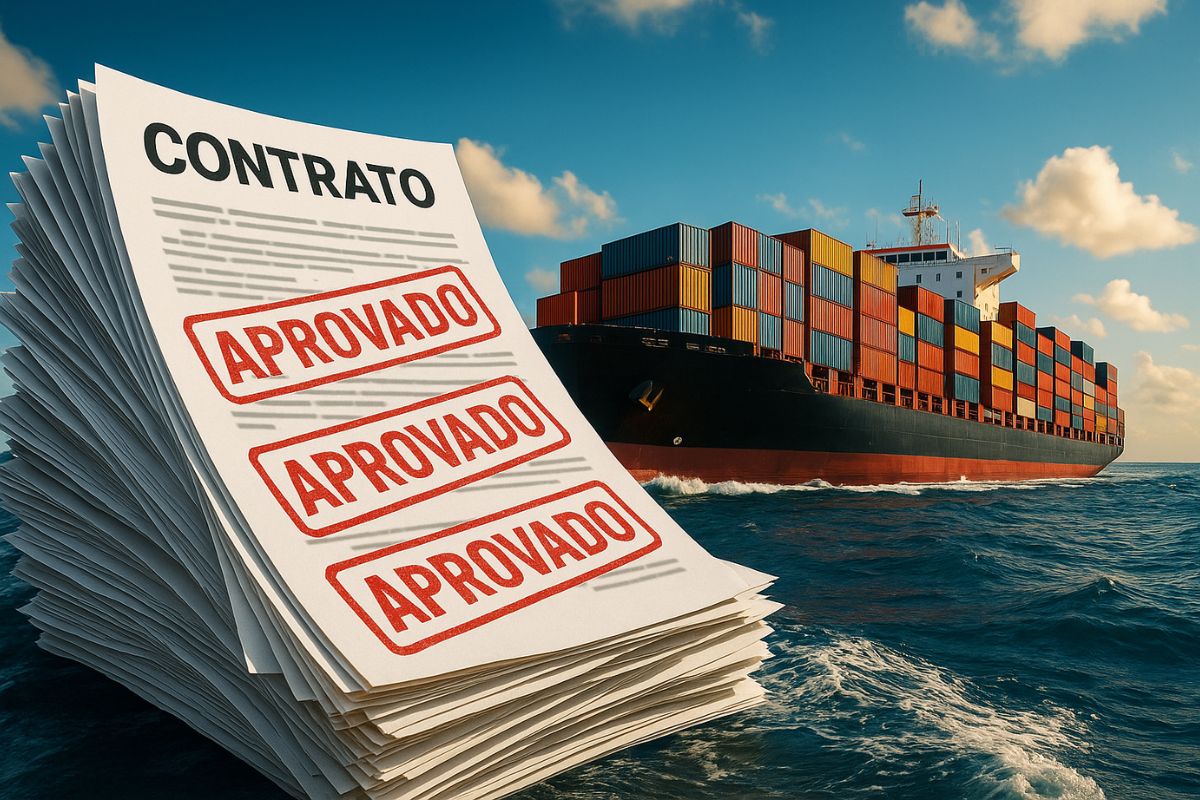
Exchange Contracts Already Have Extended Deadlines, Confirms Central Bank Amid Tariffs. Exporters Requested Extension to 1,500 Days, but Rule Has Been in Effect Since December 2022, According to the Central Bank.
The Central Bank confirmed that exchange contracts already have extended deadlines for settling operations, including export operations, since December 2022. The measure meets a long-standing demand from Brazilian exporters, who intensified requests after Donald Trump’s tariffs. Many, however, had not realized that the change was already in effect.
According to Estadão, entities such as Abimaq (Brazilian Association of Machinery and Equipment Industry) consulted the monetary authority to reinforce the need to extend the deadline from 750 days to 1,500 days for Advance of Exchange Contracts (ACCs). The Central Bank responded that this change had already been regulated by Resolution BCB No. 277, dated December 31, 2022.
What Changes with the Longer Deadline for Exchange Contracts
In practice, the measure ensures that exporters have more flexibility to ship goods or provide services without the risk of contract breach with banks. This means there is less pressure to meet short deadlines amid international crisis scenarios, such as those imposed by additional tariffs from the U.S.
-
Brazilian city bets on the business environment to generate jobs and attract investments in the energy sector — secretary reveals strategy at Macaé Energy 2026.

-
50 viaducts, 4 tunnels, 28 bridges, and 40 kilometers of bike paths: BR-262 in Espírito Santo will receive 8.6 billion reais for the largest engineering project in the state’s history, inspired by the Immigrant Highway in São Paulo.

-
Brazil produces too much clean energy and doesn’t know what to do with it: over 20% of solar and wind capacity was wasted in 2025 while investors flee and 509 renewable generation projects were abandoned in the last year.

-
Piauí will produce a new fuel that replaces diesel without needing to change anything in the truck’s engine and reduces pollutant gas emissions by half: truck drivers from all over the Northeast are already celebrating the news that will arrive later this decade.


For the industry, the extended deadline is considered a relief. José Velloso, president of Abimaq, emphasized that the change already meets a long-standing request but had gone unnoticed by the main sector entities. “This deadline has been in effect since December 2022 for both exchange contracts and export advances,” he stated.
Sector Reaction and Complementary Measures
Even with the Central Bank’s confirmation, the productive sector continues to push for new mechanisms to support foreign trade. The National Confederation of Industry (CNI) had formally requested the extension of the deadline, emphasizing the need to reduce risks for companies affected by the tariffs.
Meanwhile, the government is negotiating in Congress a package of 18 proposals, including emergency measures to mitigate the impact of American tariffs. Among them are credits, guarantees, and facilitation of exports. Vice President Geraldo Alckmin advocated for the swift approval of the MP and PLP sent by the Executive, highlighting that the goal is to protect strategic sectors of the economy.
Impacts of Tariffs on Brazilian Exporters
The tariffs imposed by the U.S. directly affect products that use steel and aluminum, now subject to Section 232 of the Trade Expansion Act. This legislation allows for the imposition of tariffs under the justification of national security. Analysts assess that the practical effect is to limit the competitiveness of Brazil and other countries in the American market, favoring local producers.
Experts warn that while the extended deadlines for exchange contracts are positive, they do not independently resolve the challenges created by the tariffs. The measure helps reduce financial pressure on exporters, but the trade dispute is likely to generate long-term impacts on production chains.
The longer deadlines for exchange contracts have been guaranteed since 2022, but they have only recently gained attention amid the escalation of tariffs imposed by the U.S. For exporters, the measure provides breathing room, but the debate on how Brazil should face trade barriers remains open.
And you, do you believe that merely extending deadlines is enough to protect our exports, or should the government adopt tougher measures against the tariffs? Leave your opinion in the comments.










Seja o primeiro a reagir!