





 Portuguese
  English
  Spanish
  5 min of reading
  0 comments


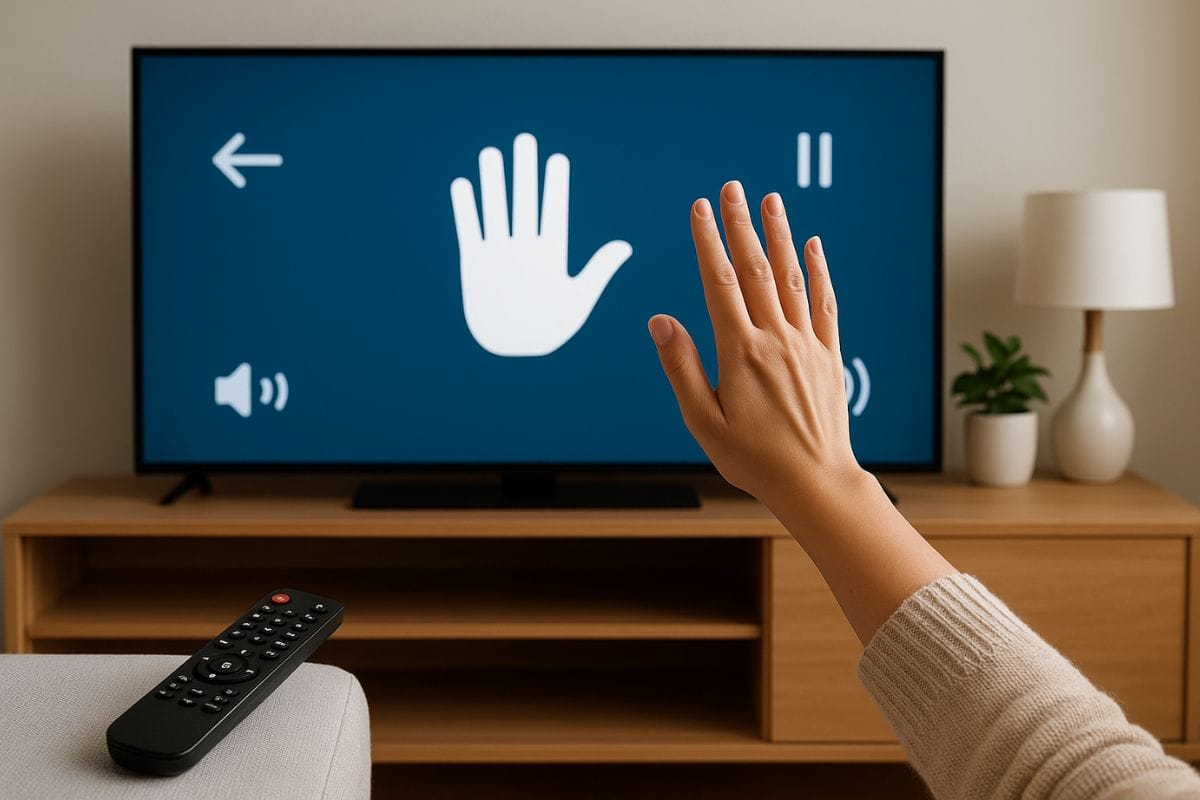
The Traditional Collection of Remote Controls in Your Living Room May Be Near the End. Explore the New Technologies That Are Transforming the Way We Command Our Home Appliances, Promising More Simplicity and Intelligence.
The scene of a table filled with remote controls, one for each device, is a common frustration in many households. This “tyranny of remote controls” has created a yearning for more fluid and centralized ways to interact with home technology. The good news is that this reality is changing rapidly.
This article dives into the revolution of home command, examining how voice assistants, smartphones, and other emerging technologies are turning old remote controls into museum pieces, and what this means for consumers, including in Brazil.
The Tyranny of Remote Controls: The Yearning for Simplicity in the Connected Home
The need to manage multiple remote controls for TV, cable, sound, air conditioning, and other devices has become a burden. The search for the right control, the constant battery changes, and unintuitive interfaces are daily frustrations. This degraded experience has driven the quest for alternatives to traditional remote controls, not only due to technological advancement but also out of a fundamental demand for a superior user experience. The essential function of remote controls – commanding from a distance – does not disappear, but evolves into smarter and more integrated forms.
-
Something is happening around the Earth: Inside the huge explosion of fireballs in 2026

-
A hot air bubble coming from Argentina expands over Brazil, causing thermometers to exceed 38 degrees with a thermal sensation of 40 degrees in late March, affecting 6 states at once.

-
The radish leaf that almost everyone throws away has more polyphenols, flavonoids, and fiber than the consumed root, and a 2025 study showed that the leaf contains compounds that protect the intestine, combat inflammation, and may inhibit the growth of cancer cells.

-
A planet that seemed to defy the laws of physics has intrigued scientists for decades, until the James Webb revealed what is really affecting Saturn’s rotation.


The Voice That Commands: Virtual Assistants Retiring Traditional Remote Controls

The emergence of virtual assistants like Amazon Alexa, Google Assistant, and Apple Siri marked a turning point. These systems capture verbal commands through microphones in smart speakers or smartphones, process natural language, and execute the action. The main advantage is the “hands-free” convenience, ideal for multitasking and crucial for accessibility, allowing greater independence for people with reduced mobility. Interaction is more natural, and complex routines can be triggered with simple commands.
However, there are challenges. Concerns about privacy due to “always-on” microphones and voice data processing in the cloud are significant. The accuracy of voice recognition can vary, and reliance on the internet is a limitation. Despite this, the rise of voice control is changing the human-machine interface from graphical to natural language, influencing the design of connected devices.
Your Smartphone, Your New Universal Control: Apps and Smart Hubs Replacing Remote Controls
The smartphone has emerged as a powerful candidate for a universal command center, replacing many remote controls. This occurs through dedicated manufacturer apps (such as LG ThinQ, Kian Smart) or through smart universal controls. These are hubs that connect to Wi-Fi, receive commands from an app on the smartphone, and translate them into infrared (IR) signals understood by older devices.
The advantages include a rich and familiar graphical interface, control from anywhere with internet, and the unification of multiple remote controls in one place. The concern over batteries also disappears. However, accessing the app may be less immediate than grabbing one of the physical remote controls. Dependence on the smartphone battery and app fragmentation (if not using a unifying platform) are downsides. The security of the smartphone also becomes crucial for home safety.
The Interactive Future: Gestures and Intelligent Ecosystems Beyond Remote Controls
Gesture control is an intriguing frontier, allowing command of devices with hand or body movements, detected by cameras and AI sensors. Applications in Smart TVs and Virtual/Augmented Reality demonstrate its potential, with innovations like the Lotus Ring smart ring. Intuitive and contactless interaction is a major attraction. However, challenges such as precision, cost, learning curve, and privacy (due to the use of cameras) still limit its mass adoption as a substitute for remote controls.
More important than an isolated method is the “brain” of the smart home: ecosystems and automation platforms such as Google Home, Apple HomeKit, and Samsung SmartThings. They unify control and orchestrate interactions between devices. The true intelligence lies in the ability of the ecosystem to integrate appliances, learn habits, and automate actions. The Matter standard emerges as a crucial initiative to ensure interoperability among devices from different brands, simplifying the experience.
Connected Brazil: How Is the Country Adopting New Forms of Home Control?
The smart home market in Brazil is growing, with revenue projections reaching US$12.8 billion by 2030. However, effective adoption is still slower compared to mature markets. A January 2024 survey revealed that 30.1% of Brazilians were not familiar with “smart home devices” and 43.1% did not own any. Factors such as age, income, and location influence adoption.
The benefits perceived by Brazilians include convenience, security, sustainability, and inclusion. However, distrust in technology, initial costs, and concerns about privacy and data security are barriers. Data protection is crucial for 90% of consumers. The growing popularity of voice assistants and the use of apps indicate a gradual transition from physical remote controls to more modern solutions.
Goodbye, Remote Controls? What to Expect from the Evolution of Home Command
Physical remote controls, in their traditional and isolated form, are on a sharp decline. Their primary function of commanding from a distance has evolved into smarter and more integrated interfaces. Voice assistants and smartphone apps have already replaced many of the old remote controls. The future points to a multimodal orchestration of interfaces – voice, apps, gestures – where AI will help determine the most appropriate method or anticipate needs, making explicit control less necessary.
For Brazilian consumers looking to modernize the control of their devices, it is recommended to start small, prioritize real needs, research compatibility (especially with the Matter standard), and take security and privacy seriously. A good Wi-Fi network is essential. The transition from remote controls is an evolutionary process, shaping a home where technology serves intuitively, promoting well-being, security, and efficiency.







Seja o primeiro a reagir!