





 Portuguese
  English
  Spanish
  5 min of reading
  0 comments


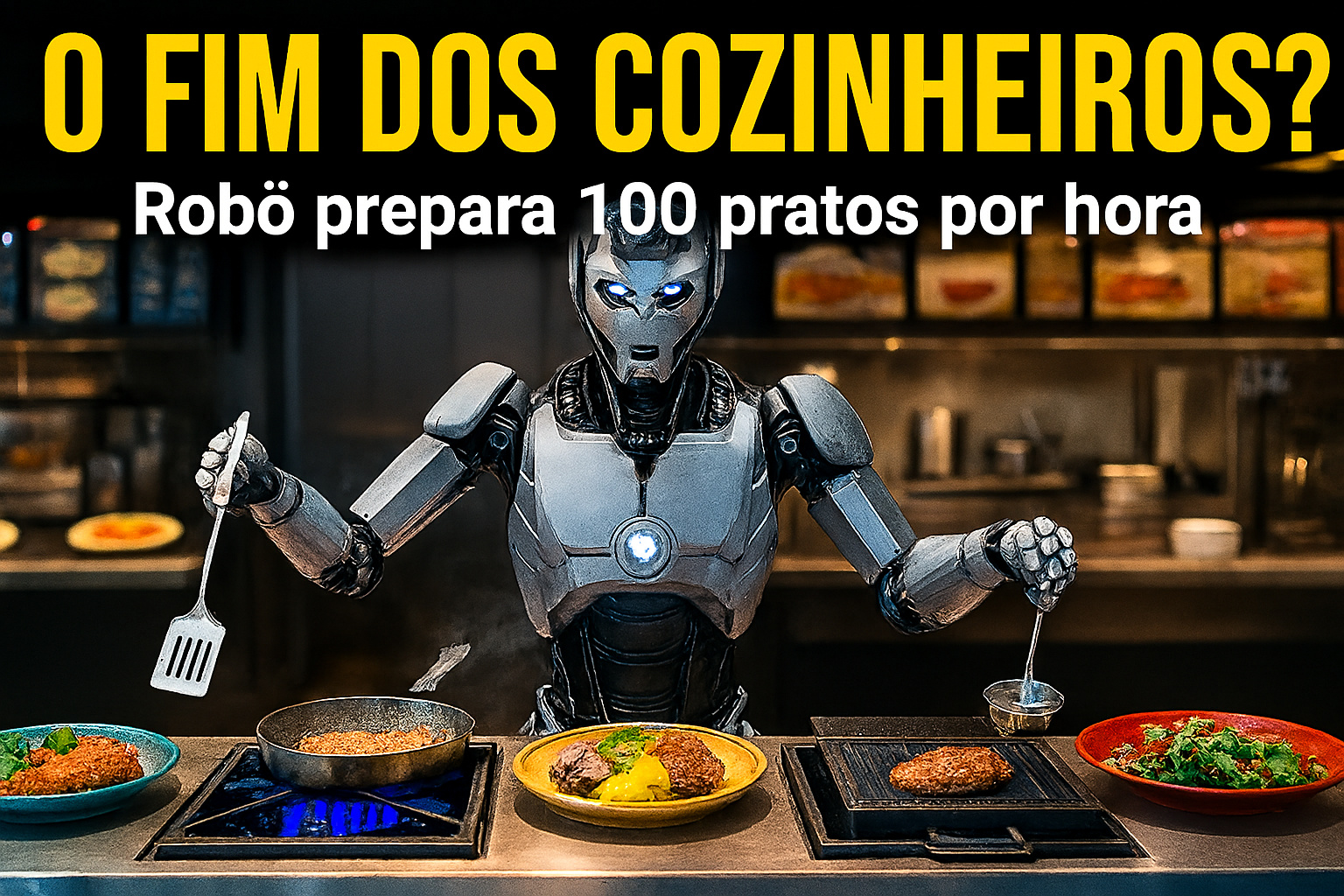
Cooking Robots Are Already Preparing Meals in Fast Food Chains in Japan and the US. Understand How Automation Is Starting to Transform the Future of Professional Kitchens.
The professional kitchen is undergoing one of the greatest transformations in recent history. What once seemed like science fiction is now a reality in restaurants in Japan and the United States: robots capable of preparing dozens and even hundreds of meals per hour with industrial precision. The revolution has a name and numbers: autonomous chef robots, which use artificial intelligence, thermal sensors, and computer vision to cook at a fast pace, reducing costs and increasing the efficiency of fast food chains.
Companies like Miso Robotics (creator of the Flippy robot), TechMagic, and Keenon Robotics are at the forefront of this new industry. Their machines are already operating in commercial kitchens, especially in large urban centers where the lack of workforce and high operating costs have accelerated automation.
The Culinary Revolution Began in the United States
In the United States, the California-based startup Miso Robotics is now one of the world leaders in kitchen automation.
-
A new phenomenon of contactless magnetic friction intrigues scientists and questions a theory that has been valid since the 17th century.
-
An impressive phenomenon in Northern Brazil causes rivers of different colors to flow side by side, revealing secrets about sediments, currents, and biodiversity.

-
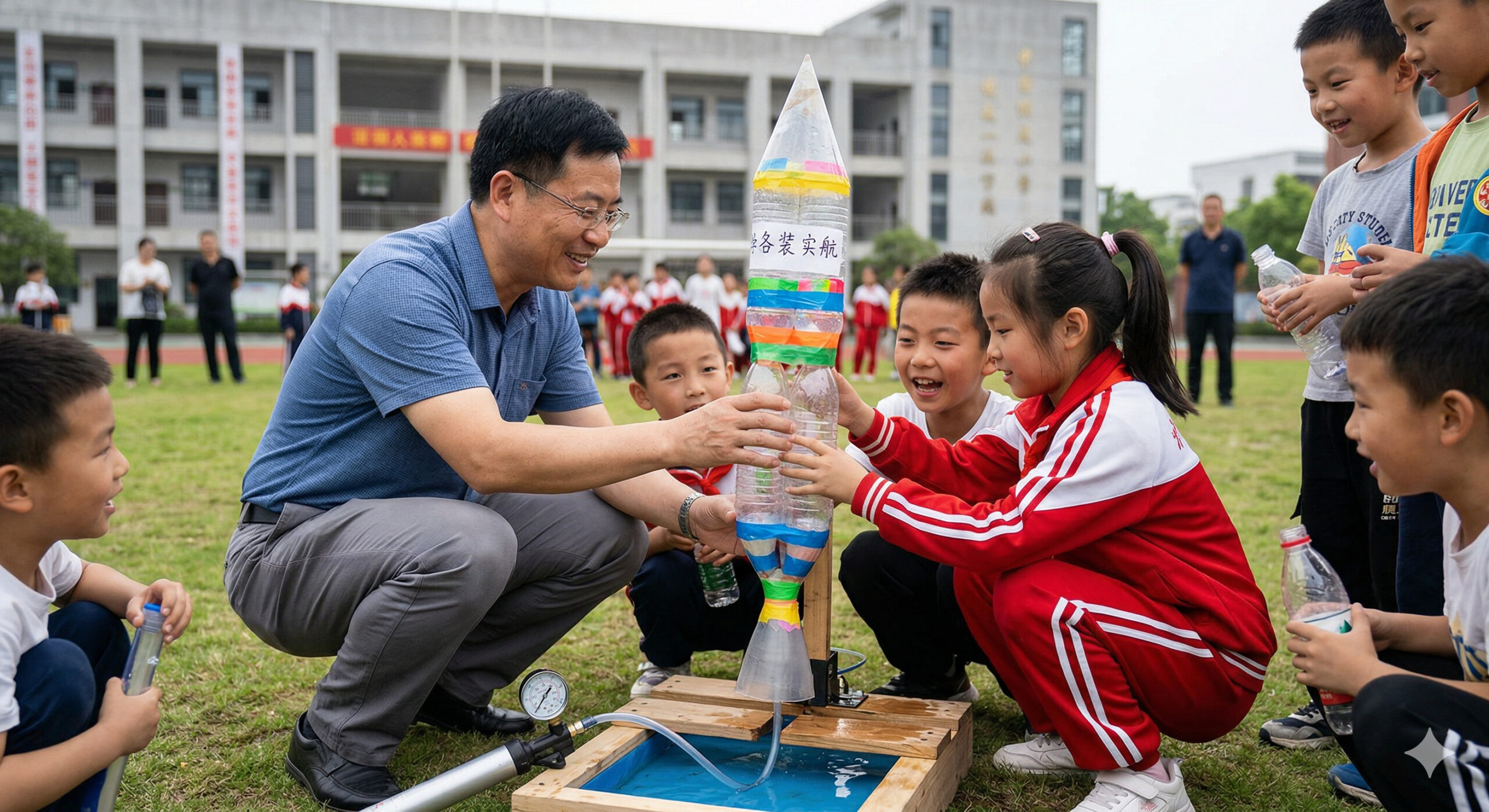
While many schools are still struggling with the basics, a teacher in China went viral for having elementary school students build a two-stage rocket using plastic bottles, water, and pressurized air in a science class that caught the attention of the entire world.
-
10 million robots per year in unprecedented industrial scale place China at the forefront of automated production and raise the question of how far machines can manufacture other machines.

The company’s most well-known robot, the Flippy 2, can fry burgers, fries, and onion rings at an impressive speed, achieving an average of 100 burgers per hour with precise temperature and cooking points.
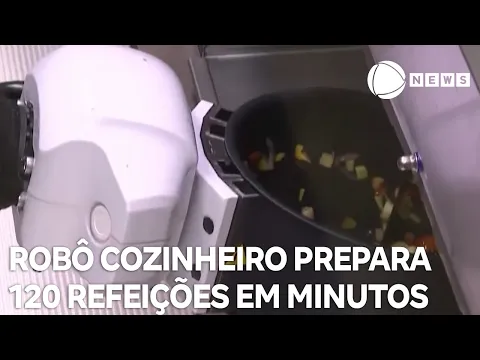

The system is powered by artificial intelligence that adjusts frying time based on the type and thickness of the meat. In addition to operating grills and fryers, the robot can automatically identify when food is ready, preventing waste.
According to Miso Robotics, the Flippy 2 has already been implemented in chains like White Castle, CaliBurger, and Jack in the Box, where it works alongside human employees.
According to data released by the company to Business Insider, the use of the robot has allowed for a reduction of up to 30% in average preparation time and saved US$ 3,000 per month in product loss and electricity per restaurant unit.
Japan Leads in Kitchen Robotization
In Japan, a country known for its relentless search for efficiency, culinary automation is already part of daily life. The startup TechMagic, based in Tokyo, has developed a robot capable of simultaneously cooking pasta and preparing sauces, operating continuously for up to 12 hours.
The equipment, used in restaurants of the Pronto Corporation, combines thermal sensors and articulated arms to measure the exact point of cooking without human intervention.
The system can produce about 30 complete dishes per hour, including food preparation and assembly. According to TechMagic’s CEO, Masato Hara, the goal is to “free cooks from repetitive tasks so they can focus on creating and supervising recipes.”
Other kitchen robots from Japan are being tested in cafes, bars, and diners, some with facial recognition function to identify frequent customers and adjust flavors according to recorded preferences.
How Chef Robots Work: Technology and Precision
These robots use the SLAM (Simultaneous Localization and Mapping) system — the same one used in autonomous cars to navigate within the kitchen. Equipped with 3D cameras and heat sensors, they calculate routes, identify ingredients, and automatically adjust cooking times.
The software is powered by neural networks that continuously learn from each dish produced. Each movement is optimized to avoid errors and waste. The robotic arms have precision of up to 0.02 millimeters, allowing them to handle delicate utensils and work at a constant pace, even under high temperatures.
Moreover, automation allows for total standardization: every burger, pasta dish, or fried portion comes out identical to the previous one — something practically impossible to achieve with manual human labor on a large scale.
Economic and Social Impact of Culinary Automation
According to the report The Future of Jobs 2025, from the World Economic Forum, about 30% of operational roles in commercial kitchens could be automated by the end of the decade.
Robots reduce operational costs, increase productivity, and eliminate human variables such as fatigue and error.
However, this advancement presents social challenges. The union of food workers in the US has already warned that automation could eliminate up to 2 million jobs in the fast-food sector over the next 10 years.
On the other hand, experts remind us that new opportunities arise: robot maintenance, programming, sensor calibration, and technical supervision.
“The robot does not eliminate the human, but changes the type of work they do,” said engineer Mike Bell, CEO of Miso Robotics, to BBC News.
Brazil Still Watches from a Distance — But for Little Time
In Brazil, total kitchen automation has not arrived yet, but food service companies and delivery franchises are already studying to implement solutions inspired by international models.
According to the Brazilian Association of Bars and Restaurants (Abrasel), the high cost of importation and maintenance prevents immediate adoption. Even so, Brazilian technology startups like Bela Robotics, from São Paulo — are already developing robotic arms for food preparation in industrial kitchens.
The forecast is that the first automated restaurants with food preparation robots will be tested in the country between 2026 and 2027, starting with fast food chains and ghost kitchens (focused exclusively on delivery).
The Future of Automated Gastronomy
Robotics applied to gastronomy is no longer a distant promise. The CookRight, a new system from Miso Robotics, integrates computer vision and AI to automatically detect the cooking state of meats and fried foods without physical sensors. Already in South Korea, Doosan Robotics announced a robot capable of frying chicken and preparing drinks simultaneously.
With the advancement of machine learning technologies and precision sensors, the chef robot establishes itself as a symbol of a new phase of global gastronomy, one where efficiency, food safety, and automation go hand in hand.
For experts, the transition will not be one of extinction, but of reinvention. “Robots will do the heavy lifting, but the human touch will remain essential in creating and experiencing gastronomy,” emphasizes Kenji Yoshida, a food technology researcher in Osaka.







-

-

-

-

-

-

9 pessoas reagiram a isso.