





 Portuguese
  English
  Spanish
 4 min of reading
  0 comments


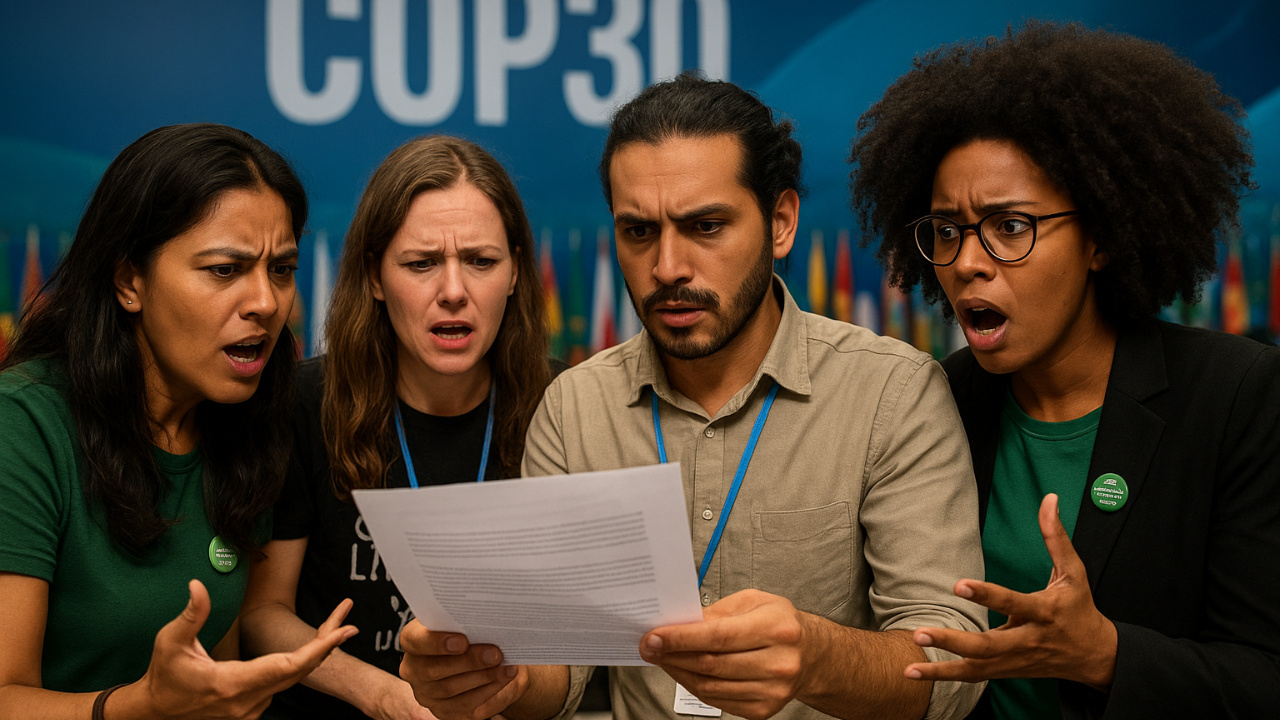
First Draft of COP-30 Brings Weak Proposal for Abandoning Oil and Other Fossil Fuels. Environmentalists Criticize, Experts Assess Potential for Progress, and Countries Reinforce Pressure for More Ambitious Goals.
The international debate on the future of oil gained momentum in Belém following the release of the first draft of the COP-30 decisions. Called the “Mutirão Decision,” the document gathers the most sensitive points of the climate negotiations and includes, albeit gently, a reference to the roadmap for the progressive elimination of fossil fuels. The softness of the text disappointed governments and civil society organizations, but experts believe that, despite its shortcomings, the material opens space for advancements in the final stretch of the conference.
Initial Text Divides Opinions on the Abandonment of Oil
The presidency of the Climate Summit chose to simplify the documents, resulting in options deemed weak for one of the central debates of COP-30: the end of the use of fossil fuels like oil.
Nevertheless, around 80 countries expressed support for creating a global roadmap to abandon these pollutants — an initiative advocated by President Luiz Inácio Lula da Silva and reinforced during the Leaders’ Summit.
-
A major turn in the Justice system suspends tax increases and directly impacts oil and gas companies in Brazil by affecting costs, contracts, and financial planning, leaving uncertain what could happen to the sector if these costs had increased.

-
Brava Energia begins drilling in Papa-Terra and Atlanta and could change the game by reducing costs in oil while increasing production and strengthening competitiveness in the offshore market.

-
Petrobras surprises the world again by announcing a new discovery in the pre-salt with excellent quality oil.

-
Offshore industrial demand in Macaé skyrockets with the recovery of oil and gas and could grow by up to 396% by 2026 in the Campos Basin.

On Tuesday afternoon, nations such as Germany, the United Kingdom, Colombia, and Sierra Leone publicly reaffirmed their alignment with the “roadmap,” in an attempt to increase pressure on resistant countries. However, COP CEO Ana Toni stated that she had not heard any formal requests for more ambition from negotiators when questioned about demands made by island countries.
The Options Presented for the Text on Fossil Fuels
The “Mutirão Decision” offers three alternatives for the section addressing the energy transition. The first encourages cooperation among countries to overcome dependence on oil and move towards low-carbon energy matrices. The text also calls for a ministerial group to support these transitions fairly.
The second option is much more limited and merely suggests holding a workshop or sharing successful national initiatives. The third completely eliminates any mention of the topic — a move seen as a setback by environmentalists.
Marcio Astrini, executive secretary of the Climate Observatory, lamented the lack of ambition:
“The roadmap commissioned by President Lula is not there, in any of the papers. The question remains: when will the president’s request be included in these texts?”
Despite the criticism, Astrini considers it positive that the proposals were presented in advance, as this increases the chances for improvement during negotiations.
Marina Silva Reinforces the Need for Planning and Financial Support
During her speech at the high-level plenary, Environment Minister Marina Silva reiterated the importance of building a global roadmap for the elimination of fossil fuels. She referenced Lula’s statements and emphasized that the transition requires cooperation and shared responsibility between producing and consuming countries.
According to Marina,
“Structured dialogue, exchange of experiences, and long-term strategies are necessary, incorporating both oil-producing and oil-consuming countries. We need to plan the paths forward and secure financial resources and technical support to reduce our high dependence on these fuels for job creation and energy security in various parts of the world, especially in developing countries.”
Climate Adaptation Concentrates Impasses and Pressures Negotiations
Another point progressing slowly in the COP-30 discussions is climate adaptation, a topic that faces strong resistance, particularly from African countries. Among the divergences are:
- use of the indicators from the Global Adaptation Goal;
- mention of a new financing goal;
- role of the Baku Adaptation Roadmap;
- creation of a two-year work program following the conference.
Flavia Martinelli, a climate change specialist at WWF-Brazil, warned of the intensity of the upcoming rounds of discussions, highlighting that negotiations are expected to escalate to the ministerial level.
“There are still many open issues. This week will be quite intense, and it is likely that this discussion will move to the ministerial level to make timely progress.”
Climate Financing: The Biggest Sticking Point of the Conference
While the discussion about oil usage gains political traction, climate financing remains the toughest hurdle. In the draft presented, several sections on the topic bring divergent and even contradictory proposals, reflecting the impasse among countries.
The most sensitive point lies in the target of US$ 100 billion annually that developed nations should allocate to developing countries.
The text suggests three paths:
- Acknowledge that the target was reached in 2022, a position favored by wealthy nations, and await an update on 2023.
- Indicate that the target was not met, stating that this causes “great concern.”
- Completely exclude the topic from the document, deferring the debate to future COPs.
For Tatiana Oliveira, international strategy leader at WWF-Brazil, the material is insufficient: “The climate financing item in the ‘Mutirão Package’ is weak and inadequate. It is a document with conflicting text options.”
She warns that separating the topic for future discussions is not permitted at this summit, which would render the process even riskier. “They are pushing this to the future and contracting an issue for upcoming COPs.”
In addition to oil, the package of decisions also includes topics such as deforestation, deemed essential for advancing in the global fight against warming. These proposals were highlighted by Lula in different speeches, reinforcing the expectation that Brazil will play a central role in concluding negotiations.
Nevertheless, the convergence between deforestation, energy transition, and financing complicates discussions. As each group of countries prioritizes a distinct theme, the challenge is to create an agreement that maintains cohesion without diluting ambitions.








Seja o primeiro a reagir!