





 Portuguese
  English
  Spanish
  5 min of reading
  9 comments




While World Leaders Speak About Climate, The British Newspaper The Guardian Reported: COP30 Started by Cutting Down Trees in the Amazon, Symbolizing the Irony of Sustainability
Belém, the capital of Pará and the gateway to the Amazon, is experiencing a historic and simultaneously controversial moment. The city was chosen to host COP30, the 30th United Nations Conference on Climate Change, which brings together leaders and scientists from over 190 countries.
The event, scheduled to take place from November 10 to 21, 2025, promises to be the most symbolic of all. Officially announced in December 2023 by the United Nations, Belém’s selection was confirmed after months of competition among Brazilian cities.
Since then, construction and preparations have intensified throughout 2024 and 2025, turning the state capital into a true construction site. Now, just before the conference, the world is preparing to discuss the future of the planet in the heart of the largest tropical rainforest on Earth.
-
These living root bridges and ladders are over 700 years old and help indigenous people survive in one of the rainiest regions in the world.

-
From sertanejo star to international investor: Ana Castela invests millions in a mansion in the USA, creates a themed accommodation in Orlando, and shows that the “boiadeira” also wants to grow away from the stage.

-
The 10 most stunning motorhomes in the world: a $3 million trailer with a rooftop nightclub and garage for a Ferrari, “palaces on wheels” with Italian marble, private cinema, and five-star hotel luxury for billionaires.

-
Trump wanted to spend $400 million on the White House, but the courts prohibited the million-dollar construction.


But what should have been an environmental landmark began with a destruction act.
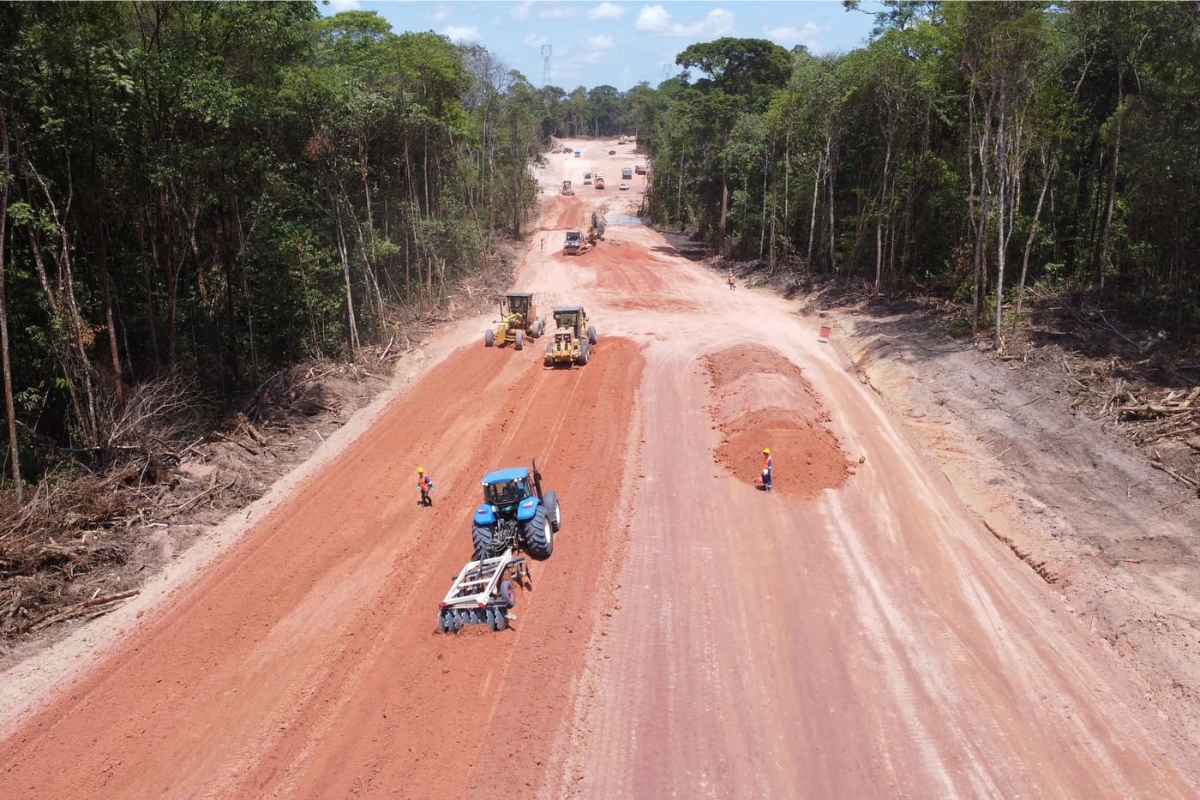
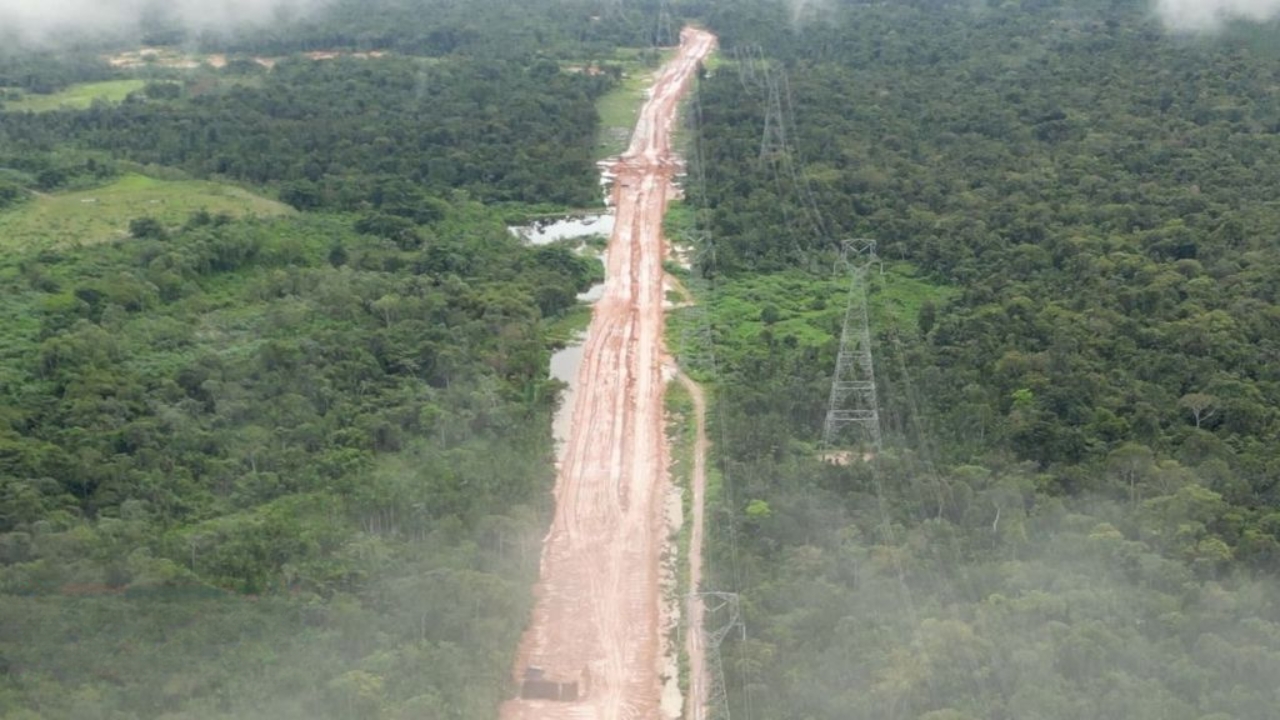
In the outskirts of the city, a new 13-kilometer, four-lane road is being opened to accommodate the more than 50,000 expected visitors for the climate summit. The project, dubbed Avenida Liberdade, cuts through areas of the forest that until recently remained intact. The stretch passes near the Belém Environmental Protection Area (APAB) and required the removal of dozens of hectares of native vegetation.
Satellite images confirm the recent deforestation and reveal a clear corridor of bare ground where there once was dense green coverage. According to a report by The Guardian, the expansion of this avenue and another auxiliary road, Rua da Marinha, resulted in the elimination of over 100 hectares of Amazon rainforest.
The visual impact is undeniable: a scar opened in the forest, in the name of infrastructure for an event that presents itself as a defender of nature.
Affected Communities and the Silence of Authorities
The consequences were not limited to vegetation. Local communities, composed of açaí producers, fishermen, and riverside families, report that they lost part of their livelihood with the felling of açaí trees and other fruit-bearing species during the construction of the avenue.
“Our livelihood ended when the machines arrived. They cut everything down, including the açaí trees that guaranteed our income,” said resident Cláudio Verequete to the New York Post. According to him, no type of compensation has been offered so far.
The state government of Pará, however, denies that the project is directly linked to COP30. In an official statement published in March 2025, it stated that the project “is not part of the 33 preparatory infrastructure actions for the conference” and that Avenida Liberdade “was planned since 2012.”
However, this justification does not convince environmentalists. Even if the project predates the conference, its execution was accelerated and presented as one of the urban improvements that would give Belém a “new face” before the international event. Critics argue that the government is merely trying to evade environmental responsibility.
The situation is worsened by the lack of transparency regarding environmental compensations. The government promises to plant three trees for every tree cut down, but so far, there is no public record of where, when, and how these replacements will occur. Meanwhile, the loss of biodiversity and the advancement of degradation are immediate and irreversible.
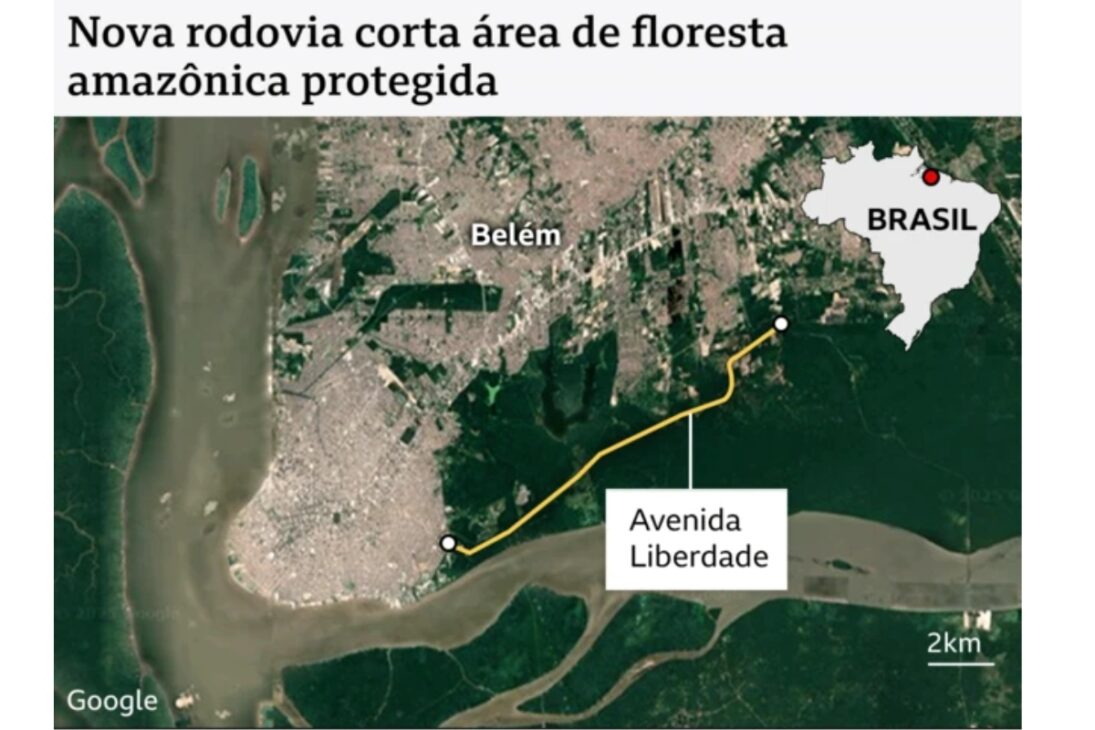
Credit: BBC News / Google Maps
The Contradiction of the Climate Summit
The choice of Belém as the host for COP30 aimed to send a powerful message: the planet looking at the Amazon not as a problem, but as a solution. However, the beginning of the construction turned the event into a symbol of ecological irony.
“How can we advocate for the end of global deforestation while cutting down trees to build a road in the forest?” questions ecologist Carlos Souza Jr. from the Imazon Institute.
Experts warn that the road could generate the so-called edge effect, when the opening of roads fragments the ecosystem and facilitates the advance of illegal exploitation. “Whenever a corridor is opened in forest areas, the risk of invasions, fires, and species loss increases. It’s an impact that goes far beyond the construction itself,” explains Souza Jr.
Brazil’s international image also suffers.
At a time when the country is trying to reaffirm its environmental leadership and reduce deforestation, seeing hectares of forest being removed for a climate event is perplexing. The criticism resonates in foreign newspapers such as The Guardian, El País, and AP News, which called the case “an incongruity that undermines the credibility of the conference”.
According to a report from Esquerda Diário, Avenida Liberdade represents the destruction of 107 soccer fields of Amazon rainforest and threatens over 250 families. The project, which should symbolize sustainable progress, has become a portrait of a political contradiction: cutting down trees to save the climate.


Between Progress and Paradox
The case of Belém exposes the dilemma faced by many countries that have hosted large environmental conferences. On one hand, there is the need for infrastructure to accommodate delegations and ensure security; on the other, the environmental cost of these same works.
In the case of COP30, the contrast is more evident precisely because the event takes place in the Amazon, one of the planet’s most sensitive and monitored regions.
The 13 km road is presented as a symbol of urban modernization. However, for those who depend on the forest, it represents loss and abandonment. The sound of chainsaws replaced the song of birds; green gave way to asphalt. The promise of a sustainable future began by leaving scars on the present.
While world leaders speak about climate goals and carbon neutrality, local residents are still waiting for answers about their losses. And the forest, which should be the stage for a celebration of life, was, ironically, the price paid to set the scene for COP30.







A **** Barbalho é um câncer no estado do Pará.
É muitoa hipocrisia destruir para um evento e não poder asfaltar a BR 319 alegando que vai destruir a amazônia
Amo Belém. Acabei de vir de lá… Foram 10 dias incríveis. Pena que o povo tão sofrido é sempre desrespeitado em nome da sustentabilidade insustentável. Lamentável Brasil!!!