





 Portuguese
  English
  Spanish
 4 min of reading
  0 comments


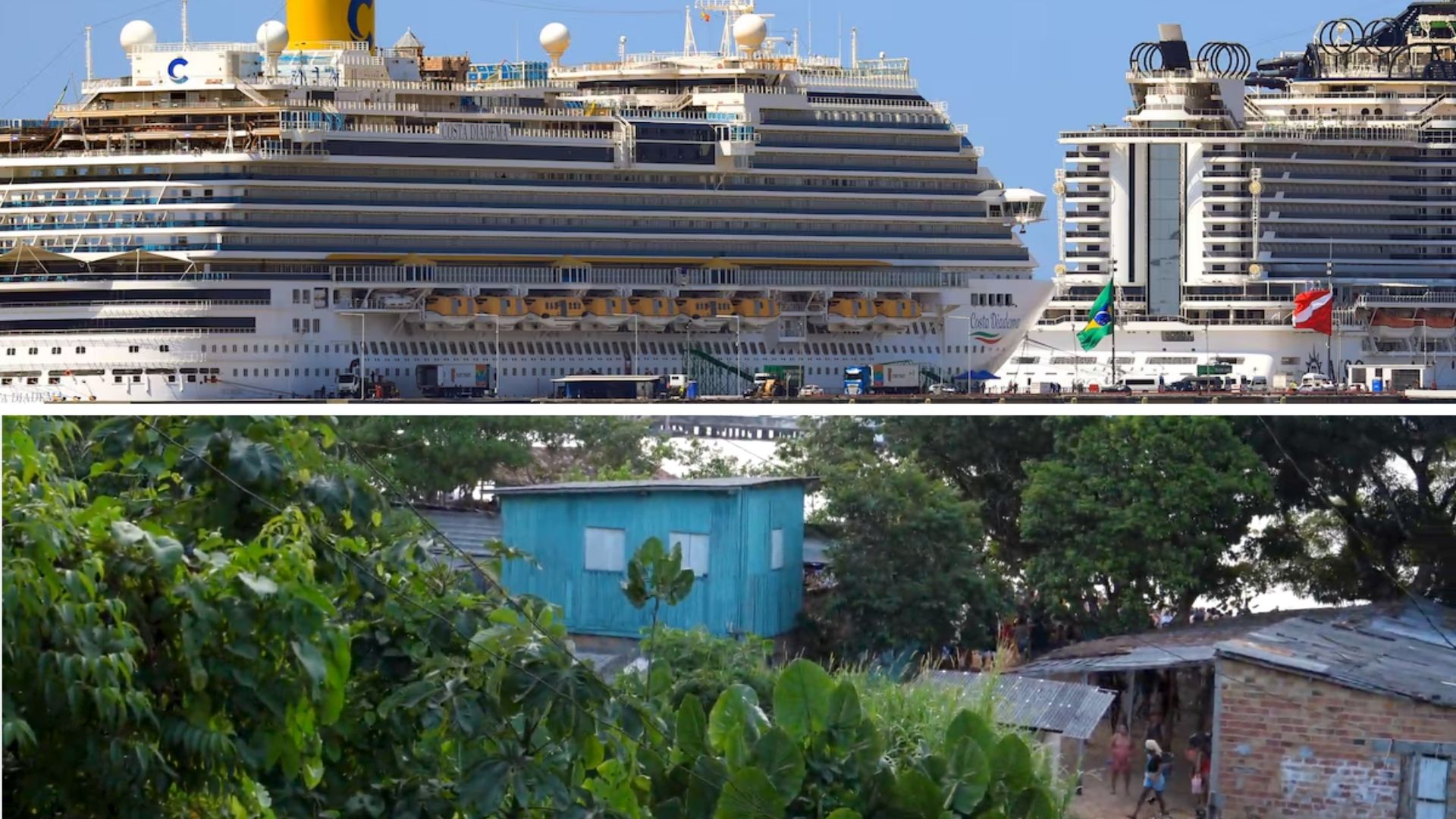
Luxury Cruises Host International Delegations While Residents Coexist with Degraded Beaches and Demand Investments That Never Reached the Beaches
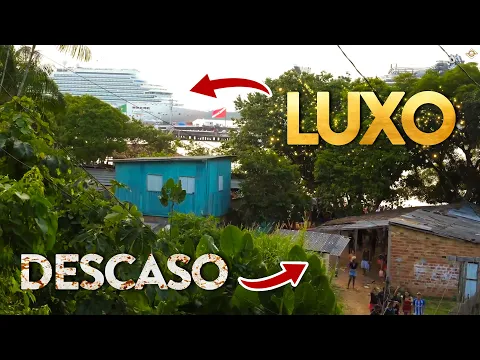
The contrast is striking and bothers even those who try to ignore it. While two luxury cruise ships stand out on the horizon of Outeiro Island, serving as accommodations for delegations of the COP30, just a few meters away, Praia da Brasília reveals a completely opposite reality: poor infrastructure, destroyed beachfront, and social abandonment.
R$250 Million at the Port, Nothing on the Beaches
To accommodate the luxury ships, the federal government invested over R$250 million in dredging works, pier reinforcement, and improvements at the Outeiro port. The interventions allowed for the creation of disembarkation structures, security control areas, and direct transport to the so-called Blue Zone, the official center of the climate conference.
However, residents of the area claim that the money could have been better spent.
“Over two hundred million was spent here, in this part of the cruise. It was money well spent in part, but they left Outeiro abandoned. The beaches are horrible, the descent is a hassle. The beachfront of Praia Grande is all ruined,” reported Damião de Paula Araújo, a local resident.
-
The Federal Revenue Service now automatically cross-references everything you declare with data from banks, credit cards, brokerage firms, and insurance companies, and any discrepancy between your income and your expenses triggers an alert in seconds.

-
Amid global tensions, Brazil blocks the United States’ proposal at the WTO and paves the way for a trade crisis and possible retaliations.

-
Shopee opens the largest logistics warehouse in Brazil in Guarulhos: 220,000 m² on Dutra, contract signed before construction, pays R$ 45/m² and accelerates deliveries at scale, putting pressure on Mercado Livre and Amazon.
-
After mistakenly transferring R$ 50,000 via Pix, a man will receive the amount back along with R$ 10,000 for moral damages from the recipient.


The Praia da Brasília, which became the closest point to the ships, has turned into a symbol of the paradox between global sustainability discourse and local negligence. This information was disclosed by the channel Brasil Paralelo, which recorded the contrast between the luxurious ships and the scene of abandonment by the seaside.
Million-Dollar Cruises: The “Floating Hotels” of COP30
The two ships contracted by Embratur total 3,900 cabins, with a capacity for up to 6,000 guests. The daily rates range from R$7,900 to R$48,562, depending on the suite category.
Brought from Italy exclusively for the event, the MSC Seaview and the Costa Diadema impress with their dimensions: the former has 20 decks and is 323 meters long, while the latter has 19 decks and is 306 meters. Together, they exceed 280,000 tons.
According to the federal government, by November 5, 1,700 beds had already been reserved — with priority for delegations from developing countries. The average subsidized daily rate is up to US$200, according to the parameters established by the UN.
The operation is part of an emergency accommodation plan, given that Belém needed to double its hotel capacity to accommodate the approximately 50,000 participants expected for the climate conference.

Critiques, Costs, and Controversies
The total cost of the cruise operation reaches R$260 million, with part of the value transferred to Embratur and the company Qualitours, responsible for managing the vessels. In addition, the government allocated R$259 million additional to cover possible losses in case the cabins were not fully occupied.
The decision generated severe criticisms both inside and outside the country. Countries such as Sweden, the Netherlands, and Canada officially protested against what they classified as “price gouging” by the local hotel network, which charged up to 15 times the market value.
The Federal Court of Accounts (TCU) also pointed out signs of overpricing in infrastructure and service contracts for the COP30 — with basic items costing up to 10 times more than the normal price.
According to data gathered by the portal, the total cost of the emergency and luxury structures already exceeds R$500 million, reinforcing the debate about the disparity between investments in international image and local improvements.
The COP Seen from the Sand: The Luxury of Some, the Abandonment of Others
As international delegations disembark from the cruises and head to the air-conditioned auditoriums of the conference, the residents of Outeiro continue to live with pothole-ridden streets and beaches littered with trash.
“This whole movement is nice to see, but when the ships leave, we are the ones who remain,” lamented Pablo Monteiro, a resident of Praia da Brasília.
The prevailing sentiment among locals is one of distance between the discourse of inclusion and political practice. For them, the COP30 — which should symbolize unity around sustainability — has ended up becoming a grand stage of luxury, vanity, and environmental contradiction.
In the end, the question remains that echoes on the sand and on social media: Is the COP still an event to save the planet or merely a political spectacle to impress the world?







-

Uma pessoa reagiu a isso.