





 Portuguese
  English
  Spanish
  4 min of reading
  10 comments


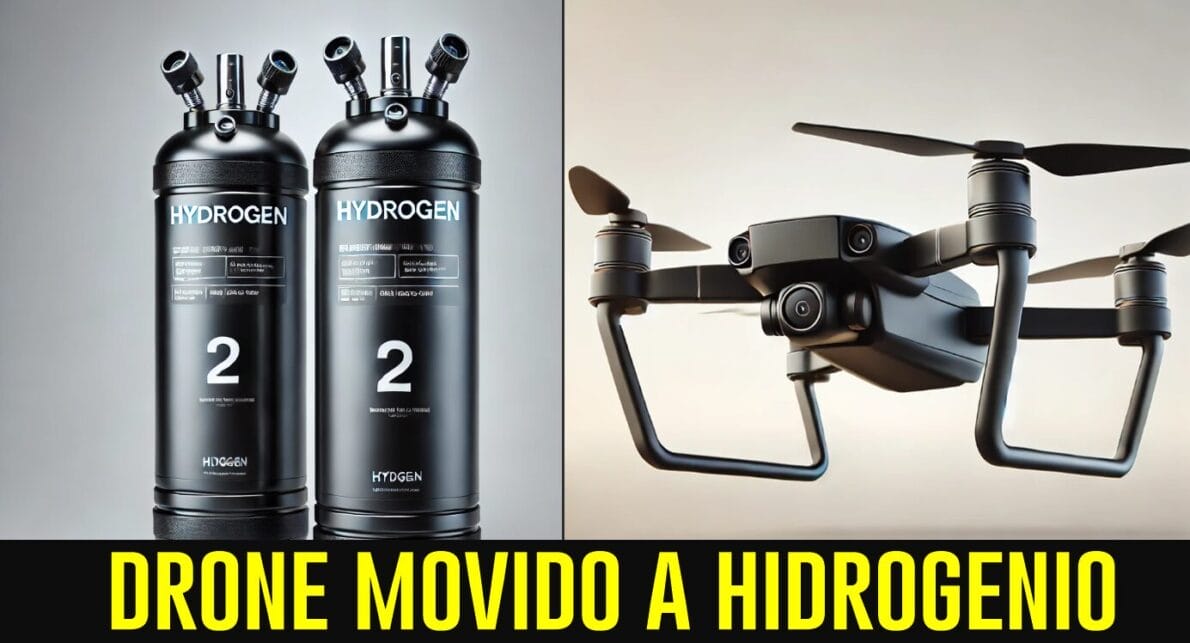

A hydrogen-powered drone, capable of flying for 14 hours and reaching up to 9,334 km, was revealed in Seoul, equipped with radiofrequency and LTE/5G communication, bringing significant advancements for the future of aerial technology.
Technological innovation in the field of unmanned aerial vehicles (UAVs) has significantly advanced with the launch of the first hydrogen-powered drone, made in South Korea, capable of covering a range of approximately 9,334 km.
The reveal took place in Seoul, South Korea, during the H2 Mobility Energy Environment Technology (MEET) conference, held from September 25 to 27.
Developed by the South Korean company Hogreen Air, this drone promises to revolutionize surveillance, reconnaissance, and rescue operations due to its high speed, long flight duration, and global autonomy.
-
Seen from space, a colossal volcano nearly 5,000 meters high in Russia has released 1,600 km of smoke over the Pacific, forming “devil’s horns” of lava and revealing the brutal force of the Ring of Fire.

-
Expedition 501: Scientists drill into the ocean floor and discover a giant reserve of fresh water hidden beneath the sea, extracting nearly 50,000 liters and revealing an invisible system that could reshape the map of water scarcity.
-
Archaeologists find an intact tomb over 2,500 years old, with more than 100 preserved objects, weapons, jewelry, and human remains never touched.

-
Volcanic lava transforms into threads as fine as human hair that travel over 30 kilometers by wind and fall like cutting rain on roofs and backyards in Hawaii and Iceland.


The Hydrogen Drone from Hogreen Air
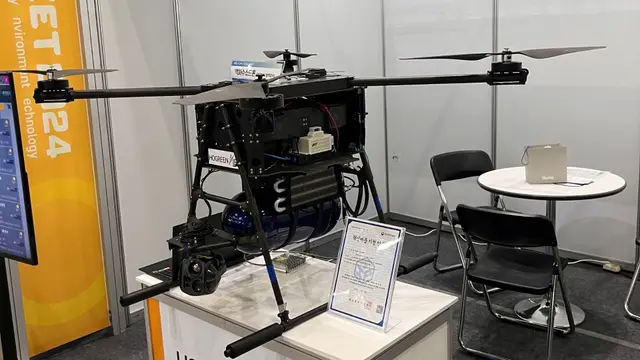
The Hogreen Air, known for its commitment to innovation and cutting-edge technological solutions for the drone industry, revealed its latest model of hydrogen-powered drone, which uses fuel cells as a power source.
This drone, designed to conduct long-duration missions, utilizes hydrogen in its gaseous or liquid form, ensuring greater energy density and thus greater flight autonomy.
The use of hydrogen as a power source has emerged as a promising alternative to replace lithium batteries in drones.
While most traditional drones can fly between 10 and 30 minutes on lithium batteries, Hogreen Air’s new drone can fly for over 14 consecutive hours.
This represents a significant advancement, especially for operations that require extensive territorial coverage and prolonged response times.
Remote Operation and Global Range


One of the major differentiators of this drone is its remote operation capability. Recently, it was tested in a flight in Germany while the operators were located about 9,299 km away, in South Korea.
Moreover, the drone was operated in the United States at a distance of 9,041 km from the operators. This feat was made possible by the integration of radiofrequency and LTE/5G communication systems, allowing the drone to be controlled from virtually anywhere in the world as long as connected to a stable mobile network.
This remote operation capability opens new possibilities for surveillance and reconnaissance missions in hard-to-reach or dangerous locations without the need for physical presence of operators.
Furthermore, the combination of high speed and long range makes this drone a strategic tool for military operations, search and rescue, environmental monitoring, and other sectors that demand fast and efficient responses.
Cutting-Edge Technology and Green Innovation
Hogreen Air’s commitment to technological innovation is not limited to the development of advanced drones. The company is a pioneer in the use of hydrogen fuel cells, promoting a sustainable and environmentally friendly solution for energy generation.
The PEM (Proton Exchange Membrane) platform used in the drones is characterized by air-cooled fuel cells, ensuring reliable and efficient performance.
This system converts hydrogen into electricity efficiently, emitting only water vapor as a byproduct. This provides a significant environmental advantage compared to conventional diesel generators, which emit pollutant gases and consume fossil fuels. Additionally, the drone operates with minimal noise and vibration, making it ideal for operations in sensitive areas and reducing environmental impact.
Hogreen Air also invests in the proliferation of green energy across various sectors. The company developed the ‘Hydrogen Power Pack’, a power generation system that combines hydrogen fuel cells and tanks, providing a clean and reliable energy source for its operations.
With this innovation, the company aims not only to enhance the efficiency of drones but also to contribute to the adoption of green technologies across various industries.
Diverse Applications and Promising Future
The hydrogen-powered drone from Hogreen Air has applications in various sectors, including defense, agriculture, artificial intelligence (AI), and security.
An example of practical use is conducting search and rescue missions, where the drone can locate missing individuals using AI-based facial recognition programs. The combination of advanced technology with sustainable fuel makes this solution ideal for critical real-time operations.
Additionally, Hogreen Air holds numerous patents related to drone technology, such as ‘High-Speed Video Data Encryption Based on LTE’ and ‘Unmanned Pesticide Delivery System’.
This demonstrates the company’s commitment to continuous innovation and the pursuit of customized solutions for different sectors.





Onde eu compro esse drone, alguém sabe?
O título tá errado! Diz sim que alcança 9 mil km. Ou erraram a redação.. Nas queria saber qual a carga de Hidrogênio e qual o peso., Sec for líquido, o tanque muito pesado devido a pressão., se for gás, cai muito a autonomia ..
Sabe me dizer como converte o hidrogênio em energia elétrica pra alimentar os motores, será que o hidrogênio alimenta um motor de explosão pra gerar energia elétrica.
Pode até ir a 9mil km, só não volta mais pro home point, ou seja, drone suicida…
Acho q é 9km.
O meu faz 10km, mais a bateria não aguenta o retorno, se mandar tem que ir buscar
A autonomia em voo do drone não é falada. E só para esclarecer: separar hidrogênio da água é eletrólise e não hidrólise, a eletrólise gasta mais energia para ser feita do que é obtida na célula de combustível no fim do processo e sim o hidrogênio pode não ser ecologicamente correto a depender da fonte da energia usada para a eletrólise.