





 Portuguese
  English
  Spanish
  3 min of reading
  1 comment


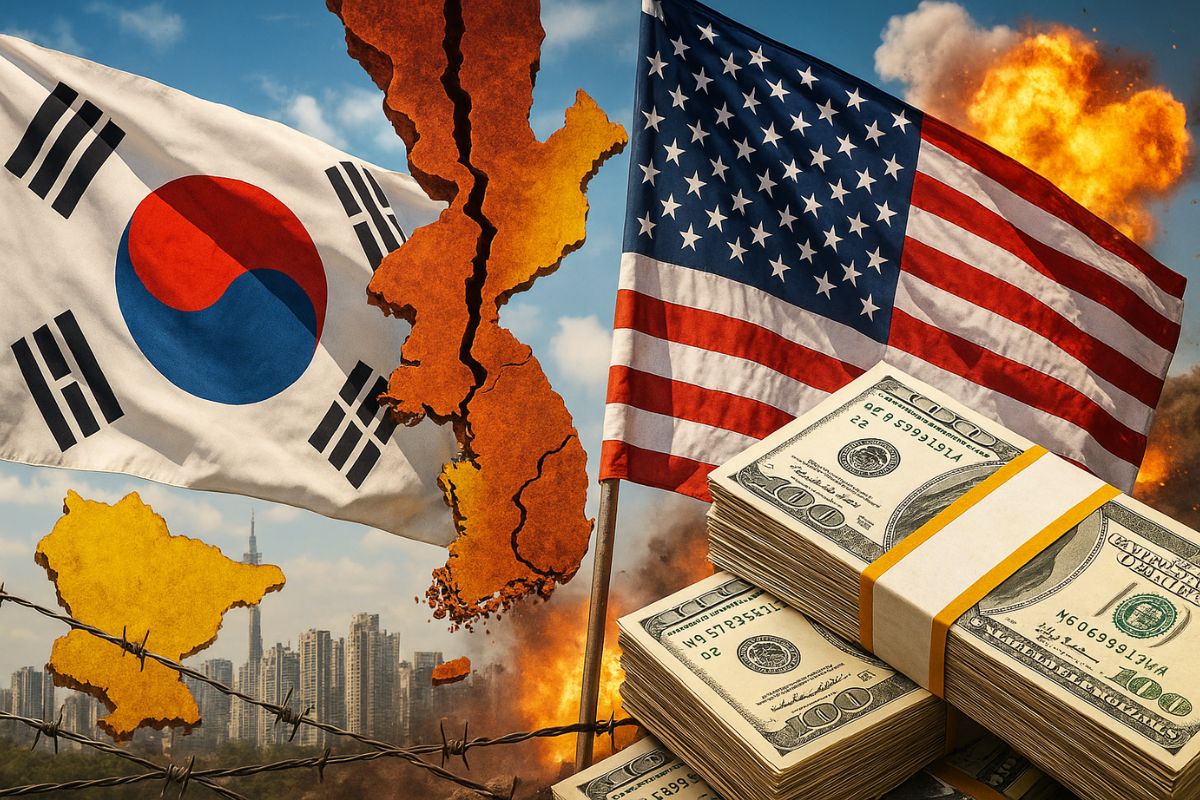


Country Claims It Is Impossible to Cover US$ 350 Billion Demanded in Trade Negotiations with Washington.
The Republic of Korea is facing one of the biggest diplomatic and economic impasses in its recent history. The country declared that it cannot afford to pay the US$ 350 billion required by the United States in a trade agreement that involves tariff reductions and new investments.
According to National Security Advisor Wi Sung-lac, this amount represents over 80% of the country’s foreign exchange reserves, making the commitment “objectively and realistically” unfeasible, as highlighted by the People’s Daily.
Financial Negotiations in Jeopardy
The agreement, signed in July, stipulated a reduction of US tariffs from 25% to 15% in exchange for billion-dollar investments.
-
Oil surged to $115 a barrel due to the war in the Middle East, and diesel in Brazil has already risen to R$ 7.45 per liter, while the United States…

-
Brazilian city bets on the business environment to generate jobs and attract investments in the energy sector — secretary reveals strategy at Macaé Energy 2026.

-
50 viaducts, 4 tunnels, 28 bridges, and 40 kilometers of bike paths: BR-262 in Espírito Santo will receive 8.6 billion reais for the largest engineering project in the state’s history, inspired by the Immigrant Highway in São Paulo.

-
Brazil produces too much clean energy and doesn’t know what to do with it: over 20% of solar and wind capacity was wasted in 2025 while investors flee and 509 renewable generation projects were abandoned in the last year.

However, the Republic of Korea is seeking alternatives to mitigate the impact, including looking for loans and the possibility of a bilateral currency swap with Washington.
Nevertheless, the U.S. has reiterated that it prefers cash contributions, which increases pressure on Seoul.
South Korean authorities hope for new advancements during the APEC summit, which will take place in Gyeongju next month.
Visa Issues Escalate Tension
In addition to the financial dispute, the relationship has been affected by a visa issue. Several South Korean professionals were detained in the U.S. during the operation of a battery plant in Georgia.
Prime Minister Kim Min-seok stated that investments in the country are on hold until the issue is resolved, demanding swift action from Washington to ensure worker safety.
This issue has become a priority in bilateral talks, adding to the discussion on investments and increasing the complexity of the negotiations.
Cultural Diplomacy as a Political Tool
The Republic of Korea has turned to cultural diplomacy tools, such as K-Pop, to reinforce its external influence and balance relations with the United States.
This strategy aims to bring the two countries closer in areas not strictly economic, creating space for flexibility in trade negotiations.
The use of culture as soft power has been a hallmark of South Korea’s foreign policy, especially in times of impasse.
Other Ongoing Negotiations
Even with the central impasse over the US$ 350 billion, other topics are progressing in parallel. Finance Minister Koo Yun-cheol announced completed negotiations regarding the exchange rate with Washington, promising to disclose details soon.
This move indicates that, although there are financial hurdles, the two countries maintain an open dialogue on different fronts, seeking to preserve the strategic partnership.
Impacts and Future Challenges
The current impasse puts not only the future of the trade agreement at stake but also the mutual trust between the two governments.
For the Republic of Korea, the American demand could compromise its economic stability, while for the U.S., Seoul’s resistance complicates the consolidation of a long-term strategic alliance.
The solution will depend on concessions from both sides. If the amount is not adjusted, analysts assess that the risk is transforming a historical partnership into a source of regional instability.
The dispute between the Republic of Korea and the United States raises questions about how far a country can balance diplomacy, economy, and sovereignty.
The amount demanded by the U.S. is considered unrealistic by Seoul, yet indispensable by Washington to validate the agreement.
Do you believe that the Republic of Korea should yield to American pressures or seek diplomatic alternatives to avoid a collapse of the agreement?
Leave your analysis in the comments; we want to hear from those closely following the impacts of this negotiation.








Infelizmente não Coreia do Sul eles não tem um Lula