





 Portuguese
  English
  Spanish
  5 min of reading
  0 comments


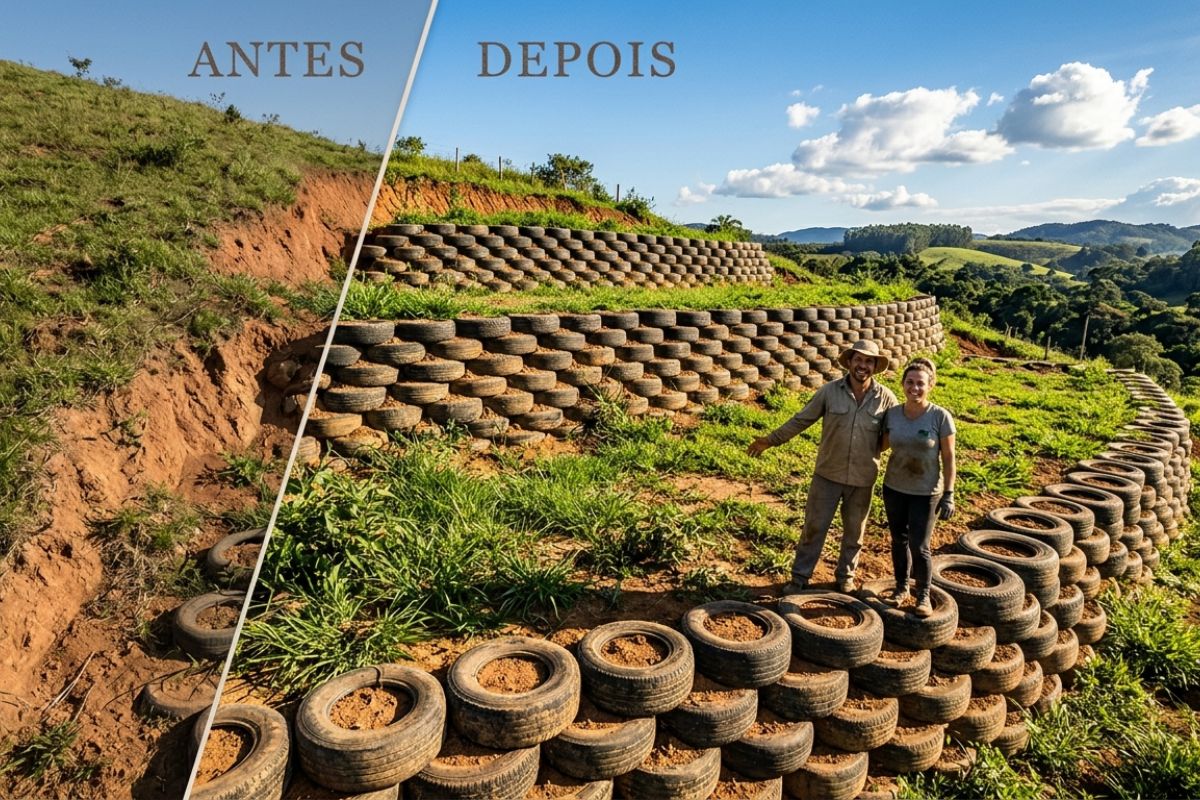
The couple shows the step-by-step of the retaining wall at the site, aligning tires, filling with well-compacted soil, and using grass as an ally to reinforce the support
The couple Érica and Magno decided to solve a classic site problem: very steep land and little usable area to build. Instead of spending on concrete and blocks, the couple reused 400 old tires that were going to be discarded and built a retaining wall that became the base to create plateaus and make use of the local soil.
The couple’s idea was simple and efficient: align tires in layers, fill with soil, and compact with force, repeating the process to form a firm structure. The result is a resistant wall, with almost zero cost, which also helps reduce environmental impact by giving useful purpose to used tires.
Why the couple chose tires for the retaining wall
The couple‘s land is quite steep, and the intention was to open more plateaus for the future house and other areas of the site. In such a situation, the soil needs to be contained; otherwise, it slides down, and the space never remains flat.
-
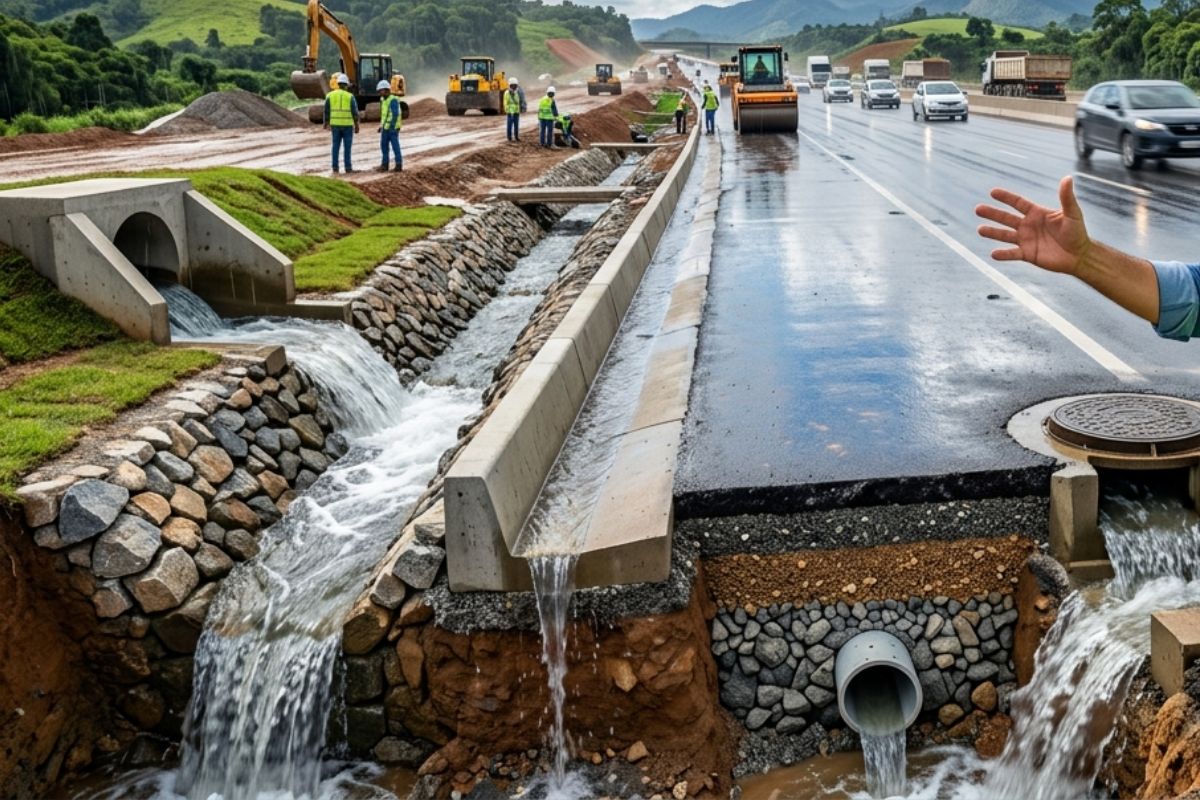
Engineer explains drainage during the rainy season: the difference between surface water and deep water, ditches, gutters, and water outlets on the road, as well as drains and drainage mattresses, to prevent erosion, aquaplaning, and flooding at the construction site today.
-
With 55 floors, 177 meters in height, a 15-meter walkway between the twin towers, ventilated facade, and 6,300 m² of leisure space, Ápice Towers already has one tower completed and another nearly at the top.

-
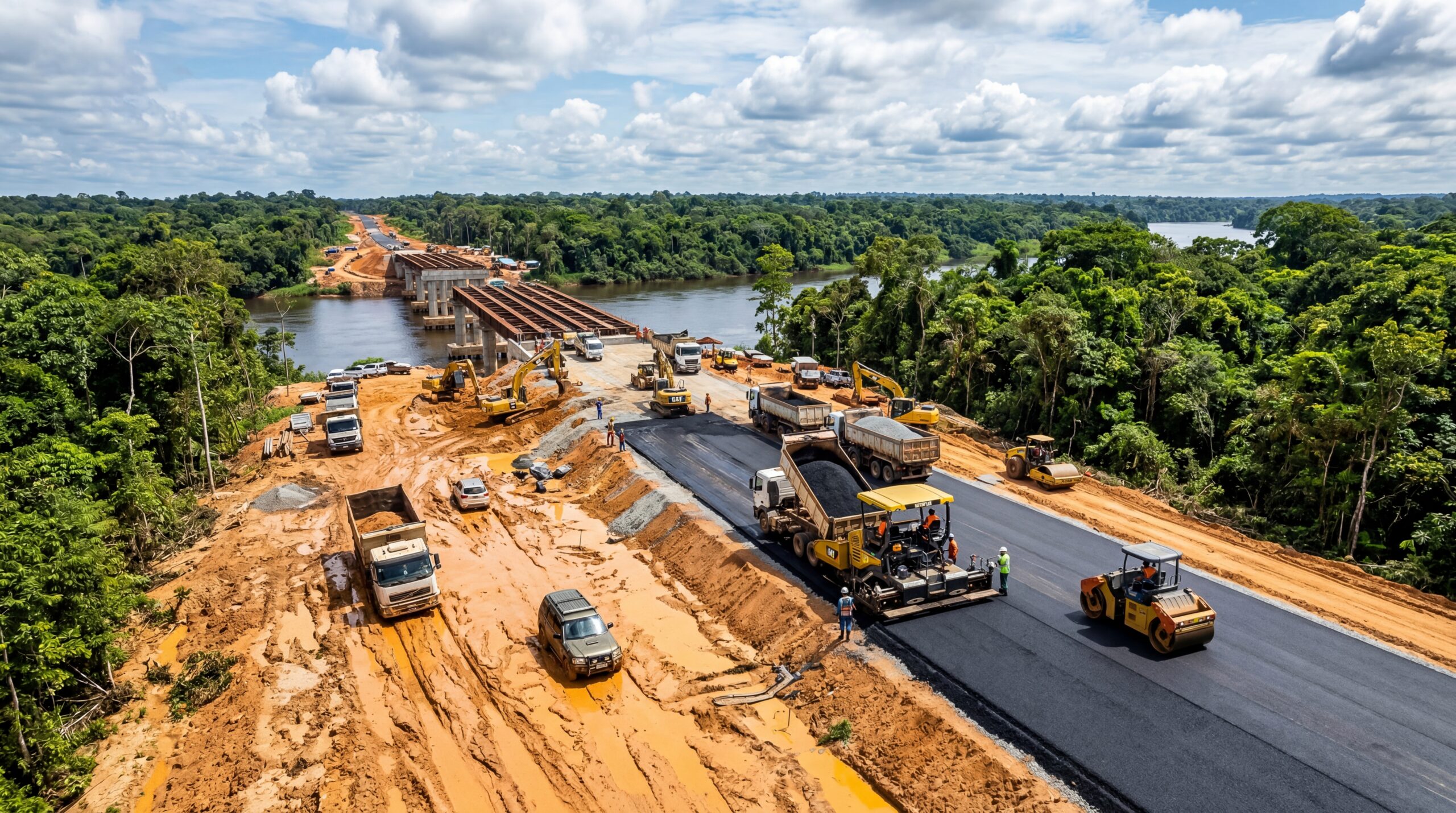
After nearly 50 years of neglect, BR-319 receives R$ 678 million to pave 340 km, gain a 320-meter bridge, and try to lift Amazonas out of the mud, the quagmire, and road isolation.
-
In Sweden, a 51-meter tower was built almost entirely of wood, without a concrete structural core and with solar panels integrated into the facade, using CLT and laminated beams to challenge the dominance of steel and concrete in modern buildings.


The couple opted for the retaining wall with tires for three clear reasons:
almost zero cost, since used tires are easy to obtain from tire shops
resistance, because filled and compacted tires can withstand a lot of pressure
environmental benefit, preventing tires from being improperly discarded
In addition, the couple explained that the city hall usually has collection processes to prevent tires from being left lying around, and by reusing the material, they help reduce the problem.
The secret of the wall: alignment with a slight inward slope

Before the first layer, the couple prepared the ground so that the wall would already have a logic of containment. The base is slightly sloped inward, which helps the weight of the soil to “push” the wall towards the slope, and not outward.
After that, comes the first row of tires, all well aligned. This first layer is crucial because any mistake here is repeated in the upper layers.
How the couple fills the tires and why compaction is everything
The most important step of the couple‘s method is the filling. Each tire is filled with soil, and this soil needs to be well compacted, because the top part of the tire tends to become loose if there is no compaction.
The couple emphasizes that “you have to compact a lot” so that the soil becomes a firm block inside each tire. This detail is what transforms a “pile of tires” into a structure that can withstand pressure.
The logic is the same for any containment: the more compacted, the less the material yields with rain and time.
Interleaved layers: why the couple preferred this fitting
In the second layer and the following ones, the couple explained that there are two ways to position tires:
aligned layer, forming a kind of “pillar” on top of the lower tire
interleaved layer, tying with two tires from the lower row
The couple preferred the interleaved model because they believe the tie is stronger, as each tire on top rests on two below. This distributes the weight better and reduces the risk of displacement at specific points.
Controlled height and step-by-step strategy to avoid risk
Since this was the first wall, the couple chose not to make a very tall height right away. The idea was to work in stages, with a lower wall and then create slopes and new walls above.
According to the couple, this wall was made with five rows and the intention is to make more walls at higher levels to expand the usable area of the land. This “layered terrain” strategy is what allows transforming a hill into usable plateaus, without trying to solve everything with a tall wall.
Grass and weeds: the “villain” that becomes an ally in support
One detail that caught attention was the grass taking over the wall after the rains. The couple explained that, in this case, the weeds are not necessarily bad. For the tire wall, the vegetation helps in support, because the roots help to secure the soil and keep the structure more stable.
They also made it clear that they have not yet done the final landscaping. For now, they mow over it and maintain the greenery, but in the future, they intend to replace it with more beautiful plants with strong roots, which help to hold and make the visual more pleasant.
How the couple avoided a common problem: tires with standing water

The couple took an important precaution before and during the work: the tires were not left lying on the ground getting rained on. They explained that, with each load, they unloaded at one point, covered them with a tarp, and only opened them when they were going to use them.
This avoids two risks:
standing water, which can become a breeding ground for mosquitoes
working with wet tires, which hinders compaction and increases mess
The couple emphasizes that working with dry tires is essential and that this organization helped keep the process safer and cleaner.
What this type of wall solves at the site
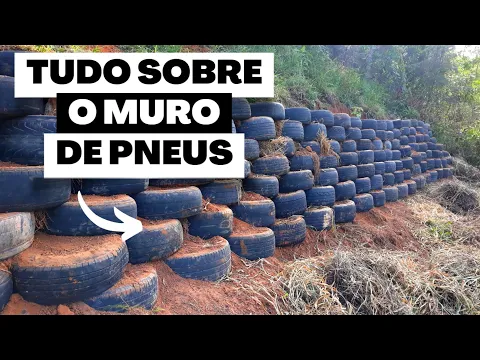

The couple‘s wall is not just a “cheap” solution. It solves a structural problem: containing the soil and creating space where there was only slope before.
With this method, the couple was able to:
- make use of the land’s own soil
- reduce the need to remove and transport soil
- create plateaus for future areas of the site
- do containment with reused and available material
It is a simple yet efficient engineering solution, especially when the goal is to expand usable area without spending much.
Is it worth making a retaining wall with tires?
For the couple, it is very worthwhile, as long as one respects the process: correct alignment, heavy compaction, and construction in layers, without exaggerating the height right at the beginning.
The result, according to them, is a firm wall even without complex locks, because the compacted soil inside each tire is what “locks” the structure. It is a job that requires effort and patience, but delivers resistance and savings.
Would you build a retaining wall like this with old tires on your land, or do you still prefer a traditional wall even if it costs more?






Seja o primeiro a reagir!