





 Portuguese
  English
  Spanish
  4 min of reading
  0 comments


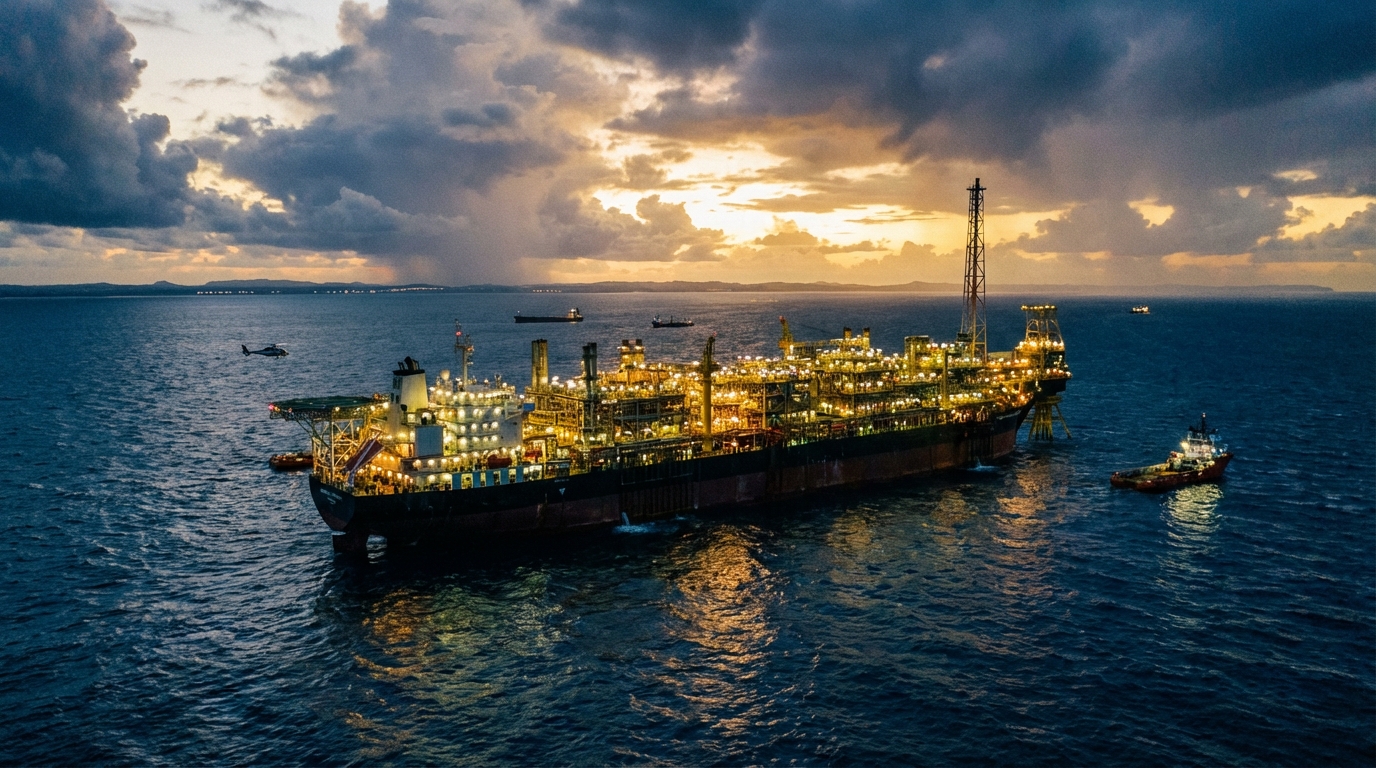
Brazilian startup that was born as a spin-off of Modec within platforms in the pre-salt developed artificial intelligence capable of predicting failures before they occur, tripled in size for two consecutive years, opened an office in Houston, and now sells technology to ExxonMobil in Guyana, Equinor in the Bacalhau field, Prio, TotalEnergies, and Petrobras, monitoring over 25% of the national oil production.
Shape Digital is a Brazilian startup that was founded in 2021 within oil platforms in the middle of the ocean. Therefore, it is not a common technology company — it was created from the actual operation of FPSOs in the pre-salt.
The company emerged as a spin-off of Modec, one of the largest independent FPSO operators in the world and a subsidiary of the Japanese conglomerate Mitsui. Thus, Modec operates a fleet that accounts for about 30% of Brazil’s national oil production.
In less than four years, Shape moved from Petrobras’ platform ships to contracts with ExxonMobil, Equinor, TotalEnergies, and Prio — and opened an office in Houston.
-
All mammals on the planet were born from eggs 250 million years ago, and scientists have just found the first evidence of this hidden inside a skull smaller than a coin in South Africa.
-
The government creates a package of R$ 14 billion to secure the price of diesel after the war in Iran closes off 20% of the world’s oil route, while Petrobras plans to never depend on imports again and promises to supply Brazil on its own by 2031.
-
Big techs plan US$ 635 billion in AI data centers by 2026, but the crisis in the Middle East threatens investments, and Brazil is betting on natural gas to attract megacomplexes of up to 1,500 MW in Rio de Janeiro, Rio Grande do Sul, and Paraná.

-
FPSO P-78 begins operations in the pre-salt of Búzios with 180,000 barrels/day, ROTA 3 pipeline, 13 smart wells, and CO₂ reinjection, while the field already produces 1 million barrels per day and generated R$ 81 billion in royalties in 2025.
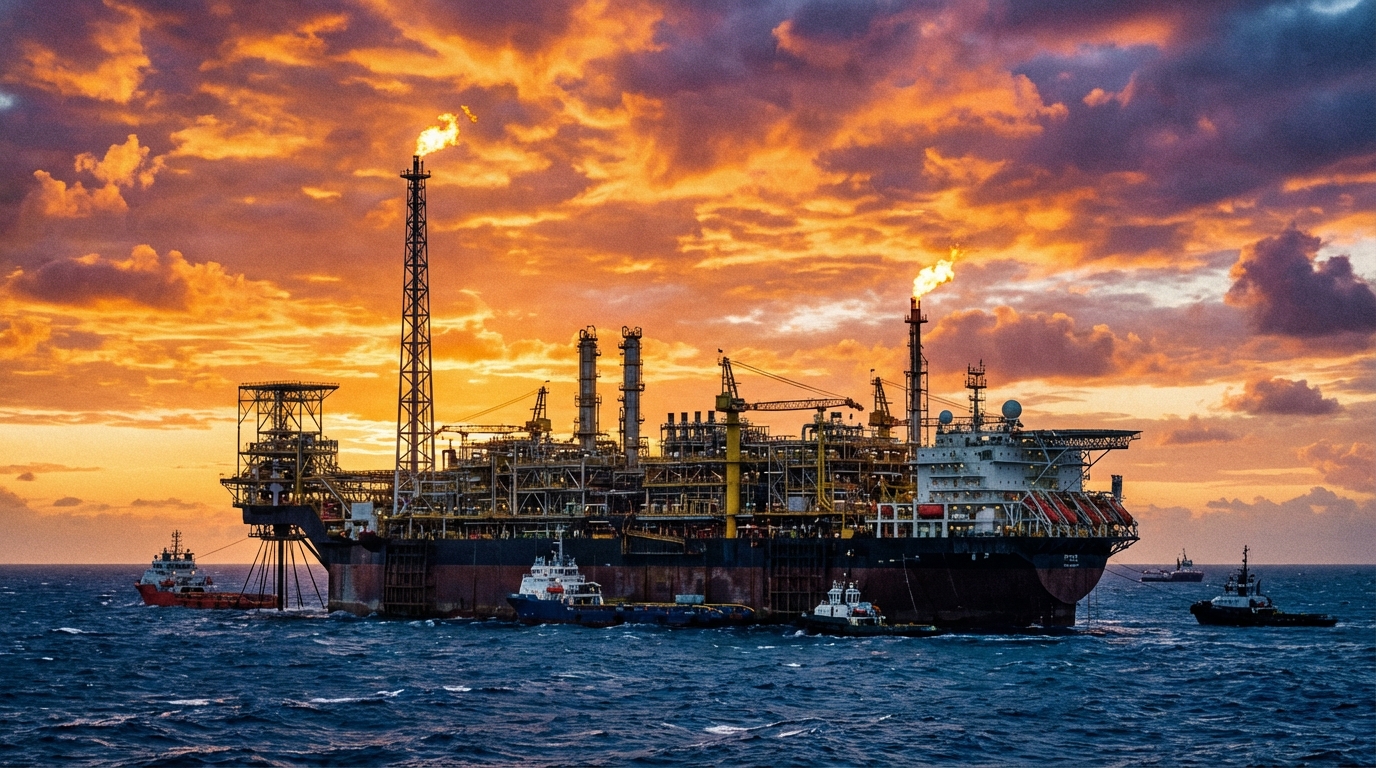

Brazilian startup created AI that predicts failures with over 200 models
The main product is Shape Lighthouse, a predictive maintenance platform that centralizes all data from an offshore platform. In this way, it organizes process variables, maintenance notes, inspections, and alarm history.
Additionally, the system correlates this data with a library of over 200 AI-based models and engineering equations. Therefore, it can anticipate failures before they become critical.
The documented result: a reduction of more than 15% in unplanned operational downtime and savings of over $1.5 million in repair costs per plant per year.
In addition to Lighthouse, Shape markets two other products. Shape Reef manages risks and process safety in real time. Meanwhile, Shape Aura functions as a “Virtual Engineer” that optimizes energy efficiency and reduces emissions.

Petrobras, Prio, and TotalEnergies are already using Brazilian technology
In Brazil, the Brazilian startup monitors assets with processing capacity of over 25% of the national oil and gas production. The main clients include heavyweight names.
At Petrobras, Shape implemented Lighthouse on the FPSOs Almirante Barroso (150,000 bbl/day) and Anita Garibaldi (80,000 bbl/day). Additionally, it maintains a R&D partnership for a Virtual Engineer.
At Prio, Brazil’s largest independent oil company, the contract signed in October 2025 covers three FPSOs and the Wellhead Polvo A. Thus, the total monitored capacity reaches 380,000 barrels per day.
TotalEnergies implemented Shape Aura on the FPSO Cidade de Caraguatatuba, aiming to reduce 5% of the unit’s total emissions.
Shell, along with Unicamp and Modec, also established a 36-month partnership to develop a new risk monitoring methodology using AI, funded with resources from ANP.
From Houston to Guyana: Brazilian startup competes with global giants
In 2025, Shape opened an office in Houston — the global epicenter of the energy industry. Consequently, it secured significant international contracts.
With Equinor, the Brazilian startup operates in the Bacalhau field, where the FPSO began production in October 2025 with a capacity of 220,000 barrels per day. The consortium includes Equinor (40%), ExxonMobil (40%), and Galp (20%).
With ExxonMobil, the contract is in Guyana, in the Stabroek block, which produced 894,000 barrels per day in November 2025. Therefore, it is one of the most dynamic offshore projects in the world.
CEO Felipe Baldissera participated in CERAWeek 2025 in Houston, and executives represented the company at SXSW 2025. Thus, the strategy for insertion into the global energy and technology agenda is deliberate.

Why Brazil is the best place in the world to create offshore AI
At OTC Brasil 2025, Baldissera explained the company’s thesis. “Artificial intelligence is all about having data, having history. And Brazil is an incredible breeding ground for that,” he stated.
The numbers support the argument. Brazil leads the global ranking of operational FPSOs, with 46 to 49 active units. This amounts to approximately 25% of the entire global fleet.
Therefore, the country generates unparalleled volumes of offshore operational data. It is on this basis that the algorithms of the Brazilian startup were trained, creating a network effect that is difficult to replicate.
The more units are monitored, the more accurate the model library becomes — and the harder it is for competitors to reach the same level of accuracy.

Brazilian startup tripled in size for two consecutive years
The growth rate is remarkable. Shape grew three times in 2024 and projected to grow three more times in 2025. The company does not disclose revenue.
However, it estimates generating over $160 million in additional production per year for its clients. Additionally, it saves over $1.5 million in repair costs per plant annually.
From a technological standpoint, Shape is advancing towards generative AI. Thus, it integrates solutions from Microsoft and OpenAI to reduce false positives in alerts — increasing engineers’ confidence in the system’s recommendations.
The global FPSO market reinforces the potential. According to Rystad Energy, South America leads global demand, with 15 projects expected by 2030. To understand how robots are already taking over inspections on these platforms, see the report.
Shape is not just exporting software — it is exporting the accumulated knowledge of operating the world’s deepest waters. And that is an asset that no outside competitor can buy.





Seja o primeiro a reagir!