





 Portuguese
  English
  Spanish
  4 min of reading
  2 comments


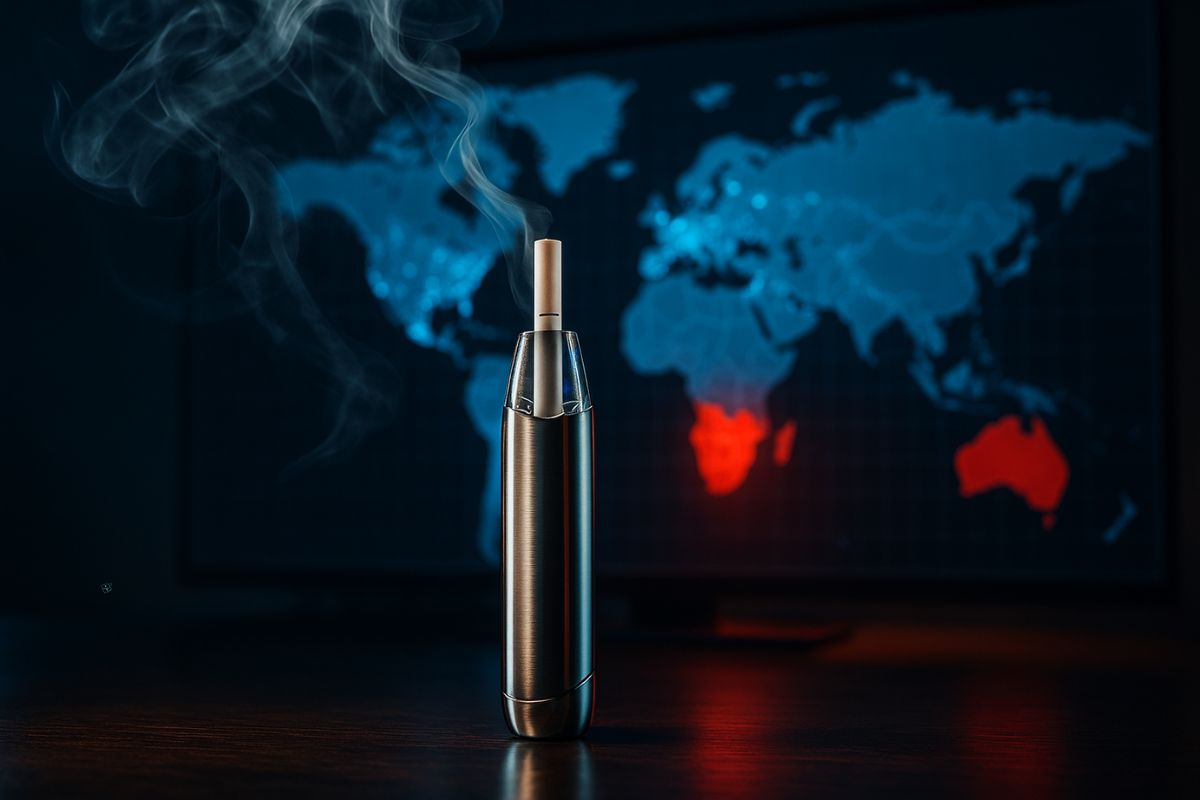


While 95 Countries Have Already Regulated Devices That Heat Tobacco and Generate Billions in Taxes, Brazil Has Maintained the Ban Since 2009, Opening Space for Smuggling and Losing Relevant Revenues, According to Correio 24 Horas.
The so-called tobacco of the future is already present in nearly a hundred global markets and has led millions of smokers to abandon traditional cigarettes. The technology, based on devices that heat tobacco instead of burning it, generates less waste and captures the interest of consumers seeking alternatives to conventional smoking.
Nevertheless, Brazil continues to prohibit the devices since 2009, a decision reaffirmed by Anvisa in 2024. The deadlock has created a paradox: while the world advances, the country opens space for the illegal market and loses billions in tax revenue.
What Is the Tobacco of the Future and Why Does It Divide Opinions
The tobacco of the future consists of electronic devices that heat small tobacco sticks, releasing nicotine without combustion.
-
The largest food company on the planet, JBS, has just opened a 4,000 square meter laboratory in Florianópolis to develop customized proteins that modulate muscle mass gain, immune response, and metabolic performance.

-
After nearly 30 bids and competition among industry giants, a Spanish company purchases one of the largest airports in Brazil for almost R$ 3 billion and takes over the management of Galeão in a concession that will last until 2039.
-
The Federal Revenue Service now automatically cross-references everything you declare with data from banks, credit cards, brokerage firms, and insurance companies, and any discrepancy between your income and your expenses triggers an alert in seconds.

-
Amid global tensions, Brazil blocks the United States’ proposal at the WTO and paves the way for a trade crisis and possible retaliations.


Studies indicate that the reduction of burning decreases the emission of toxic substances, which attracted 32.2 million users in countries like Japan and Italy. Of these, 72% have abandoned traditional cigarettes.
Companies like Philip Morris International (PMI) are leading the innovation.
Since 2008, the multinational has invested US$ 12.5 billion in research and development and opened, in 2021, the Industrial Excellence Center in Crespellano, Italy, dedicated to global scale production.
Brazil’s Stance and the Advance of Smuggling
Despite the international movement, Brazil maintains a restrictive position.
Anvisa reaffirmed the ban in 2024, even in the face of scientific evidence and the regulatory advances in developed countries.
This choice, however, has had practical effects: it is estimated that 4 million Brazilians already use devices clandestinely, fueling smuggling.
According to a study by the School of Multidimensional Security at USP, R$ 7.7 billion in taxes were not collected in 2025 due to the illegal market.
The number reveals that the lack of regulation has not eliminated consumption but has merely pushed demand to unregulated channels.
The Scientific Debate and the International View
In the United States, the FDA (Food and Drug Administration) approved five models of the Iqos device between 2019 and 2022, recognizing that they release fewer harmful substances.
In total, over 700 independent studies have already been published on heated tobacco.
For scientists like Gizelle Baker from PMI, regulating with monitoring is more effective than prohibiting, as it allows for tracking long-term impacts.
In 2025, the CEO of PMI, Jacek Olczak, stated that Japan and Sweden are expected to be the first countries to completely abolish regular cigarettes, replacing them with smoke-free alternatives.
He characterized the continuation of traditional cigarettes as “foolishness,” reinforcing the defense of options for consumers.
Impacts on the Brazilian Economy
Brazil is one of the largest tobacco producers in the world.
In 2025, 787 tons of tobacco were harvested, especially in Rio Grande do Sul, Santa Catarina, Paraná, Bahia, and Alagoas.
Part of this production is exported to PMI factories in Italy, but the country is unable to participate in the global heated tobacco market due to the ban.
This limits Brazilian competitiveness and reduces potential gains in the production chain.
Another critical point is the recent rise in smoking: the adult smoking rate rose from 9.3% in 2007 to 11.6% in 2025.
For experts like Professor Luciana Florêncio from ESPM, this trend reinforces the need to offer sustainable alternatives, especially for young people seeking products with health and technology appeal.
The Official Policy of the Ministry of Health
Even under international pressure, the Brazilian government maintains the National Tobacco Control Program, which distributes patches, gums, and medications through the SUS.
The official position is that these measures are safer and more effective than adopting electronic devices.
For the Ministry of Health, allowing the devices could normalize nicotine use and create new dependency risks.
The advancement of the tobacco of the future exposes a dilemma for Brazil: to continue prohibiting and lose billion-dollar revenue or to regulate and align with the international movement for harm reduction.
The deadlock involves public health, agricultural economy, and combating smuggling, placing the country at the center of an increasingly urgent debate .
Do you think Brazil should maintain the ban or regulate the tobacco of the future to reduce the illegal market and increase revenue? Share your opinion in the comments — we want to hear your views on this controversial issue.







Onde comprar?
Matéria ****, a cada um real arrecadado são gastos dois no SUS para problemas decorrentes do tabagismo.