





 Portuguese
  English
  Spanish
  5 min of reading
  0 comments


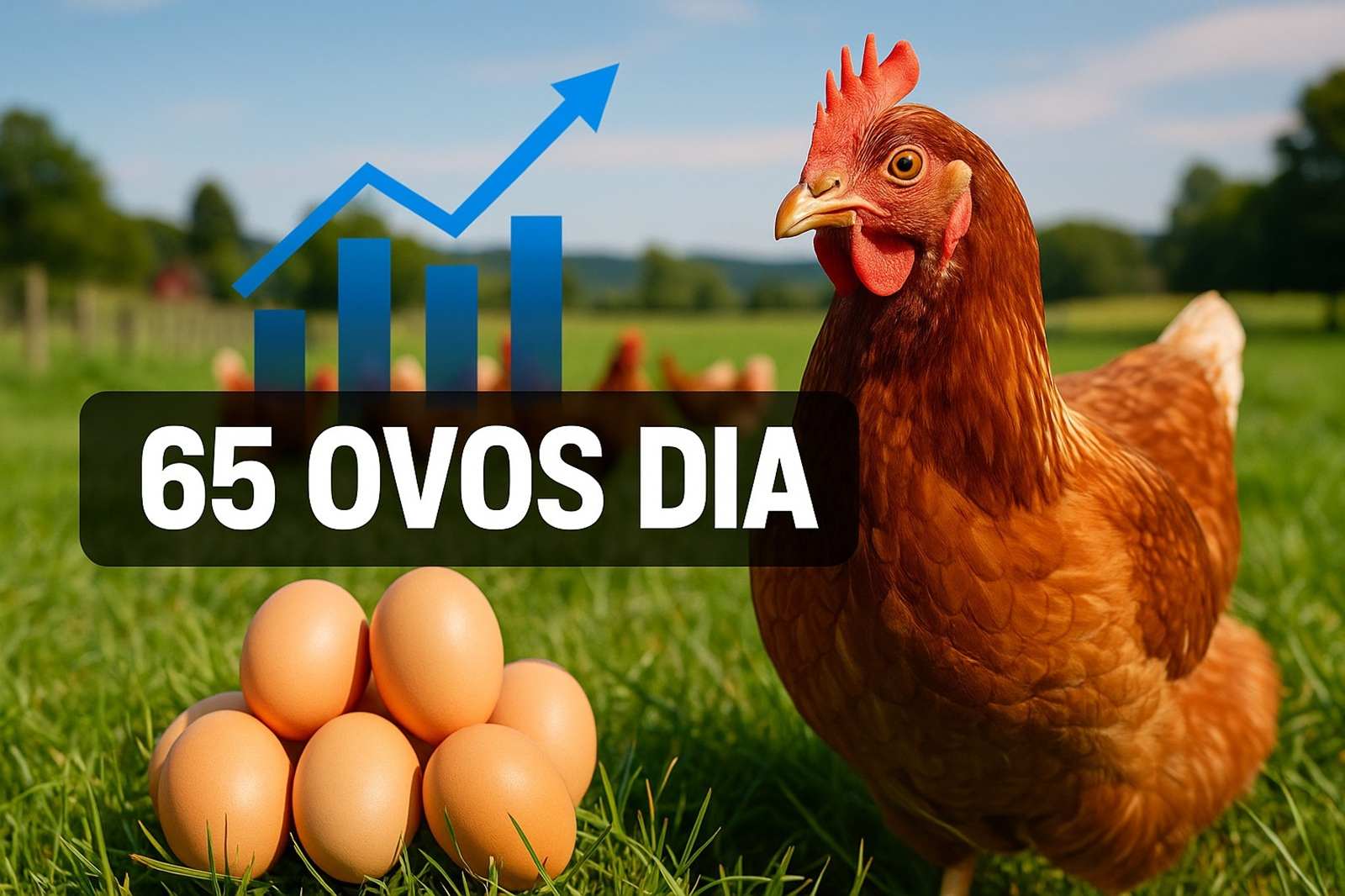
With Batch Scalability Technique, Producers Start Raising 100 Chickens with Little Money, Keep a Steady Supply, and Capture the Market.
Many people dream of starting a laying hen farm, but they run into the same problem: not having all the money at once to buy 100 ready-to-produce birds.
This is a common obstacle that causes many to give up even before trying.
However, there is a practical solution that works precisely for those who want to start without the full capital gathered. Agronomist Fábricio Andrade’s channel presented an excellent method for you to begin investing in laying hens.
-
The eggshell that almost everyone throws away is made up of about 95% calcium carbonate and can help enrich the soil when crushed, slowly releasing nutrients and being reused in home gardens and vegetable patches.

-
This farm in the United States does not use sunlight, does not use soil, and produces 500 times more food per square meter than traditional agriculture: the secret lies in 42,000 LEDs, hydroponics, and a system that recycles even the heat from the lamps.

-
The water that almost everyone throws away after cooking potatoes carries nutrients released during the preparation and can be reused to help in the development of plants when used correctly at the base of gardens and pots, at no additional cost and without changing the routine.

-
The sea water temperature rose from 28 to 34 degrees in Santa Catarina and killed up to 90% of the oysters: producers who planted over 1 million seeds lost practically everything and say that if it happens again, production is doomed to end.


This solution is called batch scalability, and it allows for setting up an organized, steady, and profitable production structure without the need for a heavy initial investment.
The Objective of Scalability
The central point of scalability is simple: start small and grow gradually, in a planned manner.
This way, the farmer can achieve a production of 65 eggs per day, equivalent to a flock of 100 hens, without needing to buy all the birds at once.
The method guarantees two main advantages.
The first is the possibility of starting with little money. The second is to always maintain a stable egg production, which avoids losing customers due to lack of supply.
Why Not Buy 100 Chicks at Once
At first, it may seem logical to buy 100 chicks. But this creates a future problem.
When they all age at the same time, production drops, leaving the producer without eggs to sell. Losing supply is bad because the market demands consistency.
Customers like supermarkets, bakeries, and housewives trust producers who always deliver. The moment eggs start to run low, trust disappears, and customers look for another supplier.
Therefore, maintaining a constant flow is more important than filling the coop all at once.
The Calculation of Weeks
Scalability works from simple calculations. The productive lifespan of a laying hen is 90 weeks.
After that, it eats more feed and lays fewer eggs. This is the moment to cull the birds.
In addition to these 90 weeks, it’s necessary to add 4 weeks of sanitary emptying, a period used to disinfect the barn and prepare the space for new pullets. The result is a total cycle of 94 weeks.
Dividing this time by 4, the ideal is to replace the batches every 23.5 weeks.
This number is the heart of scalability, as it ensures organization among the four batches that will keep the farm always with 100 birds.
The Step by Step
In week zero, the producer buys the first batch of 25 chicks. They grow until 23.5 weeks when they start laying. At this same point, the second batch, also of 25 pullets, is purchased.
Another 23.5 weeks later, it’s time for the third batch, and in the following cycle, the fourth batch comes in. By the end of this process, the producer will have reached the mark of 100 hens, distributed across four different ages.
With this rotation, there will always be one batch starting to lay, another at peak production, another declining, and one in the culling phase. This balance ensures that the daily average remains around 65 eggs.
The Moment of Culling
Culling the birds is an inevitable part of the activity. After 90 weeks, it is no longer worthwhile to keep the hen. The most common outcome is slaughter for meat sales at lower prices.
The important thing is to understand that this is not cruelty. The producer’s duty is to provide a dignified life for the birds, with quality feed and water, and then use them properly for human food.
This culling frees up space in the barn to accommodate new pullets after the cleaning and disinfection period.
Necessary Structure
To work with this model, it is ideal to have four barns. But it is also possible to operate with three barns and one nursery. This is because there will always be three batches laying, and only one will be growing.
The nursery works well for young birds but cannot accommodate the adults in production. Therefore, those who choose this alternative need to ensure that the larger space is ready when the birds begin to lay.
Why 65 Eggs and Not 100
Even with 100 hens, production does not reach 100 eggs per day. This is because not all of them lay at the same time, nor do they all hit peak laying together.
Biology does not follow exact math.
The realistic calculation shows that the average stabilizes around 65 eggs per day, a sufficient number to maintain sales flow and ensure satisfied customers.
The Commercial Side
The biggest problem for small producers is not producing eggs, but selling them. The technical part can be learned: how to make feed, how to manage, which breed to choose.
But the challenge is to capture the market. And scalability helps precisely with that, as it provides time to build the customer base gradually.
When the first batch starts laying, the farmer needs clients for about 20 eggs a day. More than 20 weeks later, they need customers for 50 eggs.
With another cycle, it goes up to 75. Thus, the base of buyers increases gradually.
This extra time helps identify preferences, such as the most sought-after shell color, and adjust production to consumer tastes.
A Practical Example
If someone decided to buy all 100 hens at once, they would have a large number of eggs but also a huge problem with distribution. Imagine having 200 eggs and only a market for 100. Half of the production would be stuck.
On the other hand, starting with 25 birds allows time to organize the customer base, establish partnerships, and understand real demand before expanding.
This pace is what sustains the business in the long run.
Consistency is Key
In the end, the secret is to never let eggs run out. It is this regularity that ensures trust and fosters customer loyalty.
Losing a customer due to a delivery failure is much more expensive than passing up immediate production gains.
Scalability is not just a calculation of weeks. It is a market strategy.
The batch scalability method offers a practical alternative for those who wish to start a chicken farm but do not have significant initial capital. It combines technical planning and market vision, allowing for simultaneous growth in production and customer base.
By following this model, it is possible to achieve an average of 65 eggs per day, with safety and stability. More than just learning to raise, the producer learns to sell, which proves to be a major differentiator in remaining competitive.
And, as the specialist emphasized, knowledge must be valued. Professionals study, invest, and bring ready information. It is up to those receiving this content to apply, share, and acknowledge the effort. After all, the path of the land also requires discipline, patience, and respect for the stages.










-

Uma pessoa reagiu a isso.