





 Portuguese
  English
  Spanish
  5 min of reading
  0 comments


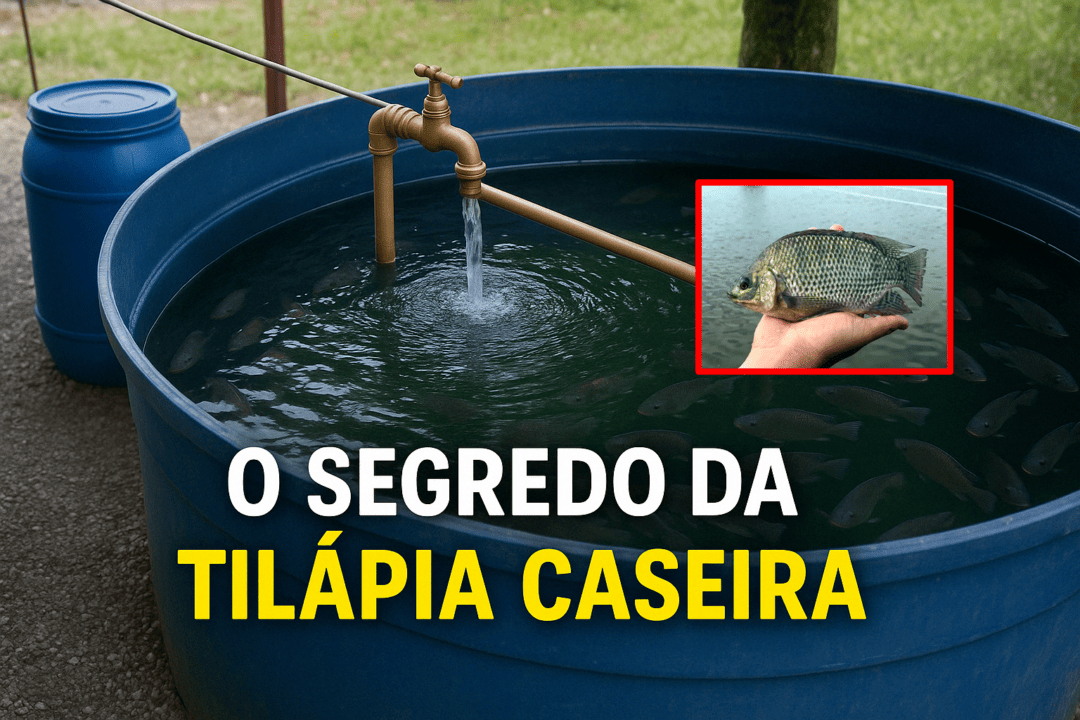
Creating Tilapia in a Water Tank Is a Viable Option for Those Seeking to Produce Fish at Home or in Small Properties. With the Use of Plastic or Fiber Tanks, It Is Possible to Set Up an Efficient System with Water Quality Control, Proper Feeding, and Simple Oxygenation
Creating tilapia in a water tank has become a practical and economical alternative for small producers and even residents of urban areas.
With the right equipment, some basic care, and a low initial investment, it is possible to set up a functional system that ensures good fish production in limited spaces.
The tilapia farming in Brazil has shown continuous growth and technological advances in recent years. In 2024, national fish production reached 968,745 tons, a 9.2% increase compared to the previous year.
-
He started running at 66 years old, broke records at 82, and is now a subject of study for having a metabolic age comparable to that of a 20-year-old, in a case that is intriguing scientists and inspiring the world.

-
Oldest tree on the planet reappears after 130 years of searches: Wattieza, 385 million years old, was 10 meters tall and had no leaves or seeds; Gilboa fossils in New York solved the mystery in 2007.

-
A 48-square-meter house assembled in hours with 4,000 bricks made of recycled plastic that does not absorb moisture, has natural thermal insulation, and costs less than 90,000 reais in a complete kit.

-
Luciano Hang revealed that Havan’s air fleet has already accumulated more than 20,000 landings, 10,000 flight hours, and 6 million kilometers traveled, and he says that without the planes, the company would never have grown so quickly.


Of this total, tilapia accounted for 662,230 tons, corresponding to 68.36% of national production, with a growth of 14.3% compared to 2023.
Main Producers
Paraná remains the largest tilapia producer in the country, accounting for 37.6% of national production.
In 2023, the state produced 166.1 thousand tons, with highlights for the municipalities of Nova Aurora, Palotina, and Assis Chateaubriand.
Minas Gerais holds third place in the national ranking, with a production of 45.5 thousand tons in 2023, representing 10.3% of the total.
Advantages of Farming in Water Tank
Farming tilapia in water tanks presents various advantages over traditional open tank systems.
Controlling the environment is easier and more efficient since tanks are closed systems. This reduces the risk of contamination by bacteria, algae, and other harmful organisms.
Additionally, it is possible to maintain a higher fish density per square meter, increasing productivity in limited spaces.
How to Farm Tilapia in Water Tank
The initial investment to start tilapia farming in water tanks depends on the size of the chosen system.
Small systems can be set up for less than R$ 2,000, while larger projects require investments above R$ 10,000.
The basic costs include the purchase of water tanks, aerators, biological filters, specific feed, and fingerlings (young fish).


Which Water Tank to Choose?
The most suitable tanks are made of fiberglass or polyethylene, sturdy materials that do not interfere with water quality.
It is recommended to use tanks with capacities between 1,000 and 5,000 liters, depending on the desired number of fish.
How Many Fish Can Be Farmed?
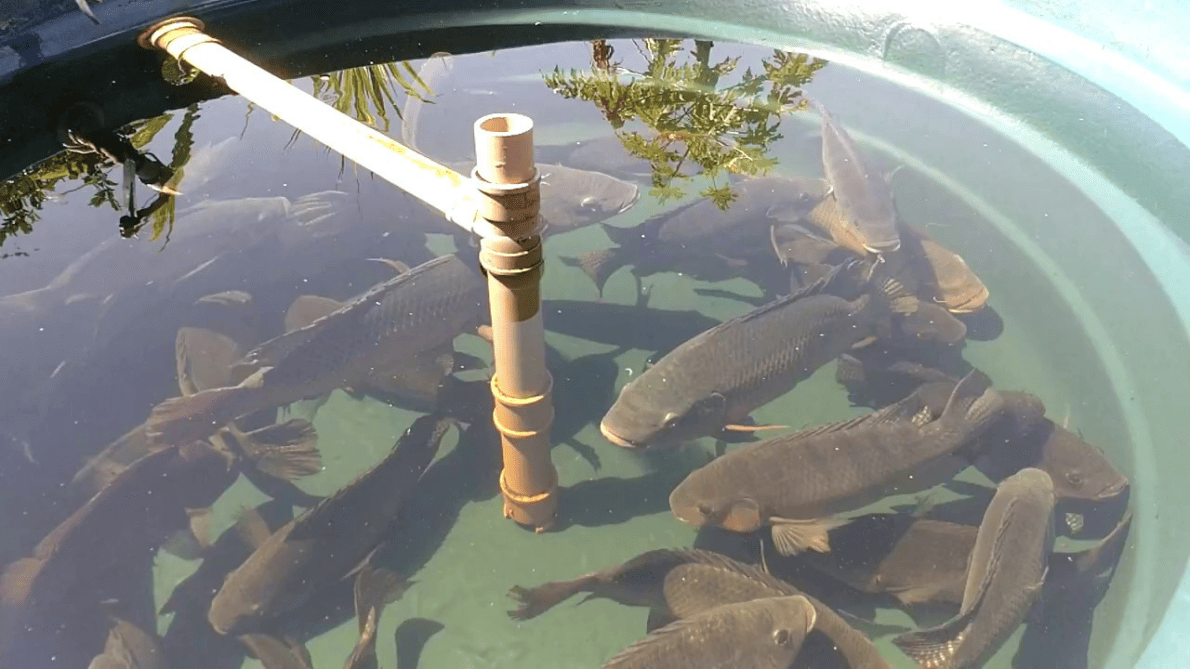
For a 1,000-liter water tank, the ideal density ranges from 50 to 100 tilapia, that is, from 5 to 10 fish for every 100 liters of water.
This density ensures good health and growth of the fish, provided there is efficient filtration and proper oxygenation.
Proper Feeding Is Essential
Feeding is one of the most important aspects and also one of the highest costs in tilapia farming.
Commercial feeds with 32% to 40% protein are ideal for rapid and healthy fish growth. Initially, fingerlings should receive finer feed, while juveniles and adults can consume extruded pellets.
Although tilapia also accept vegetable scraps and insects, a balanced diet is essential to maximize meat quality and weight gain.
Correct Management for High Productivity
Efficient management is crucial to ensure the health of the fish and the financial success of the venture.
Key factors include strict control of water quality, proper feeding, constant monitoring of the fish, and regular maintenance of the equipment.

Clean and Oxygenated Water
The quality of water directly influences fish growth and profitability. It is essential to have access to a clean and pollutant-free source.
It is recommended to partially change the water weekly, replacing between 10% and 20% of the total volume.
In addition, a biological or mechanical filtration system is essential to remove impurities and waste that can accumulate and become toxic.
Another essential equipment is the aerator, which keeps the water well oxygenated, reduces fish stress, and promotes healthy growth. Basic models can be found on the market starting from R$ 300.
How to Prevent Diseases?
Preventing diseases in fish involves keeping the water clean, using high-quality feed, and avoiding overcrowding in the tanks. The use of coarse salt, at a rate of 5g per liter, can help reduce common parasitic infections in tilapia farming.
How Long Until Sale?
Under good farming conditions, a tilapia takes 5 to 7 months to reach the ideal weight for sale, which ranges from 800g to 1.2 kg. This time can vary depending on water temperature, feeding, and proper management.
Farming tilapia in water tanks is highly profitable due to the high demand for this type of fish in the Brazilian market.
Each production cycle, which lasts on average six months, can generate between R$ 1,000 and R$ 2,500 with an average production of 100 tilapia.
Local Market Evaluation
Before starting the business, it is essential to evaluate the local or regional market. The analysis should include research on demand, prices practiced, and competition. This will help determine the real profit potential of the activity.
Operational Costs
The costs for farming tilapia go beyond the initial investment. It is necessary to consider recurring expenses such as feed, electricity, equipment maintenance, labor, and water treatment.
A detailed calculation of these costs is essential to verify the financial viability of the business.
Another important point is to be aware of local and national regulations regarding aquaculture. Meeting legal requirements can influence operations and costs of the venture, avoiding future problems.
Training and Technical Knowledge
To maximize profits, it is essential for the producer to seek technical training.
Participating in specific courses on tilapia farming and aquaculture systems management can help avoid common mistakes and increase the chances of success in the business.
How to Market the Fish?
The sale of tilapia can be made directly to markets, restaurants, fish shops, fishing farms, or even directly to local consumers. The fish can be marketed live, fresh, or frozen, according to the preferences of the consumer market.
Ideal Temperature for Farming
Originating from Africa, tilapia has adapted very well to the Brazilian tropical climate. Although it prefers temperatures between 25ºC and 28ºC, the species is resistant to climate variations and can be cultivated in all regions of the country.
Tips to Maximize Production
Some practices can help increase productivity and profitability in tilapia farming:
- Maintain the correct fish density to avoid overcrowding;
- Use an efficient oxygenation system;
- Continuously monitor water quality;
- Adopt balanced and sustainable feeding practices;
- Regularly perform partial water changes;
- Control temperature and dissolved oxygen levels.
Farming tilapia in water tanks offers a real income opportunity for small and medium producers.
It is a sustainable practice that allows the local production of healthy food with low water consumption.
With proper management, investment in training, and compliance with legal regulations, this activity can become a reliable and profitable source for many Brazilian families.









-

Uma pessoa reagiu a isso.