





 Portuguese
  English
  Spanish
  6 min of reading
  0 comments



Prototype Created by Japanese Student Goes Viral for Using Biometrics to Unlock Bra with Fingerprint; Extreme Intimate Technology Draws Attention on Social Media.
In September 2025, a curious creation from Japan gained international attention after being published by the Correio 24 Horas portal: a prototype bra that only unlocks through the partner’s pre-registered fingerprint. The project is led by Japanese student Yūki Aizawa, known on social media as ZAWAWOEKS, who developed the device as an applied engineering experiment and maker culture. Within hours, videos and images of the prototype spread across platforms such as X, TikTok, and technology forums, bringing the object to the top of trending topics.
What drew the most attention was not just the idea itself, but the fact that the prototype is functional, with a real biometric sensor integrated into the bra’s clasp. Unlike merely artistic concepts, the system recognizes the registered fingerprint and only then releases the mechanical lock. Otherwise, the clasp remains completely locked.
How the Bra with Biometric Lock Works
The operation of the prototype is relatively simple from an engineering perspective, but sophisticated in its final result. The system uses:
-
While the world looks at oil, the war with Iran is already disrupting helium supply from Qatar, affecting car and iPhone chips, threatening AI expansion, and putting pressure on aluminum packaging at the highest value in four years.

-
Global warming will expose a treasure hidden under the ice of Antarctica and may spark an international dispute over gold and valuable minerals.

-
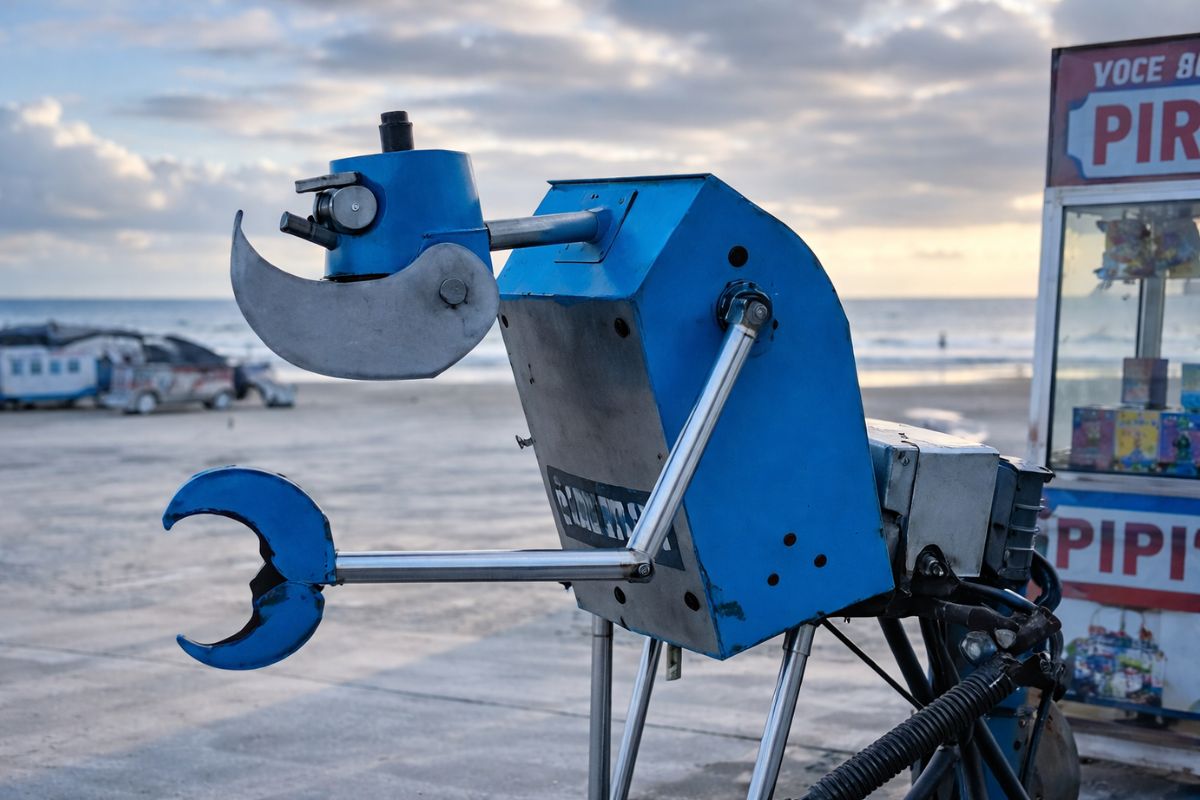
A street vendor from Praia Grande built a robot made of scrap from scooters and washing machines that pulls his popcorn cart on the beach, emits sounds, and interacts with customers, becoming an attraction on the coast of São Paulo.
-
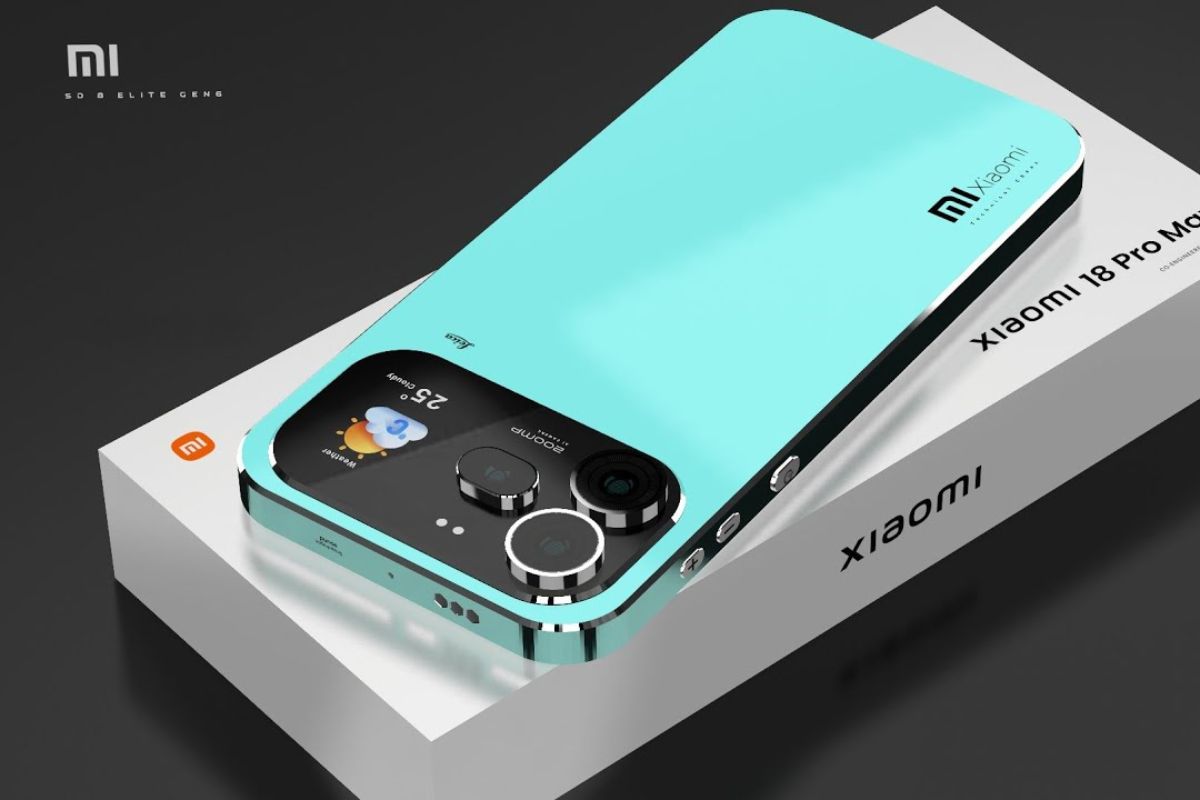
The specifications of the Xiaomi 18 Pro Max have been leaked, and the highlight is a dual 200 MP camera with a new 22-nanometer technology that promises to consume less energy and capture details in shadows and bright areas using LOFIC HDR.

- Capacitive fingerprint sensor, similar to those used in smartphones;
- Low-power microcontroller, responsible for processing the fingerprint reading;
- Miniaturized electromechanical lock, attached to the bra’s clasp;
- Rechargeable internal battery, responsible for powering the circuit.
When the registered fingerprint is recognized, the microcontroller sends the command to the electromechanical lock to release the clasp. Otherwise, the system automatically blocks any attempt at manual opening. According to the creator himself, all the hardware is compact, lightweight, and discreetly integrated into the structure of the piece.
The prototype does not rely on internet connection, external apps, or cloud databases. The entire process occurs locally on the embedded circuit, which reduces latency and communication failures. The technical proposal was to demonstrate that biometrics can be miniaturized to the point of being applied even in intimate clothing.
Why the Creation Went Viral So Quickly
The combination of technology, intimacy, and physical access control was the main trigger for the viral spread. Within hours, the original video from the creator surpassed hundreds of thousands of views and generated reactions of astonishment, curiosity, and disbelief.
Global interest can also be explained by the current context of expanding smart wearables. In 2024 and 2025, the tech clothing market saw growth driven by smartwatches, clothing with thermal sensors, fabrics with vital signs monitoring, and even pieces with Bluetooth communication. The fingerprint bra emerges in this same logic of integration between body and technology, but taken to an extreme level.
Another decisive factor for the repercussion was the contrast between the visual simplicity of the object and the sophistication of the internal mechanism. At first glance, it appears to be a common bra. Only when attempting to open the clasp does the hidden biometric system reveal itself.
An Experimental Prototype, Not a Commercial Product
Despite the global attention, Yūki Aizawa himself made it clear that the project has no commercial purpose. The device was created as a technical experiment and conceptual provocation, within the logic of independent prototyping laboratories that are very common in Japan.
There is no record of industrial patenting or plans for mass production. The creator’s focus was to demonstrate:
- the extreme miniaturization of biometric sensors;
- the feasibility of integrating these sensors into fabrics and clothing;
- the robustness of locking systems in small moving components.
From a technical standpoint, the project serves as a proof of concept for broader applications, such as personal safety clothing, hospital garments with access control, and smart personal protective equipment.
Biometrics Beyond Smartphones: An Expanding Market
Biometrics has ceased to be exclusive to smartphones and banking systems. Today, biometric sensors are already applied in:
- residential locks;
- electronic safes;
- vehicles;
- public transport turnstiles;
- industrial equipment;
- medical devices.
The Japanese creation draws attention for taking this technology into uncharted territory: intimate clothing. From an engineering perspective, this imposes complex challenges, such as:
- reduced energy consumption;
- moisture resistance;
- flexibility of circuits;
- extreme miniaturization;
- safety against mechanical failures.
Just the fact that the system functions reliably in such a sensitive environment already positions the prototype as an advanced demonstration of embedded engineering.
Japan and the Tradition of Extreme Prototypes
Japan has a long tradition of experimental technological projects that blend cutting-edge engineering with everyday objects.
From humanoid robots to unusual wearable devices, the country hosts a highly active maker culture, with thousands of independent engineers developing solutions outside traditional corporate environments.
Within this context, the biometric bra fits as yet another one of these creations that quickly crosses cultural boundaries through social media. International viralization often occurs because these projects combine three very strong elements:
- real technical innovation;
- easily recognizable everyday object;
- immediate visual impact.
The result is a content format that spreads rapidly across digital platforms, even without an organized marketing campaign.
Extreme Intimate Technology and the Future of Wearables
In recent years, the wearable industry has advanced far beyond watches and bands. There are already on the market:
- clothes that monitor heart rates in real-time;
- sports bras with performance sensors;
- T-shirts with integrated electrodes for medical exams;
- clothing with automatic thermal control.
The Japanese prototype stands out for not focusing on health, performance, or comfort, but rather on physical access control through embedded biometrics. Technically, this paves the way for multiple future applications, such as:
- protective clothing with restricted release;
- garments for high-risk industrial environments;
- safety pieces with personal authentication;
- hospital garments with access control for procedures.
Even if the specific bra does not become a product, the technology demonstrated in the prototype can migrate to other high-demand sectors.
International Repercussions and Immediate Cultural Impact
After the report was published in Brazil, the case began to circulate in technology portals across Latin America, as well as innovation pages in Europe and Asia. The interest was not limited to the technical aspect but also to the novelty of the application of biometrics.
In engineering groups, the project was analyzed from the perspective of miniaturization and energy efficiency. Meanwhile, in digital culture communities, the focus was on the boldness of the concept and the speed with which it spread across networks.
In less than a week, ZAWAWOEKS’s name became one of the most mentioned Japanese creators during that period in international electronic prototyping forums.
What Makes This Prototype So Unique on the Global Stage
This is not just another “internet curiosity.” What distinguishes this creation is the fact that it brings together, at the same time:
- functional biometrics;
- miniaturized clothing;
- real mechanical locking system;
- total integration into a flexible object;
- absolute physical control of unlocking.
Few registered prototypes to date have managed to condense so many complex technical elements into a single common personal item.
The bra that unlocks only with the partner’s fingerprint was not created to become a shelf product, but it has become one of the most talked-about technological experiments in the world in 2025.
It proves that biometrics has reached a level of miniaturization and reliability capable of surpassing the boundaries of traditional electronic devices and invading unimaginable fields of clothing.
In an era where technology is increasingly approaching the human body, prototypes like this show that the line between engineering, fashion, and personal objects has practically ceased to exist.







-

-

5 pessoas reagiram a isso.