





 Português
  Inglês
  Espanhol
  4 min de leitura
  0 comentários



Executive Urges Urgency For Voting On Proposal That Changes The Penal Code And Allows Conversion Of Digital Assets Into National Currency
The federal government, led by President Luiz Inácio Lula da Silva, has initiated a political offensive to approve Bill No. 5,582/2025, presented on November 1, 2025. The text authorizes the liquidation of seized cryptocurrencies and bitcoins in operations against organized crime. The proposal was signed by Minister of Justice and Public Security, Ricardo Lewandowski, and Attorney General of the Union, Jorge Messias.
The project was sent to the National Congress with a request for urgency. Commonly known as the “Antifaction Bill”, it modifies six legislations, including the Penal Code (Decree-Law No. 2,848/1940) and the Code of Criminal Procedure (Decree-Law No. 3,689/1941). The text allows judges to convert virtual assets into reais immediately after seizure. According to the government, the deadline for voting ends on December 18, 2025. If this does not occur, other legislative agendas will be suspended starting December 19.
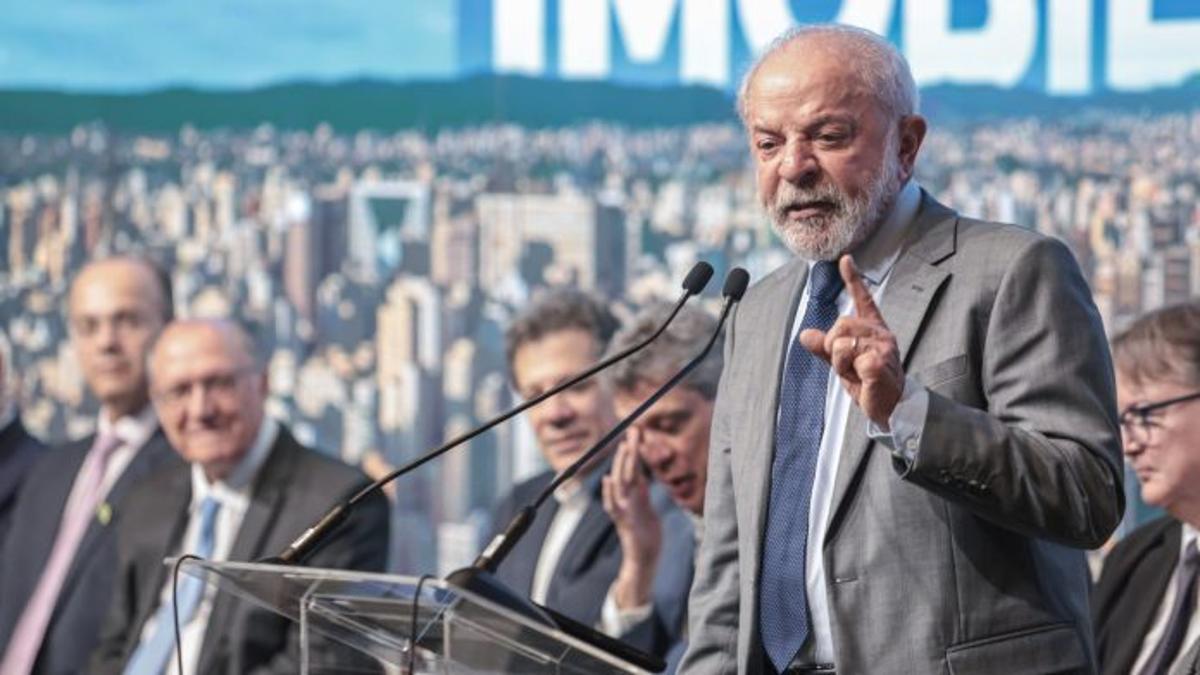
How The Project Changes The Destination Of Seized Cryptocurrencies
The Bill 5,582/2025 alters Article 144-E of the Code of Criminal Procedure. The change authorizes the immediate conversion of foreign currencies, securities, checks, and virtual assets into national currency. After seizure, the assets must be forwarded to financial institutions authorized by the Federal Government for liquidation or custody.
-
In a silent race, Shopee signs a mega contract in Guarulhos and accelerates the e-commerce war with faster deliveries, pressured shipping, and a new threat to rivals in Brazil.

-
Oil surged to $115 a barrel due to the war in the Middle East, and diesel in Brazil has already risen to R$ 7.45 per liter, while the United States…

-
Brazilian city bets on the business environment to generate jobs and attract investments in the energy sector — secretary reveals strategy at Macaé Energy 2026.

-
50 viaducts, 4 tunnels, 28 bridges, and 40 kilometers of bike paths: BR-262 in Espírito Santo will receive 8.6 billion reais for the largest engineering project in the state’s history, inspired by the Immigrant Highway in São Paulo.


When sale is unfeasible, the assets remain stored until final judicial decision. For Lewandowski, this measure is essential to weaken the finances of criminal factions. Messias claims that the project modernizes the legal system and keeps pace with the advancement of financial technologies. Both emphasize that the goal is to reinforce the efficiency of Justice and prevent the use of cryptocurrencies in money laundering schemes.
According to the Ministry of Justice, the text ensures agility in the conversion of seized assets and reduces the risk of loss of value of digital assets. Thus, the government aims to ensure the effectiveness of criminal prosecution and prevent the use of crypto assets as a financial refuge for crime.
Legal Context And Expected Effects
The government states that the Bill 5,582/2025 is a direct response to the expansion of illegal activities involving cryptocurrencies. According to the Attorney General of the Union (AGU), the measure follows the recommendations of the Financial Action Task Force (FATF) and is inspired by models adopted by European and Asian countries.
On the other hand, the text does not determine the restitution of liquidated amounts in case of acquittal. Legal experts warn that this may generate constitutional discussions about presumption of innocence and property rights. Even so, the Ministry of Justice assures that the proposal reinforces the transparency and agility of the judicial system.
The immediate liquidation of digital assets also aims to avoid losses due to devaluation and increase the efficiency of the National Treasury. Thus, the converted resources could quickly return to public coffers, strengthening the funding of security and crime-fighting actions.
Processing And Next Steps In Congress
The project is being processed under urgency regime. The vote in the Chamber of Deputies is expected to take place by December 18, 2025, before the parliamentary recess. If approved, the text will proceed to the Federal Senate and then to presidential sanction, which is expected to happen by January 2026.
Meanwhile, another project discusses the creation of a national reserve of bitcoins with seized currencies. This proposal, unlike the current one, aims to keep crypto assets as public property and generate revenue through their appreciation. The Planalto, however, maintains that immediate liquidation is more effective for blocking illicit capital and reinforcing the government’s cash flow.
According to the Ministry of Finance, the direct conversion of seized assets brings efficiency gains and improves state control over illegal resources. However, the political dispute over the destination of cryptocurrencies is expected to divide opinions among parliamentarians and experts in the coming weeks.
Between Liquidation And The State Reserve
The Bill 5,582/2025 has caused divergences in the National Congress. The government base argues that the proposal is urgent and essential to dismantle the finances of factions. Meanwhile, opposition sectors warn that liquidation may generate legal uncertainty and irreversible losses for the acquitted.
With the voting deadline approaching, expectations are rising in Brasília. After all, will Congress approve Lula’s plan to liquidate seized cryptocurrencies by 2025, or will it transform the assets into a national digital reserve?










Seja o primeiro a reagir!