





 Portuguese
  English
  Spanish
  3 min of reading
  1 comment


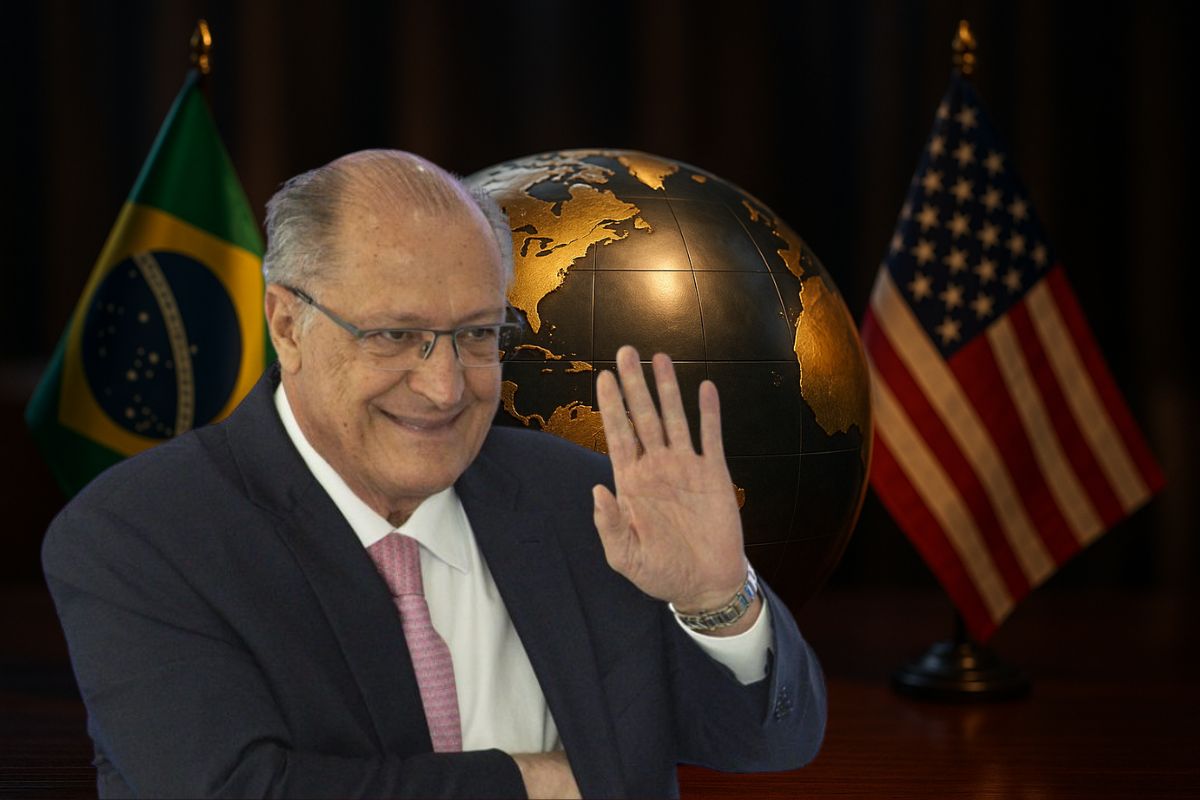

Vice President Advocates Caution and Dialogue in Response to Pressure from New U.S. Sanctions, Delaying Immediate Application of the Reciprocity Law
The relationship between Brazil and the United States is experiencing a moment of diplomatic tension. The conviction of former president Jair Bolsonaro has intensified the threat of new sanctions from Washington, and the Brazilian government has been called to respond. However, Vice President Geraldo Alckmin stated on Monday (15) that the country does not intend to resort to the Reciprocity Law, passed by the National Congress, as a response to the pressures.
According to Folha de Pernambuco, Alckmin emphasized that Brazil will continue to prioritize multilateralism and free trade, seeking solutions within the World Trade Organization (WTO). “There is a Reciprocity Law approved, but we do not intend to use it at this moment. We will engage in dialogue,” said the Vice President during the Valor 1000 event in São Paulo.
What Is the Reciprocity Law
The Reciprocity Law was approved by the National Congress as a legal instrument for Brazil to adopt measures equivalent to sanctions imposed by other countries.
-
Elderly individuals aged 65 or older who have never contributed to the INSS can receive R$ 1,621 per month in 2026 without having paid any contributions in their lifetime: learn how the benefit works that already supports nearly 7 million Brazilians.

-
The gaucho city reduced the number of Bolsa Família beneficiaries by almost 40% in just a year and a half with active outreach that connects each registered person directly to job vacancies in Bento Gonçalves in Rio Grande do Sul.
-
The bluest city in Brazil has just gained a new floating bridge for the free crossing between the island and the mainland, connecting residents and visitors to the historic center of São Francisco do Sul every day of the week.
-
In a silent race, Shopee signs a mega contract in Guarulhos and accelerates the e-commerce war with faster deliveries, pressured shipping, and a new threat to rivals in Brazil.


In practice, the legislation would allow the Brazilian government to restrict imports, exports, or investments from nations that impose trade barriers against Brazil.
Despite this possibility, the federal government prefers not to trigger the mechanism as it understands that this could aggravate the crisis with the United States.
Alckmin argued that the law should be used as a last resort in extreme scenarios of trade blockages.
Why the U.S. Pressures Brazil
The tension arises from recent decisions by Brazilian courts involving former president Jair Bolsonaro.
The conviction resonated in Washington, where U.S. lawmakers advocate the imposition of sanctions against strategic sectors related to Brazil.
The measures could directly impact exports of meat, coffee, fish, and fruits, in addition to creating barriers for industrial products.
In this context, the Reciprocity Law emerged as a potential means of retaliation, but Alckmin made it clear that the government’s priority is to avoid escalation of conflicts and protect bilateral trade, which amounts to billions of dollars annually.
The Brazilian Government’s Perspective
According to Alckmin, Brazil has already engaged the WTO to contest tariffs it considers unjustified.
Although the international body is weakened by the lack of a second instance, the government believes that this is the right path.
“We believe there is room for dialogue and negotiation,” stated the Vice President.
Alckmin emphasized that the government aims to reduce tariffs and expand trade agreements, avoiding unilateral measures that could provoke even harsher retaliations.
The Reciprocity Law, therefore, remains as a card up the sleeve but will not be used at this time.
Is It Worth Applying the Reciprocity Law?
Experts disagree on the effectiveness of the Reciprocity Law.
For some, the mechanism strengthens Brazilian sovereignty by allowing rapid and proportional responses.
For others, using the law in a time of crisis with the U.S. could compromise exporting sectors and undermine Brazil’s image as a reliable partner in international trade.
Alckmin’s decision reveals a pragmatic stance that prioritizes the maintenance of political and economic dialogue over immediate retaliation.
Still, the existence of the law approved by Congress serves as a pressure tool, signaling that the country is not powerless.
The crisis with the United States exposed internal divergences on how to react, but the government opted not to trigger the Reciprocity Law at this moment.
Alckmin bets on dialogue, multilateralism, and the use of the WTO as alternatives to avoid escalation of sanctions.
And you? Do you think Brazil should apply the Reciprocity Law in response to U.S. pressures or do you agree that caution is the best strategy? Leave your opinion in the comments — we want to hear from those closely following the impacts of this crisis.










Por enquanto cautela é um caminho seguro.