





 Portuguese
  English
  Spanish
  4 min of reading
  0 comments


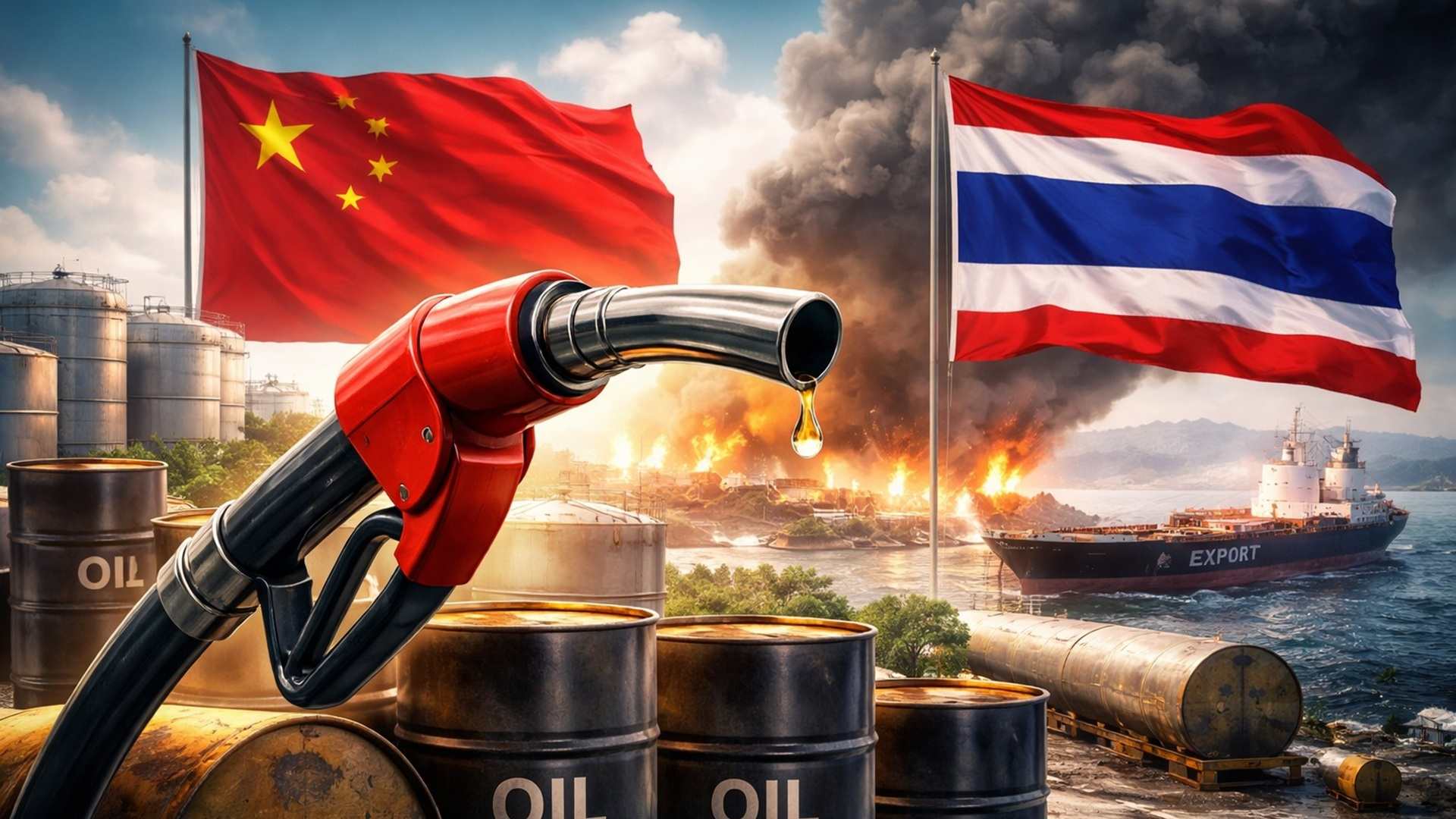
The Decision of China and Thailand to Suspend Gasoline and Diesel Exports Comes After Tensions in the Middle East and the Threat of a Blockade of the Strait of Hormuz, Route Responsible for About 20% of Oil and Liquefied Natural Gas Traded Worldwide
China and Thailand decided to suspend gasoline and diesel exports to preserve their national stocks in the face of the risk of disruption in global oil supply caused by escalating tensions in the Middle East and the threat of a blockade of the Strait of Hormuz.
China Orders Halt to New Gasoline and Diesel Exports
The Chinese government has ordered refineries to suspend new gasoline and diesel export contracts while renegotiating existing agreements. The measure seeks to preserve domestic supply in light of the instability affecting the global energy market.
The guidance came from the National Development and Reform Commission, responsible for the country’s economic planning. The agency sent direct instructions to major Chinese refineries, including state-owned companies and private firms in the energy sector.
-
Oil surged to $115 a barrel due to the war in the Middle East, and diesel in Brazil has already risen to R$ 7.45 per liter, while the United States…
-
Brazilian city bets on the business environment to generate jobs and attract investments in the energy sector — secretary reveals strategy at Macaé Energy 2026.

-
50 viaducts, 4 tunnels, 28 bridges, and 40 kilometers of bike paths: BR-262 in Espírito Santo will receive 8.6 billion reais for the largest engineering project in the state’s history, inspired by the Immigrant Highway in São Paulo.

-
Brazil produces too much clean energy and doesn’t know what to do with it: over 20% of solar and wind capacity was wasted in 2025 while investors flee and 509 renewable generation projects were abandoned in the last year.


Among the companies affected by the decision are Sinopec, PetroChina, and CNOOC, along with the private refinery Zhejiang Petrochemical. The order represents a significant tightening of the export quota policy traditionally adopted by the country.
Despite having accumulated reserves in recent months, China decided to act preventively. Some estimates indicate that national oil stocks could cover up to 130 days of internal consumption.
Risk in the Strait of Hormuz Pressures Global Energy Markets
The suspension of exports occurs amid rising geopolitical tensions in the Middle East. The focus of international concerns is the Strait of Hormuz, considered one of the most important maritime routes for the global oil trade.
About 20% of the oil and liquefied natural gas traded globally passes through this strategic corridor. Any prolonged disruption in the region could have significant impacts on the international fuel supply.
Fears intensified after Iran fulfilled its threat to block the route if it were attacked again. This scenario has led various governments to adopt preventive measures to protect their energy stocks.
Thailand Prohibits Gasoline Exports to Protect Supply
Thailand has adopted an even stricter measure in light of the risk of shortages. The government has prohibited exports and re-exports of refined fuels, including gasoline and diesel, as a way to preserve domestic supply.
The only exception involves shipments destined for Laos and Myanmar, maintained for strategic reasons. The decision reflects the country’s concern over potential prolonged interruptions in the international oil flow.
Although the Thai government claims to have enough reserves for about 90 days of consumption, the climate of uncertainty is already causing reactions from the public. Lines have begun to form at gas stations in different regions of the country.
The problem has become especially visible on tourist islands in the Gulf of Thailand. In places like Koh Samui, Koh Phangan, and Koh Tao, fuel arrives by ferry only once a day, which has led to stock depletion at various stations.
Japan and India Take Precautions Amid Fuel Crisis
The unrest caused by the situation involving China, Thailand, and gasoline is spreading to other Asian economies. In Japan, one of the main refineries has decided to temporarily suspend its fuel exports.
Other companies in the Japanese energy sector have begun negotiations with the government to access strategic oil reserves. The goal is to ensure stability in supply should the crisis in the Strait of Hormuz persist.
India is also observing the situation with growing concern. The country is the third-largest importer of crude oil in the world and has reserves that cover approximately 30 days of consumption.
Images circulating on social media show long lines of motorcycles at gas stations in rural areas of the country. The scene indicates fear of potential supply difficulties should maritime trade be disrupted.
Rising Oil Prices Increase Risk of Global Energy Crisis
The effects of geopolitical tension are already starting to appear in international energy markets. The price of Brent crude has increased by nearly 15% since the attacks carried out by the United States and Israel against Iranian targets.
At the same time, dozens of oil tankers remain parked in the Persian Gulf waiting for authorization to cross the Strait of Hormuz. Uncertainty about the safety of the route has caused delays in maritime transport.
If the blockade persists, some producing countries may be forced to reduce or even suspend part of their oil production. This possibility increases the risk of a global fuel shortage.
The combination of military tensions, interruptions in maritime routes, and preventive decisions made by Asian governments amplifies fears of a new international energy crisis. The potential impact includes rising gasoline prices and pressures on the global economy.










-

Uma pessoa reagiu a isso.