





 Portuguese
  English
  Spanish
  4 min of reading
  0 comments


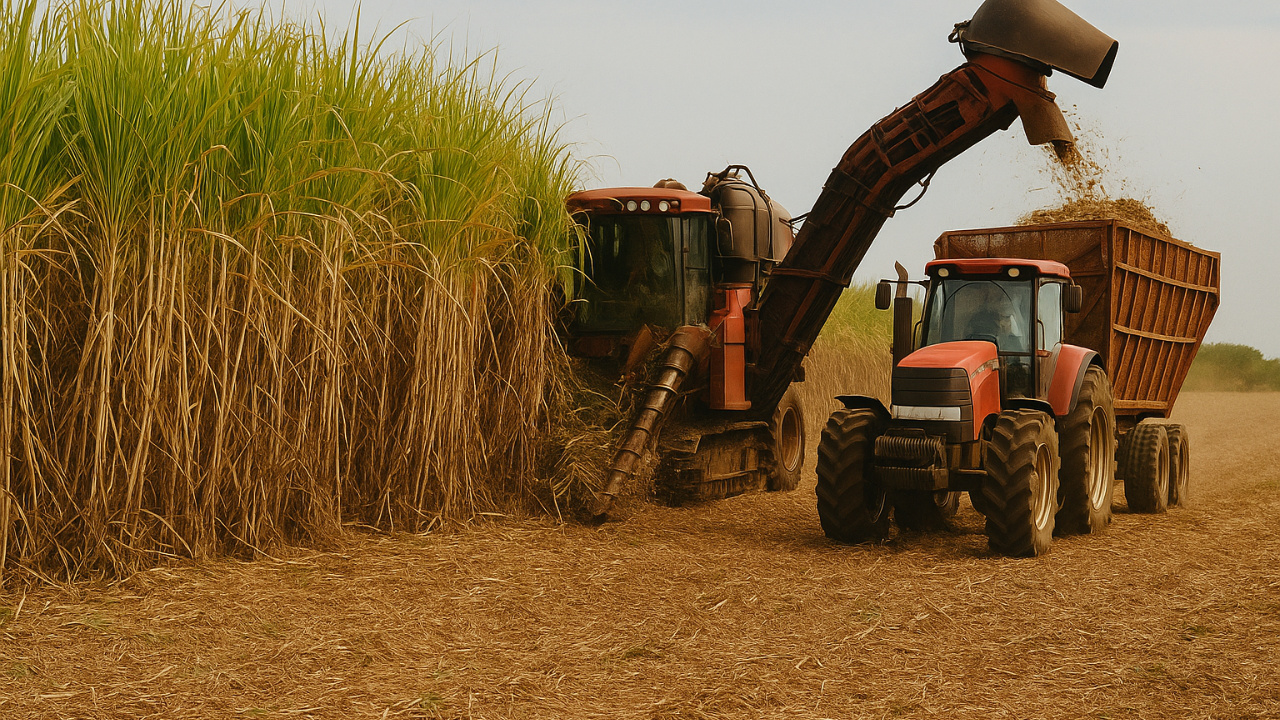
Crisis in the Northeast Worsens with Falling Sugar Prices, US Tariffs, and High Production Costs.
The sugar and alcohol sector in the Northeast began the 2025/26 harvest facing one of the most challenging scenarios in recent years.
Mill owners and producers report that the combination of falling sugar prices, steep tariffs from the United States, high production costs, and unfavorable weather has already put the season in the realm of losses.
The situation has been concerning since August, when the market began to anticipate that the crisis in the Northeast would intensify throughout the harvest.
-
The water that almost everyone throws away after cooking potatoes carries nutrients released during the preparation and can be reused to help in the development of plants when used correctly at the base of gardens and pots, at no additional cost and without changing the routine.

-
The sea water temperature rose from 28 to 34 degrees in Santa Catarina and killed up to 90% of the oysters: producers who planted over 1 million seeds lost practically everything and say that if it happens again, production is doomed to end.

-
An Indian tree that grows in the Brazilian Northeast produces an oil capable of acting against more than 200 species of pests and interrupting the insect cycle, gaining ground as a natural alternative in soybean, cotton, and vegetable crops.

-
The rise in oil prices in the Middle East is already affecting Brazilian sugar: mills in the Central-South are seeing their margins shrink just as ethanol gains strength.


The most immediate losses are coming from the sharp devaluation of sugar prices.
In Pernambuco, the reduction reached 21% in November compared to the same month last year, while in Alagoas, the decline was 14%, according to data from Cepea/Esalq.
The numbers follow the international trend: the external price of the commodity has already plummeted 25% in 2025, according to Valor Data.
US Tariffs Deepen Losses in Sugar Exports
In addition to the decline in global prices, the US tariffs—a 50% tariff imposed by the Trump administration—have practically paralyzed one of the most profitable markets for Northeastern sugar.
Traditionally, the Northeast benefited from the US import quota exempt from tariffs, receiving nearly double the international price for the commodity.
The interruption of this flow has had an immediate impact.
Since October, the simultaneous start of the Northeastern harvest and the new US quota year has seen only two ships depart from the region’s ports heading to the US, with 60,000 tons shipped, according to data from maritime agency Williams.
Ethanol Also Fails to Respond and Worsens the Crisis in Plant Revenues
The ethanol market, for its part, offers no relief. Although regional prices are slightly higher than in 2024, operations are at a loss.
The consultancy Pecege, based in Piracicaba (SP), points to an average loss of 8.2% for hydrated ethanol and 14.9% for anhydrous ethanol, considering only cash costs.
Meanwhile, the production of VHP sugar still maintains a positive average margin of 25.8%, and white sugar, focused on the domestic market, operates with a margin of 22.8%.
Even so, mill owners say the returns do not cover production costs. “No one is making a profit,” said Renato Cunha, president of Sindaçúcar-PE.
Weather and Delays in Crushing Reduce Sugarcane Allocation to Sugar
The intensification of rains in the Northeast between August and November brought another setback.
In addition to delaying harvest and crushing, excess moisture limited the redirection of sugarcane to sugar, which would be more profitable in the current scenario.
According to analyst Raphael Delloiagono from Pecege, this factor is likely to increase the alcoholic mix, contrary to what the mills desired.
Producers Increase Bet on Ethanol Anticipating Recovery in 2026
In the market, some are trying to get ahead. A mill owner from Paraíba, who preferred not to be identified, claims that he will raise ethanol production with expectations of price improvement by May 2026.
However, in sugar, he does not foresee changes in the short term.
“The price will adjust, but perhaps at the end of the next harvest [2026/27]. The price needs to react to avoid discouraging production,” he said.
For him, the ideal value would be between 17 and 18 cents per pound.
Higher Production Costs than in the Center-South Increase Competitive Inequality
The Northeast accumulates structural disadvantages that raise its operational costs compared to the Center-South.
Historically depleted soils, slopes that hinder mechanization, and older mills are factors that significantly increase production costs.
Data from Pecege shows that:
The agricultural cost of sugarcane is 25% higher than in the Center-South.
The industrial cost is 18% higher.
When calculated based on VHP sugar, the total cost per ton is 27% higher.
Sugarcane Suppliers Also Accumulate Losses
Thus, the pressure extends to independent producers.
The Asplan reports that since August, remuneration for a ton of sugarcane has dropped from R$ 170 to R$ 129.
For José Inácio de Morais, president of the entity, the loss of the American quota has worsened the situation even more.
“This import quota [from the US] gave us a R$ 10 advantage per ton of sugarcane, but without it, we are at the same parity with the market compared to other regions,” he stated.









Seja o primeiro a reagir!