





 English
  Francês
  Alemão
  Italiano
  Japonês
  Norueguês
  Portuguese
  Spanish
  2 min of reading


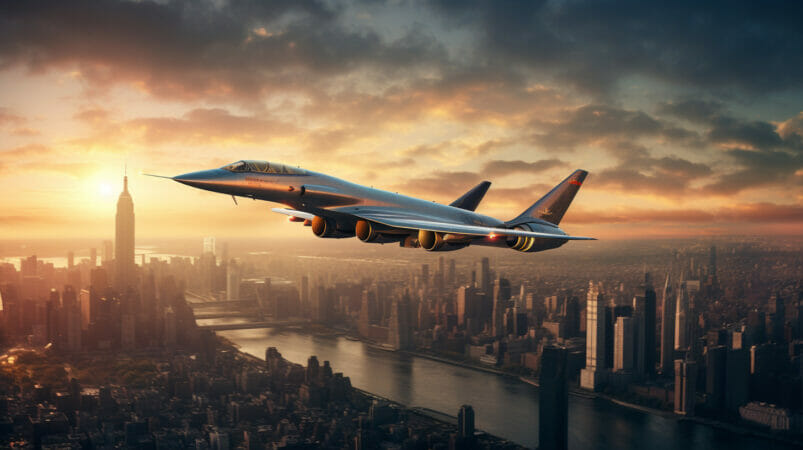
The World of Aviation Is About to Be Revolutionized, Thanks to the Joint Efforts of NASA, Boeing, and Rolls-Royce.
Imagine crossing the Atlantic in just 1 hour and 30 minutes! It sounds like something out of a science fiction movie, but it may become a reality soon.
Recently, NASA revealed that it is working on an ambitious project to transform commercial aviation. The goal is to develop a supersonic plane that can reach impressive speeds, ranging from 1,535 to 3,045 miles per hour (mph). This is more than twice the speed of current commercial planes, which fly at about 600 mph.
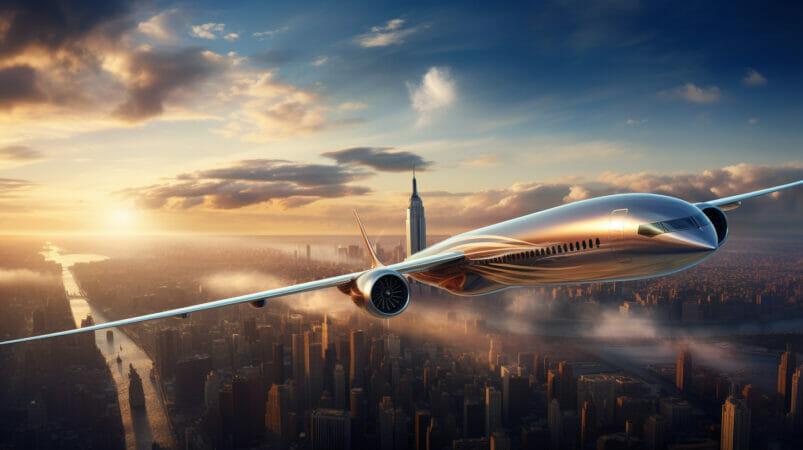
Strategic Partnerships
To make this dream a reality, NASA has signed 12-month contracts with aerospace giants such as Boeing and Rolls-Royce. These partnerships aim to create a “technology roadmap” for the development of the new supersonic jet.
-
Historic bankruptcy of Centauro shocks the market, and the century-old company puts more than 500,000 products, machines, and complete infrastructure up for online auction.

-
São Paulo surprises the world with a colossal railway network project that promises over 1,000 km of tracks, R$ 194 billion in investments, and 40 projects connecting the capital to the interior with fast and sustainable trains.
-
The world’s largest escalator, measuring 905 meters in China, reduces urban travel time from 1 hour to about 20 minutes and transforms mobility in mountainous regions with an engineering solution adapted to the terrain.

-
New shoe factory in Ceará is expected to create 400 jobs and strengthen the local economy.


The Legacy of the X-59


The project is not a completely new idea. NASA had already completed the development of the X-59 supersonic flight test aircraft, which will serve as the basis for the new project. The X-59 is scheduled to conduct its first test flight later this year, marking a significant step in high-speed air travel research.
Comparison with the Concorde
It is worth noting that the Concorde, the fastest passenger plane ever built, reached a maximum speed of 1,354 mph. However, the jets were retired in 2003 due to several factors, including a recession in the aviation industry and a fatal accident in 2000.








Seja o primeiro a reagir!