





 Portuguese
  English
  Spanish
  4 min of reading
  0 comments


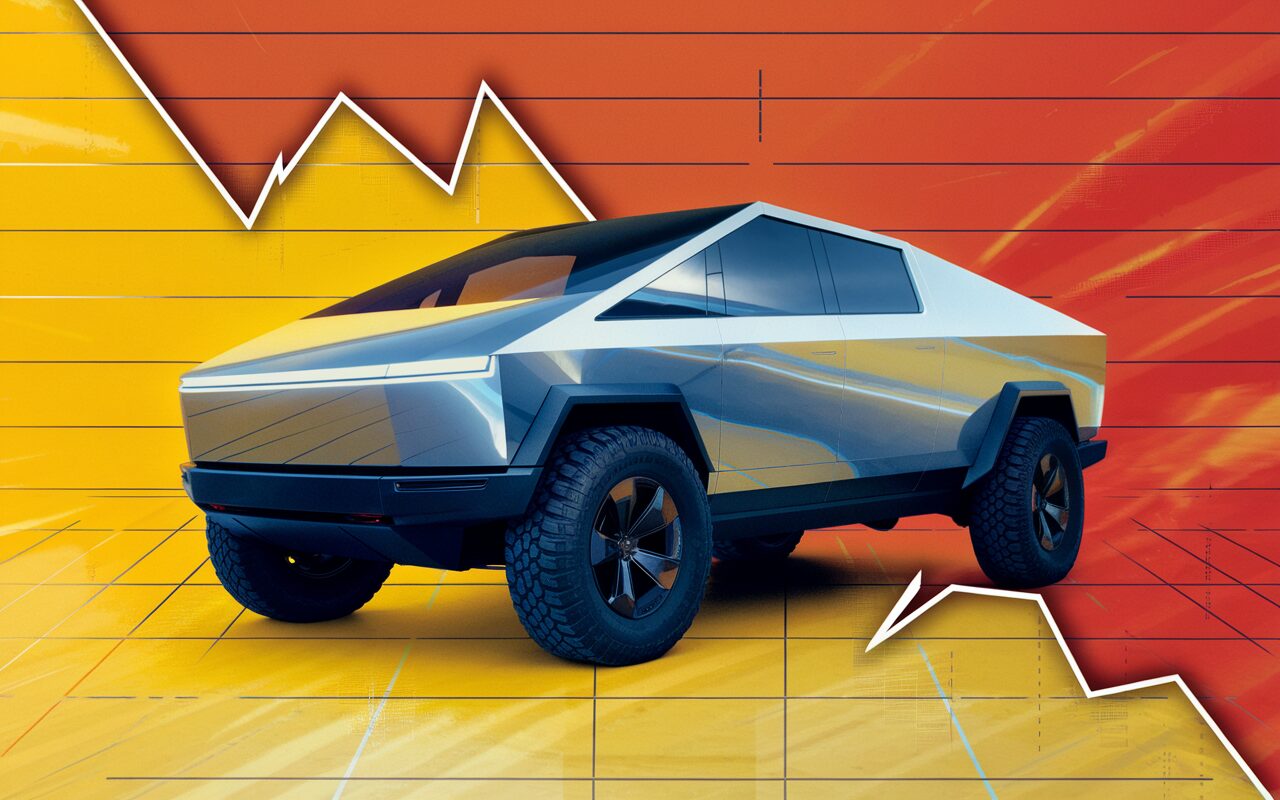
Tesla Faces Crisis With Cybertruck Sales Well Below Targets; Low Demand Threatens Performance of Electric Pickup and Pressures Future of Company
Tesla, which has been dealing with a drop in market value and the impacts of controversial statements by Elon Musk, now faces another challenge: the underwhelming performance of the Cybertruck in 2025. According to data from Cox Automotive released this week, only 6,406 units of the electric pickup were sold worldwide in the first three months of the year. The volume, which at first glance may seem significant for a niche vehicle, actually reveals a worrying scenario for the American automaker.
Even doubling the numbers compared to the first quarter of 2024, the Cybertruck lagged far behind previous results: in the third quarter of last year, 14,416 units were sold, while in the fourth quarter, it reached 12,991. The constant sales decline concerns the market and calls into question the commercial viability of the project, considered one of Tesla’s most ambitious.
If the trend continues, Tesla could end 2025 with only about 26,000 units of the Cybertruck sold, a performance that corresponds to just 10% of the production capacity initially promised by Elon Musk.
-
Ducati brings to Brazil the Superleggera V4 Centenario: 228 hp that become 247 with a track kit, carbon fiber and carbon-ceramic brakes, estimated price between R$ 1.5 and 2 million, deliveries only in 2027.

-
Used cars with electric steering for R$ 30,000: check out 5 practical and economical options for everyday use.

-
The 2026 Honda CRF 300L Rally ultra-light weighs 153 kg, travels 400 km with a 12.8 L tank, and handles both asphalt and dirt; it features a 286 cm³ engine, switchable ABS, and a slipper clutch.

-
Less than a Tera TSI, up to 710 km of range and charging in 9 minutes: the new BYD Song Ultra expands the Chinese brand’s bet on increasingly faster, more technological, and competitively priced electric SUVs.


Tesla Faces Pressure With Cybertruck Sales Failure
Expectations for the Cybertruck were enormous. On various occasions, Elon Musk stated that he aimed to achieve production of more than 250,000 units annually of the electric pickup. The reality, however, fell far short: in 2024, only 39,000 units were delivered.
The drop in sales during 2025 reinforces the perception that the Cybertruck could become one of the biggest failures in modern automotive history, alongside historic models like the Ford Edsel, Cadillac Catera, and Pontiac Aztek.


In addition to the underwhelming performance, Tesla faces extra pressure: the strengthening of direct competitors.
Ford, for example, surpassed Tesla in electric pickup sales in the first quarter of this year, selling 7,187 units of the F-150 Lightning, compared to the 6,406 units of the Cybertruck. The launch of the new Chevrolet Silverado EV and GMC Sierra EV in the coming months is likely to further intensify this competition.
Cybertruck Loses Ground as Electric Market Grows
Another data point that underscores the severity of the scenario is that while overall electric vehicle sales grew 11% in the North American market in the first quarter, Tesla recorded a decline of 8.6% in its total sales.
While the company groups Cybertruck numbers with those of the Model S and Model X in its official reports, Cox Automotive estimates that about 6,400 units of the Cybertruck were sold and only 5,100 of the luxury sedans, which are already considered outdated within their life cycles.
The weak performance of the Cybertruck directly affects Tesla’s image of innovation, which dominated the electric vehicle market just a few years ago with a wide advantage over its rivals.
Currently, the company must deal not only with declining sales but also with the strengthening of competitors that offer cheaper, more technologically advanced models that are readily available.
Elon Musk’s Promises Contrast With Cybertruck Reality
Elon Musk heavily bet on the success of the Cybertruck, presenting the vehicle as a game-changer for the automotive market. The project promised to revolutionize the sector with its futuristic design, stainless steel structure, and innovative technologies. However, production problems, constant delays, and technical limitations ended up driving consumers away.
Moreover, the final price of the Cybertruck was much higher than originally announced, causing frustration among customers. The model, which was to be sold for prices starting at US$ 39,900, was launched with initial versions above US$ 60,000.
As a result, the target audience for the Cybertruck has been limited to a narrower range of consumers, while more affordable electric pickups have gained traction in the market.
Tesla Explores Alternatives to Address Performance Decline
To try to turn the situation around, Tesla is evaluating new strategies. Among them are price cuts across its entire vehicle line, investments in new, cheaper models, and promises of technological advancements for the Cybertruck.
Elon Musk recently revealed plans for a new generation of vehicles with more affordable prices, aiming to regain market share.
Despite these efforts, financial analysts point out that recovery will not be easy. The reputation of the Cybertruck is already shaken, and with increasingly strong competition, Tesla will need to innovate significantly to regain market confidence.
Additionally, experts highlight that this turbulent moment occurs against a challenging macroeconomic backdrop, with increased global competition in the electric vehicle sector and shifts in consumer patterns in various countries.
The performance of the Cybertruck in 2025 raises doubts about the future of the model and, more broadly, about Tesla’s expansion strategy. While Elon Musk insists on the vision of innovative and disruptive electric mobility, the reality of the numbers shows that the challenge will be much greater than anticipated.
With Cybertruck sales stagnant and market pressure increasing, Tesla will need to rethink its strategies quickly if it wants to avoid having the model become a burden rather than an asset.








Seja o primeiro a reagir!