





 Portuguese
  English
  Spanish
  6 min of reading
  0 comments


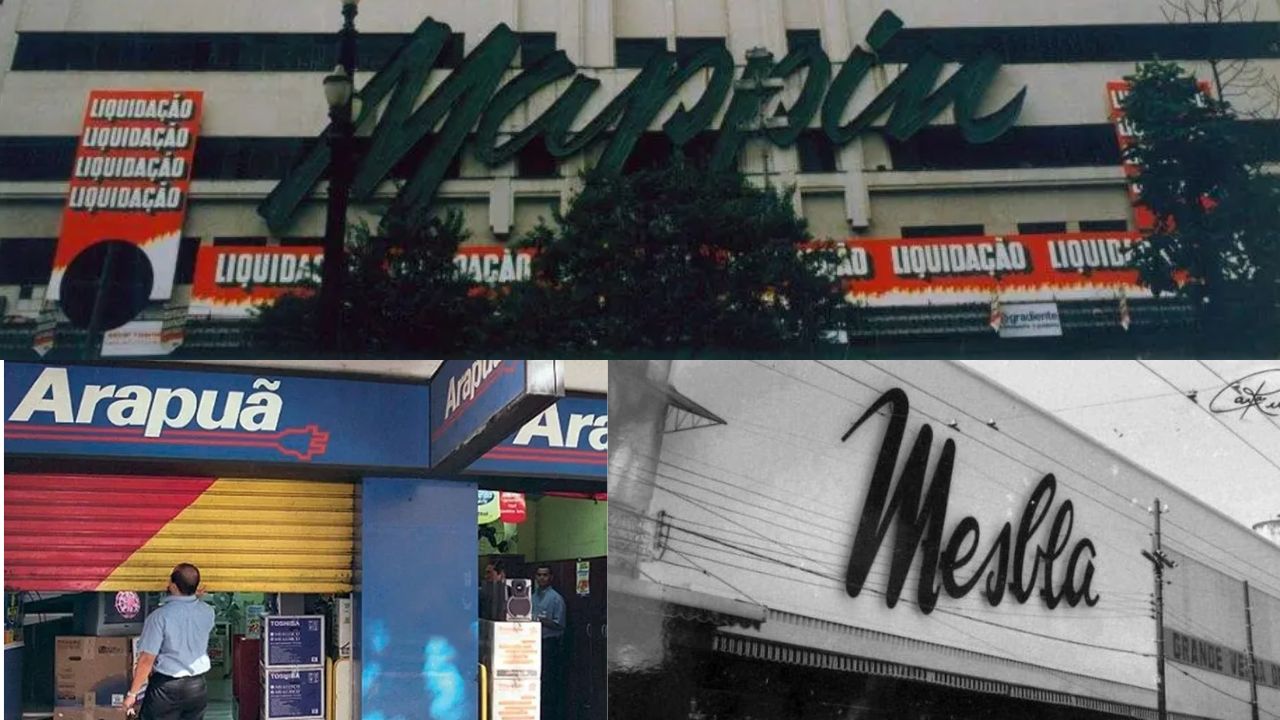
From Expansion with Hundreds of Stores and In-House Credit to Collapse Amid Inflation, Imports, High Interest Rates, and Poor Management, Mesbla, Arapuã, and Mappin Became Living Portraits of the Heights and Decline in Brazilian Retail
The country has seen chains that seemed invincible dominate storefronts, installment plans, and crowded aisles, but it has also seen these same brands disappear almost suddenly. It is this trajectory, from power to memory, that explains why Mesbla, Arapuã, and Mappin still resonate in Brazilian retail.
By looking at what these companies got right and where they failed, one can understand how Brazilian retail has changed with the economy, credit, competition, and the pace of decision-making within companies.
Mesbla: From Foreign Branch to National Power in Brazilian Retail
The story begins in 1912, in Rio de Janeiro, when a French company opens a branch to operate with cars and parts.
-
Petrobras sends a message to Brazilian truck drivers after fuel collapse and reveals plan to have 100% domestic diesel.

-
Mothers and daughters come together, create an ‘express’ beauty salon and turn the idea into a network with 21 units, revenue of R$ 16.7 million and 12,000 subscribers.

-
End of the 6×1 schedule: how the reduction of hours can affect service companies, industry, and agribusiness.

-
Brazil Ignores Trump’s threats to BRICS, Buys 42 tons of gold and reduces the Dollar’s share by 6.45% in international reserves.


The turning point comes in 1924, when the operation is reorganized and gains its own identity. In 1939, the name is shortened, and Mesbla is born, a strategy that helps to consolidate a “Brazilian” brand during a period of international tensions.
Over time, Mesbla changes its focus and becomes an icon of Brazilian retail by investing in department stores and extreme variety.
It was the type of store where practically everything fit, from household items to automobiles, growing in capitals and rural areas with giant units and thousands of employees.
At its peak, Mesbla operated with 180 points of sale, nearly 30,000 employees, and around 250,000 types of products. The gigantism seemed a sign of strength, but it also increased complexity, costs, and the risk of losing agility when the market changed.
When Complexity Becomes a Weakness: Bureaucracy, Mistakes, and Declining Image


From the late 1970s through the 1980s, the company faced more modern competition and began to experience financial difficulties.
To try to remain relevant in Brazilian retail, it invested in internal reorganization, marketing, purchasing catalogs, and expansion into various fronts, such as financial services and other subsidiaries.
However, not all innovations worked. An attempt to import cheaper cameras, with inferior quality and issues with service and replenishment, tarnished the company’s image in the electronics sector.
Meanwhile, the structure became cumbersome, with many directors involved in decision-making and slow responses to what consumers wanted.
When the economy tightens and competition accelerates, this slowness becomes costly. In Brazilian retail, response time is often as decisive as price.
Inflation, the Collor Plan, Imports, and Interest Rates: The Scenario That Crushed the Giants
The economic instability, with high inflation, reduces purchasing power and hinders operations. In the early 1990s, the Collor Plan freezes resources and consumption plummets. Mesbla, which had accumulated stock anticipating demand, ends up with unsold goods and pressured cash flow.
Later, with the opening for imports and the arrival of international chains, competition in Brazilian retail escalates. Foreign products and brands begin to dominate storefronts, and more agile chains gain ground. What used to be scale becomes a burden, as any internal correction takes too long.
Ricardo Mansur, the Attempted Merger, and the Final Collapse of Mesbla
With high debts, Mesbla sells control to Ricardo Mansur, who also owned Mappin and wanted to integrate operations. On paper, the merger promised synergy.
In practice, the crisis was deep, suppliers and rents became a problem, and the group lost credibility.
Mesbla entered bankruptcy in 1996 and began to face unregulated logistics, lack of products in some stores, and excesses in others. The attempt at “rescue” did not hold.
On August 24, 1999, the last unit closed its doors, and the bankruptcy marked the end of nearly a century of history. The name remains, above all, in the collective memory, with later attempts to return in the digital space.
Arapuã: The Queen of Installment Plans and the Popular Height of Brazilian Retail
If Mesbla symbolized the big department store, Arapuã became synonymous with popular home appliances. The story begins in 1957, in Lins, in the interior of São Paulo. The leap comes when the company realizes the potential for specialization and, above all, consumer credit.
With the creation of its own installment plan, Arapuã financed access to refrigerators, televisions, and stoves for thousands of families. It was a silent revolution in consumption, which helped the company grow strongly in Brazilian retail, especially outside the capitals where competition was lower.
In the 1990s, after restructuring and strategic decisions, Arapuã reached its peak. In 1996, it achieved a billion-dollar revenue, operated with more than 500 stores, and became an inevitable presence in urban centers, with striking advertising and strong popular appeal.
The Fall of Arapuã: Default, High Interest Rates, and Competition from All Sides
What sustained Arapuã also became its weak point. With the crisis and increasing defaults, the credit that boosted sales began to erode cash flow.
From the second half of the 1990s, the scenario worsens: competition from larger chains, the rise of hypermarkets selling home appliances, and increasing credit costs with higher interest rates.
The company entered bankruptcy in 1998, attempted to survive with credit restrictions and adjustments, but the crisis deepened. Suppliers, employees, and consumers suffered from instability.
Bankruptcy was declared in 2002, and operations were shut down in 2003. In Brazilian retail, trust disappears quickly when the installment plan fails.
Mappin: Experience, Prestige, and the Building of Modern Brazilian Retail
The history of Mappin begins much earlier, in 1775, in England, with a silver workshop that became a prestigious brand.
In Brazil, the presence strengthened from 1912 onward, and in 1913 the department store was born in São Paulo, with showcases and a shopping format that changed habits.
The move to a larger building in 1919, with dozens of departments, consolidates the ambition. A fire in 1922 nearly ended the story, but the company responded with a liquidation and expanded its audience.
In 1939, the opening of an imposing building next to the Theatro Municipal, with several floors and dozens of departments, transformed Mappin into a landmark of modernity.
Starting in 1964, with the creation of its own financing company and credit installment plans, Mappin accelerated sales and broadened reach.
It didn’t just sell products, it sold a consumption ritual, with windows, open circulation, service, and status, a model that influenced Brazilian retail.
The End of Mappin: High Costs, Changing Habits, and the Perfect Storm
Over time, the grand structure became a challenge. High operational costs, quicker competition, and changing consumer behavior pressured margins. Even with high revenue in the mid-1990s, finances collapsed.
In 1996, Ricardo Mansur bought Mappin for R$ 25 million and tried to reposition the brand while simultaneously acquiring Mesbla. The integration didn’t work, operational conflicts arose, and the group faced financial issues and credibility problems.
In 1999, after the crisis linked to the businessman’s bank and the group’s lack of support, Mappin closed its doors. Later, the name was bought and relaunched digitally, but the physical store became a symbol of what Brazilian retail once was.
What Mesbla, Arapuã, and Mappin Teach About Rise and Collapse
The three stories share a pattern: growth with scale and credit, followed by difficulty adapting when the environment changes.
Inflation, imports, high interest rates, defaults, and competition press hard, but the internal factor weighs as much as the external: bureaucracy, disorderly expansion, high costs, and slow decisions.
In Brazilian retail, winning the consumer is a daily job, and losing can happen quickly when cash tightens and trust breaks. That’s why these brands became national memories, not just out of nostalgia, but because they tell how Brazil consumed, financed, and dreamed.
And now the quick question: in your opinion, did these giants of Brazilian retail fall more because of the country’s economy or due to internal management choices that could have been avoided?




-

-

-

5 pessoas reagiram a isso.