





 Portuguese
  English
  Spanish
  3 min of reading
  0 comments


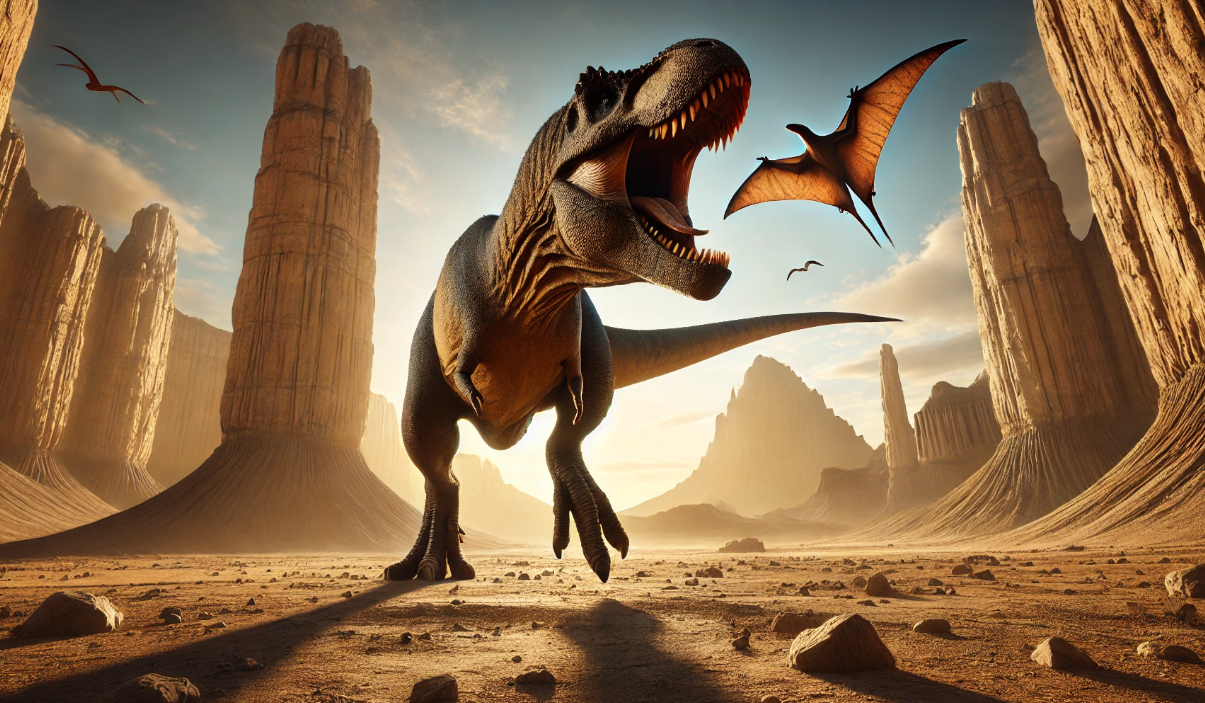
Scientists Conducted A New Study That Clarifies The Origin Of Dinosaurs And How They Dominated The Planet. Learn More!
The origin of dinosaurs is one of the most fascinating topics in paleontology. For decades, it was believed that these animals emerged in regions such as Argentina and Zimbabwe, where the oldest known fossils were found.
However, a new study published in the journal Current Biology suggests that the first ancestors of dinosaurs may have emerged in the humid equatorial regions of ancient Earth—areas that today correspond to the Amazônia rainforest, the Congo basin, and the Sahara desert.
The Gap In The Fossil Record
The oldest dinosaur fossils date back to approximately 230 million years ago and were found in South America and Africa.
-
Researchers from USP have discovered how to use Brazilian arnica to produce silver nanoparticles without generating toxic waste, and the innovation already has a patent application and practical application underway in the market.

-
A study published in one of the world’s most respected medical journals shows that just two tablespoons of olive oil per day can reduce the risk of heart attack by up to 30% and also silently protect the liver.

-
China surprises the world again with a human research program at the Tiangong station, which aims to create an unprecedented space atlas, with 387 projects submitted, 53 already completed, and a mission involving an astronaut spending over 1 year in orbit.

-
With R$ 22.5 million from BNDES, J. Assy accelerates the hybrid diesel-electric autonomous planter, featuring remote monitoring and AI: it promises to plant without an operator and adjust to the terrain; the prototype will be ready in the second half of 2026.

However, the differences among these fossils suggest that dinosaurs were already evolving for millions of years before these discoveries. This indicates an even more remote origin, whose direct fossil evidence remains unknown.
To address this issue, researchers employed advanced modeling techniques to analyze fossil data, evolutionary trees, and ancient geography.
The research suggests that the absence of fossils in these regions does not mean that dinosaurs did not exist there, but rather that the data is still insufficient.
“Dinosaurs are extensively studied, but we still do not know for sure where they came from“, said Joel Heath, the lead author of the study and a researcher at University College London.
The World Of Early Dinosaurs
According to the study, the first dinosaurs likely emerged in low latitudes of the Gondwana region, a supercontinent that housed lands that today make up South America, Africa, India, Antarctica, and Australia. At that time, these regions were warm and dry, similar to modern savannas and deserts.
Despite the lack of fossils in these regions, it is believed that accessibility issues and a lack of research funding are the main obstacles to new discoveries.
The first dinosaurs were small, about the size of a chicken or a medium-sized dog, walked on two legs, and were possibly omnivores. Their agility and adaptation to adverse environments may have been essential for their survival.
The Rise Of Dinosaurs
For millions of years, dinosaurs coexisted with other dominant reptiles, such as Pseudosuchia, distant relatives of crocodiles that reached lengths of up to 10 meters.
The scenario changed drastically about 201 million years ago, with a mass extinction caused by volcanic eruptions that opened space for the expansion of dinosaurs.
This event led the dinosaurs to diversify and occupy a wide variety of ecological niches, becoming the dominant group on Earth for the next 135 million years.
Lost Link In Evolution
One of the main contributions of the study lies in the evolutionary relationship between the first dinosaurs and their ancestors.
Researchers suggest that Silesauridae, previously considered only distant relatives of dinosaurs, may be the true ancestors of ornithischians—a group that includes stegosaurs and Triceratops.
This hypothesis helps to fill a gap in the understanding of dinosaur evolution and provides a new perspective on how these animals diversified.
Climatic Adaptation Of Dinosaurs
Another important point raised by the study is the dinosaurs’ ability to adapt to different climates.
Sauropods, known for their enormous size, preferred warm environments, while theropods and ornithischians developed adaptations to survive in colder climates, even inhabiting polar regions during the Jurassic period.
“Our findings suggest that early dinosaurs may have been well adapted to warm and arid environments“, stated Professor Philip Mannion, a co-author of the study.
The complete study was published in the journal Current Biology.







Seja o primeiro a reagir!