





 Portuguese
  English
  Spanish
  5 min of reading
  0 comments



In A Decade, The Price Of The Cheapest Car In Brazil Almost Tripled, And The Concept Of “Popular” Changed. Equipment Previously Considered Luxury Became Standard, And The Entry Price Ranged Beyond R$ 70 Thousand.
In ten years, the entry price of the new car in Brazil jumped from R$ 27,590 to R$ 73,490.
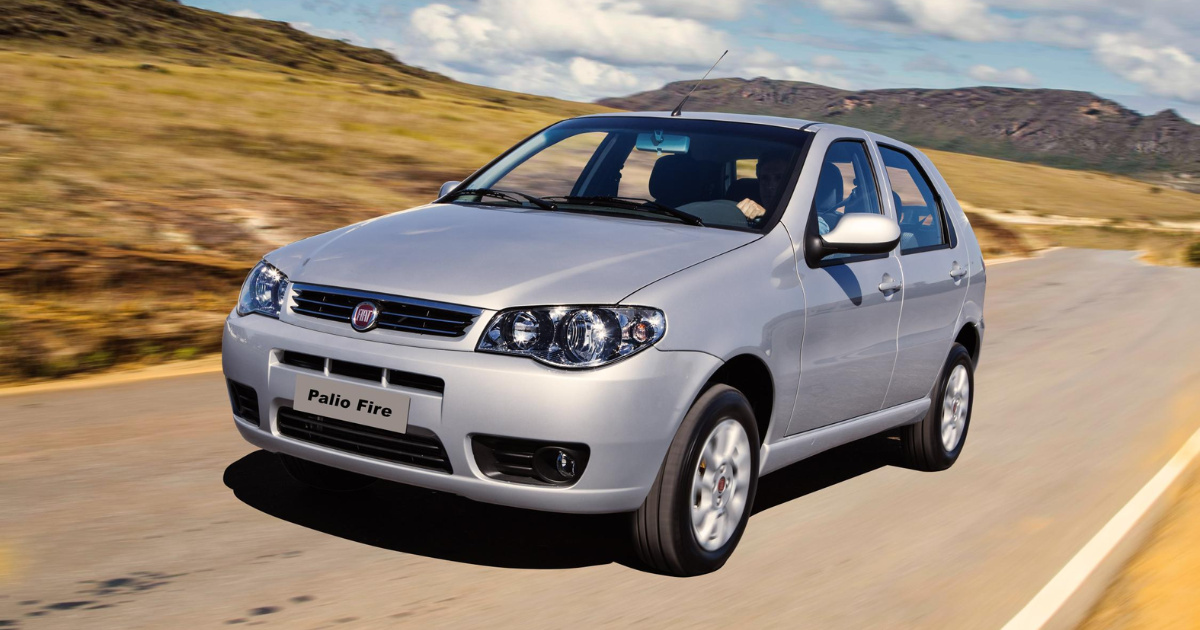
In 2015, the title belonged to the Fiat Palio Fire 1.0 with two doors; in 2025, it belongs to the Citroën C3 Live 1.0.
The increase can be explained by a combination of mandatory safety items, new equipment standards, and repositioning of brands — changes that shifted the concept of “popular” to a higher price range.
-
The institute that trained the greatest aerospace engineers in Brazil has just opened its first campus outside São Paulo after 75 years: ITA Ceará will have R$ 445 million, new courses in energy and systems, and classes are expected to start in 2027.

-
Luciano Hang, owner of Havan, goes to Juiz de Fora after the tragedy in February, brings R$ 1 million, hands out R$ 2,000 cards, and donates up to R$ 15,000 to victims in the region.

-
The Brazilian passport allows legal residence in dozens of countries without the need for a prior visa, and most Brazilians are unaware that they can apply for residency directly upon arriving in nations in South America, Africa, and even Europe.

-
Petrobras sends a message to Brazilian truck drivers after fuel collapse and reveals plan to have 100% domestic diesel.


The Palio Of R$ 27 Thousand: What Came — And What Was Left Out
Launched in the 2000s, the Palio Fire spanned generations as the entry door of the Fiat.
In June 2015, the 2016 line arrived at dealerships for R$ 27,590 in the 1.0 two-door configuration, or R$ 29,920 with four doors.
The main attraction was the price.
The basic package included simple finishing and essential equipment, but lacked comforts like air conditioning and power steering in the cheapest version.
These conveniences appeared in higher series and packages that raised the final price above R$ 30 thousand.
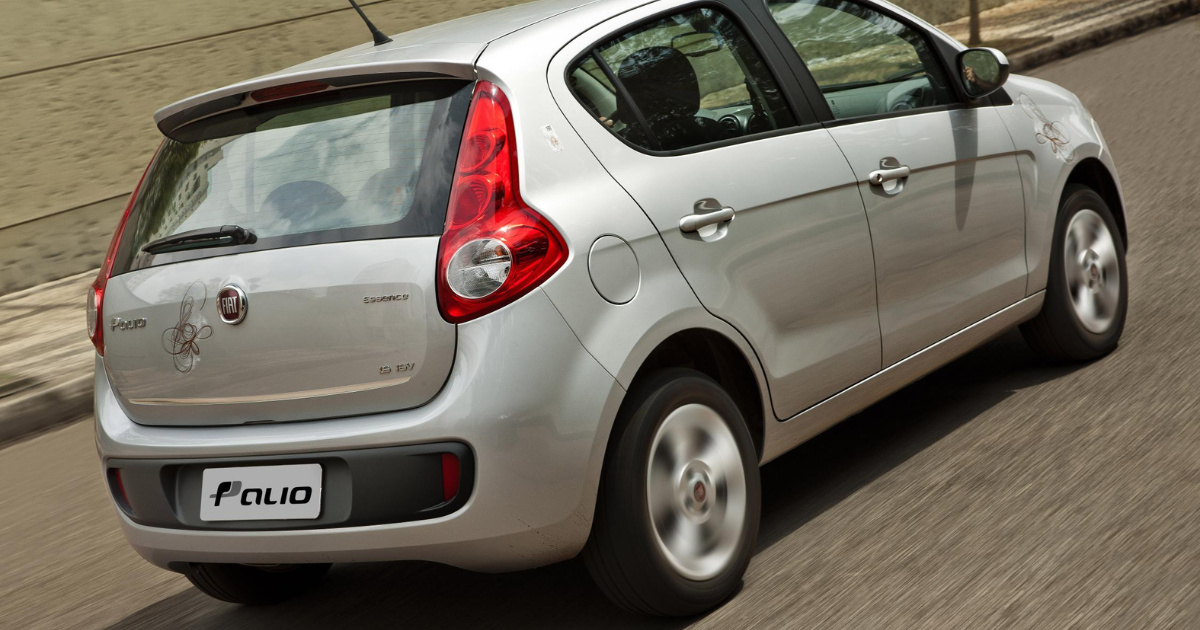
At the turn of 2016, Fiat maintained its focus on low cost in the Fire and better defined the roles: the “New Palio“, with a newer design, offered air conditioning and power steering as standard, while the Fire kept the price down with a lean list in the entry model.
This positioning helped maintain the title of the cheapest car in the country during that period.
The C3 Of R$ 73 Thousand And The New Equipment Standard
The current scenario is different.
In March 2025, the Citroën C3 Live 1.0 took the lead among the cheapest with a suggested price of R$ 73,490.
Even though it occupies the base of the line, it already delivers air conditioning, electric steering, stability control (ESC), hill start assist, tire pressure monitoring, electric windows and locks.
The multimedia center with a 10-inch screen — the highlight of this report — is standard in higher versions (Live Pack onward); the Live version does not come with the screen from the factory.
In the rearview mirror of the ranking are the Renault Kwid Zen 1.0 and Fiat Mobi Like 1.0, both also repositioned to price ranges above R$ 77 thousand in the 2025 table.
The list reinforces that there are no more new cars below R$ 70 thousand in the country.
Mandatory Safety Changed The Standard Of “Basic”
Two regulatory changes help explain why the cheapest car today delivers more — and costs more.
The first was the mandatory airbags and ABS brakes, in effect since January 2014.
The second, more recent, was the requirement for electronic stability control and other safety features in all new cars produced or imported from January 1, 2024.
These measures raised the minimum safety standard, something unthinkable in the popular cars of a decade ago.
In addition to the safety package, entry models began to incorporate connectivity and conveniences valued by consumers, such as electric steering, electronic assistants and, in the versions immediately above the basics, multimedia centers with wireless mirroring.
The C3 is an example: the 10” screen appears starting from the Live Pack, not in the version that sets the lowest price on the table.
Inflation x Real Price: How Much The Entry Car Increased
Correcting R$ 27,590 from 2015 for inflation shows part of the jump.
Considering the IPCA accumulated between mid-2015 and September 2025 — around 75% — that amount would today be equivalent to roughly R$ 48,4 thousand.
Even so, the effectively cheapest entry car on the market is more than R$ 25 thousand above that amount, indicating real increase beyond inflation.
The calculation uses the IPCA from IBGE as a reference index and the methodology from the Citizen Calculator of the Central Bank.
Why The “Popular” Disappeared From The Shelves
Several factors pushed prices up.
In addition to safety standards, the industry absorbed costs for emissions and embedded electronics, especially after the pandemic, when supply chains were under pressure.
Automakers also revised their portfolio strategies, prioritizing margins and items of higher perceived value.
The result was the shrinking of the niche that, in the 1990s and 2000s, sustained the concept of “popular car”.
Meanwhile, consumers began to find base versions with fewer frills, but already equipped with active safety and electronic assistants previously restricted to higher segments.
At the same time, screens and entertainment systems migrated to packages and versions one step up, as in the case of the C3 Live Pack, repeating what Fiat did with the kits of the Palio Fire back in the day.
Who Follows At The Base Of Prices
The 2025 snapshot confirms the change in standard.
The Kwid Zen appears just behind the C3 with a price above R$ 77 thousand, bringing four airbags and a radio with connectivity.
The Mobi Like hovers around the same range, with air conditioning, steering, and ESC as standard, but without a multimedia center in the entry versions.
The “minimum package” today is, therefore, much more loaded than in 2015, and this comes at a cost. The contrast between the Palio Fire at R$ 27 thousand and the C3 at R$ 73 thousand exposes a decade of technical advances and legal requirements that raised the bar for what is considered “basic”.
In light of this new normal, what do you consider essential in an entry car: complete safety as standard or a large multimedia center?









-

-

-

-

5 pessoas reagiram a isso.