





 Portuguese
  English
  Spanish
  5 min of reading
  0 comments


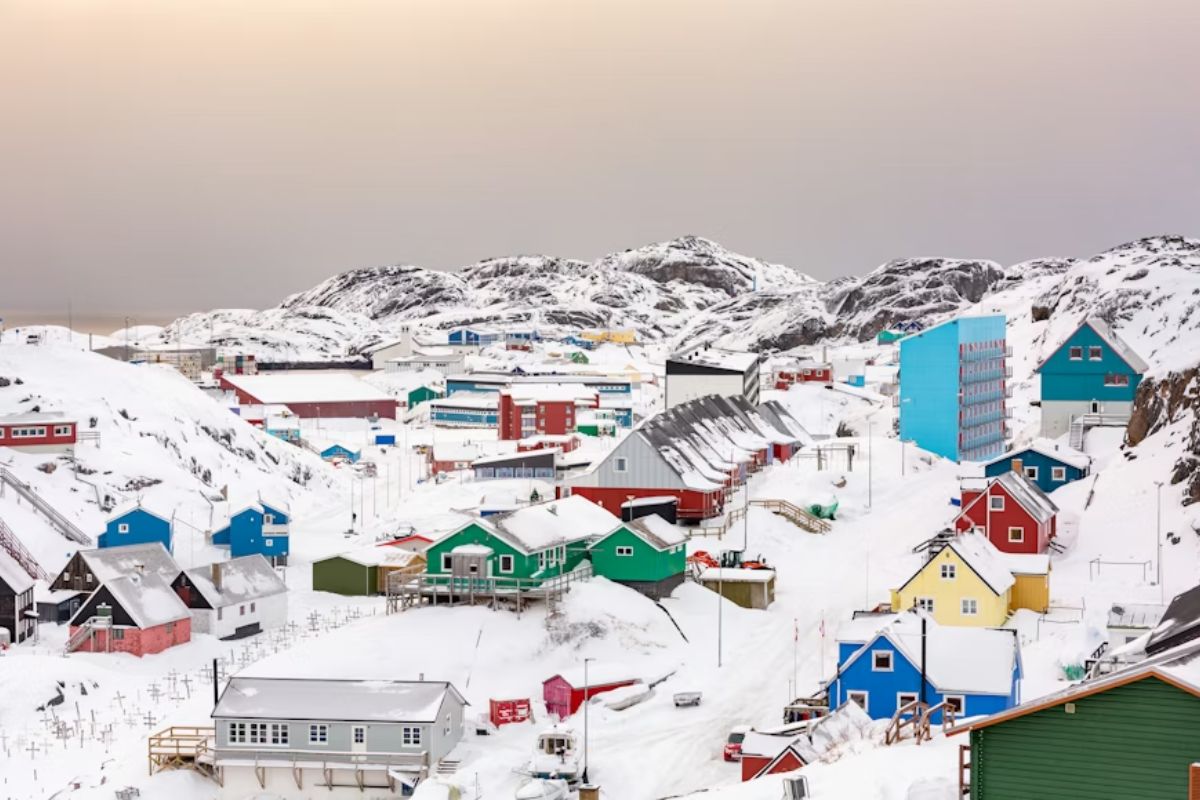
Between Purchase, Political Pressure, Strategic Agreements, and an Extreme Scenario, the Path to Control Greenland Collides with Self-Determination, Denmark, and Global Consequences.
To Control Greenland, Donald Trump does not rely on a single move. There is a range of possible paths, some formal and negotiated, others indirect and long-term, and an extreme scenario that few consider likely, but which would change the entire relationship between the US, Denmark, and NATO.
Greenland is largely autonomous, but its foreign and security policy is conducted from Copenhagen. It is also described as rich in minerals and strategically relevant, which explains why the topic keeps resurfacing, despite local public resistance and clear legal limits.
Option 1: Buy the Island and Turn Negotiation into Headline
The idea of “buying Greenland” is not new. The United States considered making an offer in 1867, reconsidered it in 1910, and in 1917, purchased from Denmark what is now the U.S. Virgin Islands for US$ 25 million.
-
After a devastating fire that left 3 injured and 200 intoxicated by smoke in the Red Sea, the most expensive warship ever built — $13.3 billion — returns to the front in Iran after quick repairs in Croatia.

-
It fell apart! The US and Iran fail to reach an agreement and global tension explodes — Vance’s exit from Pakistan raises alarms about Hormuz and the nuclear program.

-
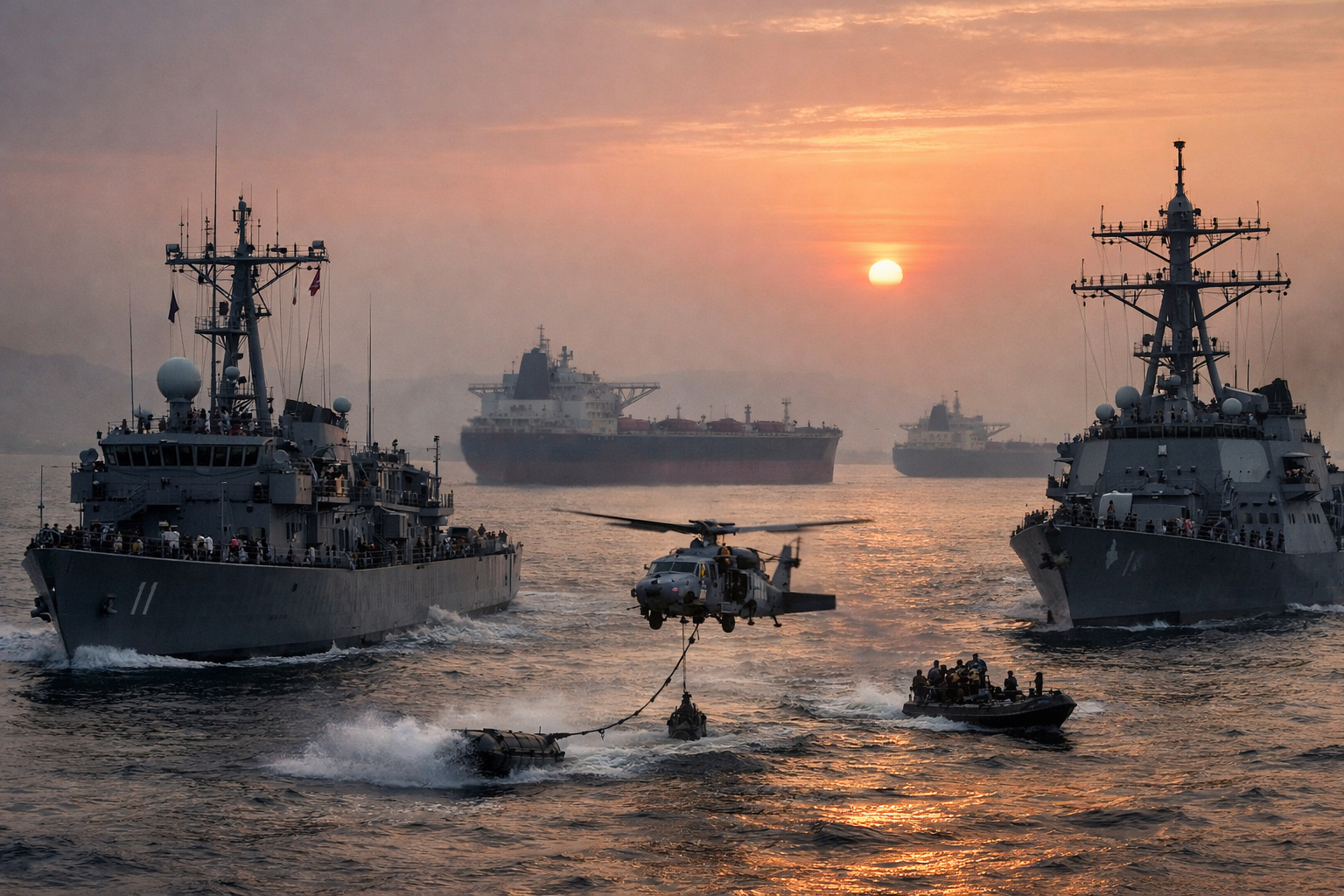
U.S. Armed Forces send warships to the Strait of Hormuz for mine removal from the channel as supertankers resume transit and global tensions pressure oil.
-
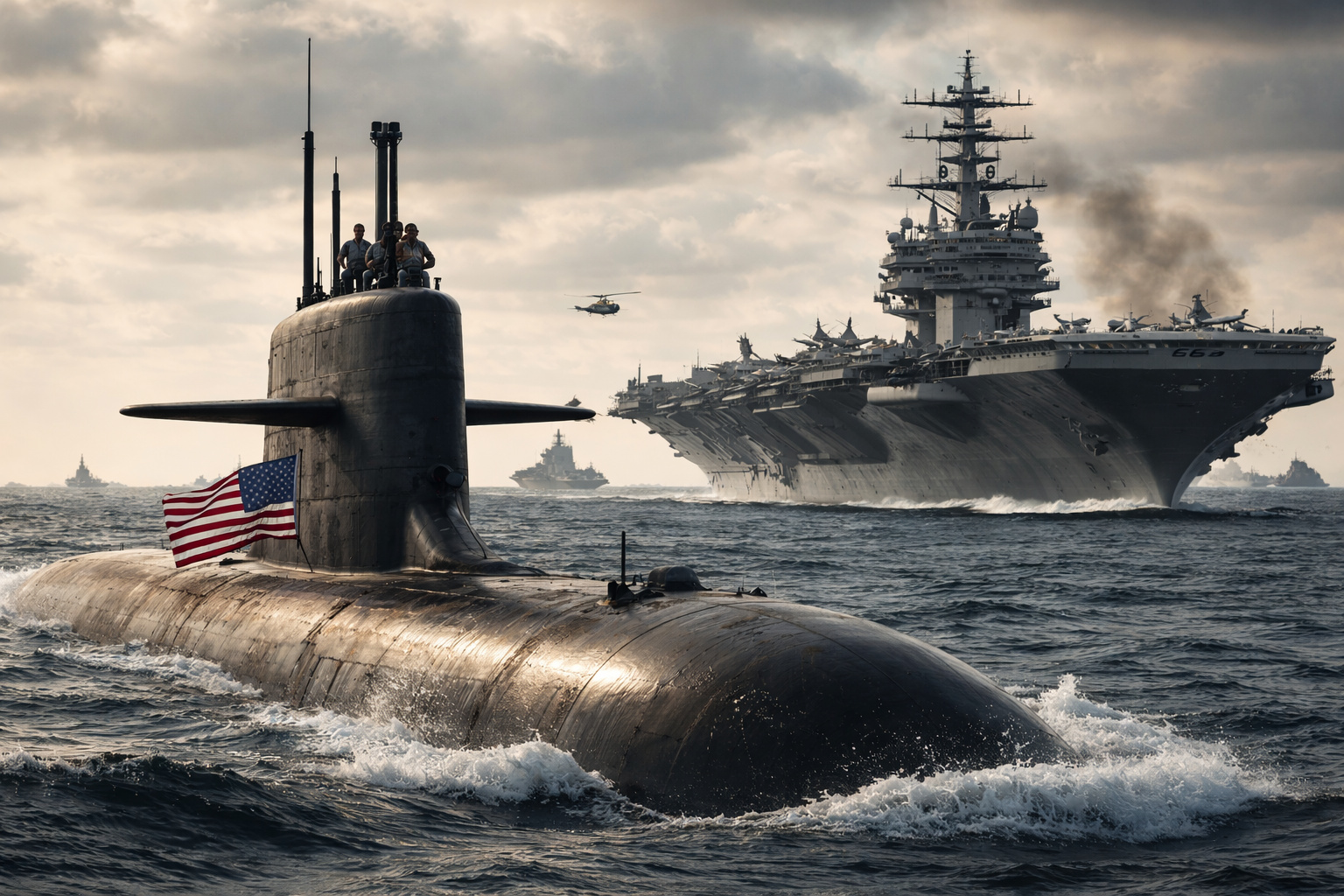
While $5.5 billion aircraft carriers dominate the seas with advanced technology, an $80 million submarine can simulate a devastating attack and expose strategic vulnerabilities that still challenge naval powers.
In 1946, the Truman administration made a formal offer of US$ 100 million for the island, arguing that control was essential for U.S. security.
The problem is that, to Control Greenland through direct purchase, there is a modern blockade: Self-Determination. Legal and constitutional experts point out that the era of buying or swapping territories and their peoples “has passed.”
The international legal principle makes a direct sale practically impossible, and both the Danish and Greenlandic governments have reiterated since 2019 that the island is not for sale.
Option 2: Win the Population Over with Investment and Influence

A slower route to Control Greenland is to “win” public opinion and create economic and diplomatic dependency.
The base describes this movement as a campaign to gain sympathy, with investment in economic and educational development and intensifying diplomatic ties.
There are practical signs of this strategy: the U.S. consulate in Nuuk was reopened in 2020, and a special envoy for Greenland was recently appointed.
On the Danish side, there is suspicion of more discreet tactics, including a supposed influence campaign to encourage the independence movement.
Option 3: Independence First and then Association with the US
Here is a central point to understand how one could Control Greenland without “buying” anything: the self-government law of 2009 allows the inhabitants to hold a referendum on independence. In other words, the future of the territory, theoretically, depends on the approximately 57,000 inhabitants of the island.
A poll cited by the base indicates that 85% do not want Greenland to become part of the US and only 6% would be in favor.
At the same time, other readings suggest that promises to invest billions could be seen by some of the population as a threat and by others as an opportunity.
In March, during a visit to Nuuk, JD Vance said he hoped that independent Greenlanders would “choose to associate with the United States.” Politically, this would open space to Control Greenland through agreement, not through annexation.
Option 4: A Free Association Agreement with Broad Military Access
Another route to Control Greenland is a “free association pact,” similar to the model used by the US with small nations in the South Pacific, such as the Marshall Islands.
In this type of arrangement, the smaller country retains independence and receives protection from Washington, along with a potentially lucrative trade agreement, while U.S. armed forces operate with minimal restrictions in strategic territory.
Many analysts consider this perhaps the most plausible outcome in the long term, especially if there is a referendum on independence and then negotiation of a format that combines autonomy with economic advantage.
Option 5: Expand What the US Already Has through Treaty with Denmark
A detail that changes the reading of the debate is that the US already has broad military access. A US-Denmark agreement from 1951 allows for “building, installing, maintaining, and operating” military bases in the territory.
Updated in 2004 and including the semi-autonomous government of Greenland, the treaty also allows for housing personnel and controlling landings, takeoffs, anchorages, movements, and operations of ships and aircraft.
Copenhagen signals willingness to allow significant expansion of military presence, currently concentrated at the Pituffik space base in the north, where around 500 military personnel are reportedly stationed.
In addition, an agreement signed in December 2023 and effective since last year grants the US unrestricted access to Danish air bases and allows military activities from and within Denmark.
In practice, this means that, to Control Greenland strategically, Washington can seek more access without changing flags.
The Extreme Scenario: Invasion and the Impact that Could Shake NATO
The White House has stated that the use of U.S. armed forces is “always an option,” but few analysts see this as likely.
Nevertheless, the topic arises because Greenland has no territorial army, and the Danish apparatus in Nuuk is geared toward observation, with limited resources. Theoretically, analysts argue that the takeover of key points could happen quickly.
In practice, the barriers would be enormous. The Climate is a Real Obstacle, Denmark has increased military presence, and the consequences would be immediate.
The Danish Prime Minister, Mette Frederiksen, stated that an attack on Greenland, territory covered by Denmark’s NATO membership, would mean the end of the military alliance and jeopardize post-World War II security.
In addition to illegality, analysts point out that such an operation would destroy trust among allies and carry a high political and military cost. Even as a hypothesis, this path would exist as the most dangerous way to attempt to Control Greenland.
What Really Defines the Game
In the end, what separates rhetoric from reality is the combination of three barriers: Local Self-Determination, the Role of Denmark, and the International Cost of Any Steps Outside the Rules.
Therefore, the most plausible routes to Control Greenland tend to go through investment, diplomatic pressure, and agreements, not through direct annexation.
If you had to bet on a single route to Control Greenland, which seems more realistic: purchase, free association agreement, or expanding existing military treaties?








-

-

2 pessoas reagiram a isso.